

Selling investment real estate through a 1031 like-kind exchange is one of the most powerful ways to defer capital gains taxes. But even a well-structured exchange can produce an unexpected tax bill if you receive what the IRS calls "boot." Boot is any non-like-kind value received in an exchange, typically cash or debt reduction. Understanding how boot arises, how it is taxed, and how to avoid it can save you tens of thousands of dollars on a single transaction. Below, we walk through the best practices every investor should follow to minimize or eliminate boot when selling investment property.
What Is Boot in a 1031 Exchange?
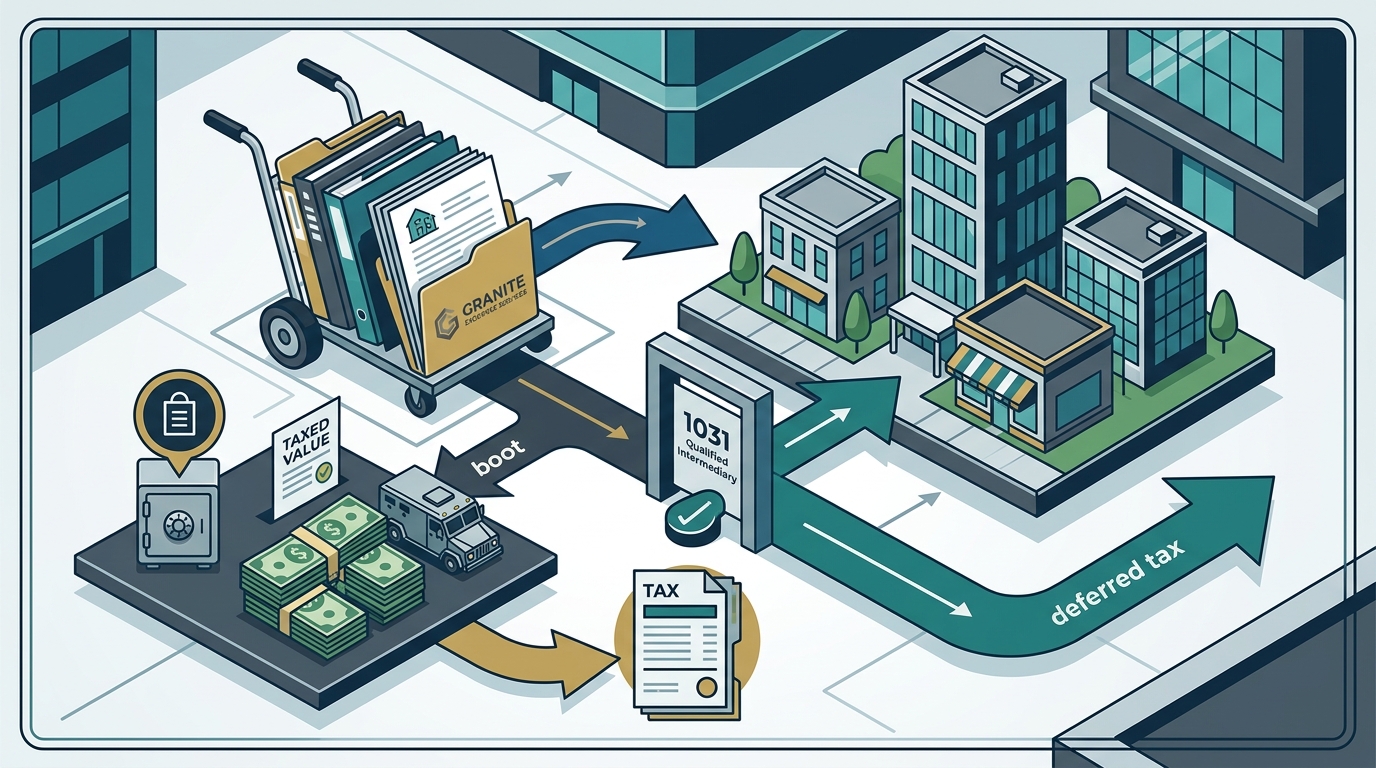
Boot is any value received in a 1031 exchange that is not like-kind real property. The term does not appear in the Internal Revenue Code itself; it is industry shorthand for the taxable portion of an otherwise tax-deferred transaction. Receiving boot does not invalidate your exchange. It simply means a portion of your gain becomes immediately taxable.
A key point many investors miss: a 1031 exchange is not an all-or-nothing event. You can complete a successful exchange and still owe capital gains tax on the boot portion. The goal, of course, is to structure the deal so that boot is minimized or eliminated entirely.
Types of Boot: Cash, Mortgage, and Personal Property
There are three primary categories of boot that investors encounter.
Cash Boot
Cash boot is the most straightforward form. It occurs when you receive proceeds from the sale of your relinquished property that are not reinvested into replacement property. Even a small amount of unreinvested funds can create taxable boot.
Mortgage Boot (Debt Reduction Boot)
Mortgage boot occurs when the debt on your replacement property is less than the debt that existed on your relinquished property. For example, if you pay off a $200,000 mortgage at closing and only take on a $100,000 mortgage on the replacement property, the $100,000 difference is considered boot, even if you reinvested all of your cash equity.
Personal Property Boot
If non-real-property items such as furniture, equipment, or appliances are included in the transaction value, those items do not qualify as like-kind and may trigger boot. Since the Tax Cuts and Jobs Act of 2017, only real property qualifies for 1031 treatment.
| Boot Type | How It Arises | How to Avoid It |
|---|---|---|
| Cash Boot | Sale proceeds not fully reinvested | Reinvest 100% of net proceeds into replacement property |
| Mortgage Boot | Replacement debt is less than relinquished debt | Match or exceed prior debt level, or add cash to offset |
| Personal Property Boot | Non-real-property items included in exchange value | Separate personal property into a distinct transaction |
How Boot Is Taxed
Boot is taxable in the year it is received, up to the amount of gain realized on the exchange. The IRS first applies boot against any depreciation recapture, which is taxed at a flat 25% federal rate. Any remaining boot is then taxed at long-term capital gains rates of 15% or 20%, plus the potential 3.8% Net Investment Income Tax.
Timing also matters. If an exchange spans two tax years and you receive cash boot in the second year, the IRS taxes it in that second year. Planning around year-end closings with your tax advisor and qualified intermediary is essential.
Best Practices for Avoiding Boot
1. Reinvest All Net Proceeds
The single most important rule: every dollar of net sale proceeds must go into replacement property. Direct your qualified intermediary to hold all funds and wire them directly to the replacement closing.
2. Match or Exceed Debt
Ensure the combined mortgage on your replacement property equals or exceeds the mortgage paid off on the relinquished property. If you choose a property with a smaller loan, contribute additional cash from outside the exchange to offset the debt reduction.
3. Pay Non-Transaction Costs with Outside Funds
Expenses such as tenant security deposit transfers, rent prorations, and non-qualified closing costs should be paid from personal funds, not from exchange proceeds. Using exchange funds for non-transaction costs is treated the same as receiving cash, according to IRS Publication 544.
Common Closing-Table Mistakes That Trigger Boot
Even experienced investors can inadvertently create boot through routine closing adjustments. Prepaid rent credited to the seller, prorated property taxes paid from exchange proceeds, and loan payoffs that reduce net debt can all generate taxable boot.
Another frequent error involves personal property. When a purchase agreement bundles furniture or equipment into the sale price, those items become non-like-kind boot. The fix is simple: assign a separate value to personal property and handle it outside the exchange.
Review every line of your closing statement with your QI before signing. Small prorations that seem routine can trigger unexpected tax assessments during an IRS audit.
The Role of a Qualified Intermediary
A Qualified Intermediary (QI) is the independent party who holds your exchange funds and ensures the transaction complies with IRC Section 1031. Working with a CES-certified QI is the most reliable way to avoid boot-related pitfalls.
Granite Exchange Services has completed over 20,000 exchanges since 2000, with more than $1 billion in secured funds. Our CES-certified counselors review closing documents, coordinate with escrow and title companies, and structure every exchange to minimize boot. All client funds are held in individually segregated, FDIC-insured accounts and are never commingled.
Unlike large corporate intermediaries, Granite provides direct access to a dedicated counselor who knows your exchange from start to finish. That personal attention is what catches the small details that create boot.
Key Takeaways
- Boot is any non-like-kind value received in a 1031 exchange, most commonly cash or debt reduction.
- Receiving boot does not invalidate your exchange; it simply makes a portion of your gain immediately taxable.
- To fully defer taxes, reinvest 100% of net sale proceeds and match or exceed prior debt levels.
- Pay non-transaction expenses such as rent prorations and tenant deposits with personal funds, not exchange proceeds.
- Separate personal property from the real estate transaction to avoid personal property boot.
- Work with a CES-certified Qualified Intermediary who reviews your closing documents line by line.
- Plan year-end transactions carefully, as boot is taxed in the year it is actually received.
Frequently Asked Questions
What is boot in a 1031 exchange?
Boot is any value received in a 1031 exchange that is not like-kind real property. This includes cash proceeds that are not reinvested, reduction in mortgage debt, and personal property such as furniture or equipment included in the sale.
Does receiving boot cause my 1031 exchange to fail?
No. Receiving boot does not invalidate your exchange. It only means that the boot portion of your gain is immediately taxable, while the remainder continues to qualify for tax deferral.
How is boot taxed?
Boot is taxed first as depreciation recapture at 25%, then as long-term capital gains at 15% or 20%, plus the potential 3.8% Net Investment Income Tax. It is taxed in the year you actually receive it.
What is mortgage boot?
Mortgage boot, also called debt reduction boot, occurs when the debt on your replacement property is less than the debt on your relinquished property. The difference is treated as taxable boot even if all cash equity is reinvested.
Can I offset mortgage boot with additional cash?
Yes. You can add cash from outside the exchange to offset a reduction in debt. This is one of the most common strategies for eliminating mortgage boot.
What closing costs can be paid from exchange funds without creating boot?
Qualified transaction costs such as QI fees, title insurance, escrow fees, recording fees, and real estate commissions can generally be paid from exchange proceeds. Non-transaction costs like rent prorations, tenant deposits, and property repairs should be paid with outside funds.
How does a Qualified Intermediary help avoid boot?
A Qualified Intermediary holds your exchange funds, prepares exchange documents, coordinates with escrow and title, and reviews closing statements to identify any items that could trigger boot. Working with a CES-certified QI significantly reduces the risk of inadvertent boot.
Can I use a DST to absorb leftover exchange funds?
Yes. A Delaware Statutory Trust (DST) qualifies as like-kind replacement property under Rev. Rul. 2004-86 and can be used to invest remaining proceeds that might otherwise become taxable cash boot.
Start Your Exchange with Granite Exchange Services
Avoiding boot requires planning that begins before your relinquished property hits the market. Contact Granite Exchange Services today at 800-899-6959 to speak with a CES-certified exchange counselor. We will review your transaction, identify potential boot triggers, and structure your exchange for maximum tax deferral.