

A reverse 1031 exchange lets you buy your replacement property before selling the one you already own. It is one of the most complex structures in the 1031 exchange world, and not every Qualified Intermediary is equipped to handle it. You need a company that can set up an Exchange Accommodation Titleholder (EAT) entity, coordinate dual closings, and keep the entire transaction compliant with IRS Revenue Procedure 2000-37. Below, we break down what to look for in a reverse exchange provider and highlight companies that offer this specialized service.
What Is a Reverse 1031 Exchange?
A reverse 1031 exchange is a tax-deferred transaction in which the investor acquires the replacement property before selling the relinquished property. Unlike a standard delayed (forward) exchange, the sequence is flipped: buy first, sell second.
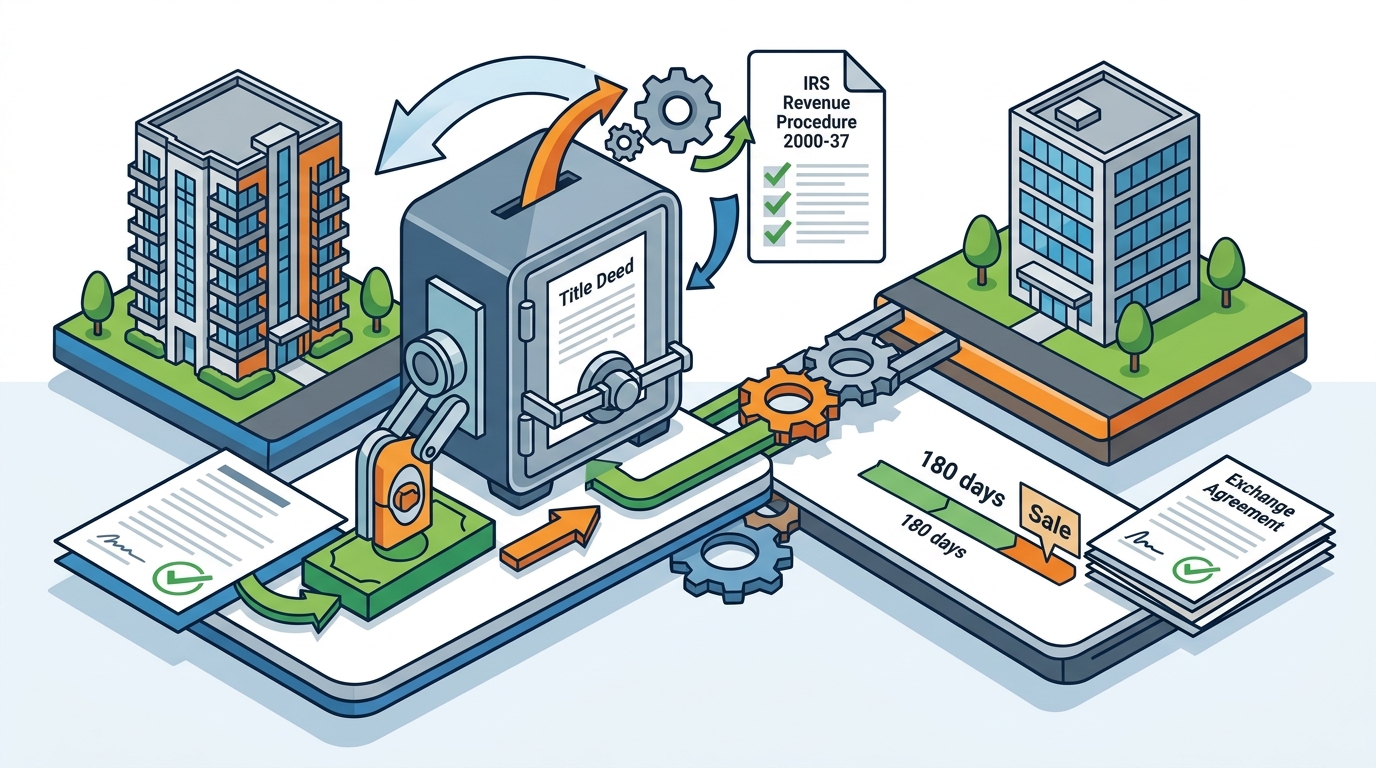
The IRS outlined a safe harbor for reverse exchanges in Revenue Procedure 2000-37. Under this guidance, the replacement property is parked with an Exchange Accommodation Titleholder (EAT) for no more than 180 days while the investor sells the relinquished property. An Exchange Accommodation Titleholder is a special-purpose entity, typically controlled by the Qualified Intermediary, that temporarily holds legal title to the replacement property on behalf of the investor.
Why Reverse Exchanges Are Harder to Facilitate
Forward exchanges are relatively straightforward: sell, hold funds, buy. Reverse exchanges add layers of complexity that many QI firms are not staffed or licensed to manage.
EAT Entity Setup
The QI must create or control an EAT entity that takes title to the replacement property. This requires legal documentation, liability management, and coordination with lenders who must consent to the parking arrangement.
Dual Closing Coordination
Two closings must happen within the 180-day window. The QI coordinates with title companies, escrow officers, and attorneys on both the acquisition side and the disposition side, often across different states.
Higher Regulatory Scrutiny
Because the investor technically owns both properties during the parking period, the IRS watches reverse exchanges closely. Precise documentation under Rev. Proc. 2000-37 is non-negotiable.
Companies That Facilitate Reverse 1031 Exchanges
The following Qualified Intermediaries offer reverse exchange services nationwide. Each varies in size, ownership structure, and service model.
| Company | Founded | Ownership | Service Model | Reverse Exchange |
|---|---|---|---|---|
| Granite Exchange Services | 2000 | Independent, privately held | Dedicated CES® counselor; no call center | Yes, full EAT structure |
| IPX1031 | 1988 | Subsidiary of Fidelity National Financial | Large national team; regional offices | Yes |
| First American Exchange | N/A | Subsidiary of First American Financial | National; title-company affiliated | Yes |
| Accruit | 1999 | Private (technology-focused) | Tech platform + QI services | Yes, including improvement hybrids |
| Realty Exchange Corporation | 1990 | Independent | Boutique; personalized service | Yes |
Why Independence Matters
Some of the largest QI firms are subsidiaries of title insurance or financial conglomerates. A Qualified Intermediary is supposed to be a neutral third party in the exchange. When a QI is owned by a title company that also handles your closing, potential conflicts of interest can arise. Granite Exchange Services is independently owned and not affiliated with any title, escrow, or lending company, which means its loyalty sits entirely with the investor.
CES® Certification
The Certified Exchange Specialist® (CES®) designation is the highest professional credential in the 1031 exchange industry, awarded by the Federation of Exchange Accommodators (FEA). When evaluating a reverse exchange provider, confirm that CES® professionals will manage your file, not junior staff handing paperwork to a back office.
How Much Does a Reverse Exchange Cost?
Reverse exchanges cost significantly more than standard delayed exchanges because of the EAT setup, additional legal documentation, and dual-closing coordination.
| Exchange Type | Typical QI Fee Range |
|---|---|
| Delayed (Forward) Exchange | $500 - $1,500 |
| Reverse Exchange | $3,000 - $7,500+ |
| Improvement / Build-to-Suit | $3,500 - $7,500+ |
Granite Exchange Services uses transparent flat-fee pricing with no hidden charges. Always request a written fee schedule before signing exchange documents.
How to Choose the Right Reverse Exchange QI
Not all Qualified Intermediaries are created equal. Here are the criteria that matter most when selecting a company for a reverse exchange.
Experience and Volume
Ask how many reverse exchanges the firm has completed. A company like Granite Exchange Services has processed over 20,000 total exchanges and more than $1 billion in exchange funds since 2000. Volume matters because edge cases surface frequently in reverse transactions.
Fund Security
Your exchange proceeds should be held in individually segregated, FDIC-insured accounts. Funds should never be commingled with the QI's operating capital or other clients' money. Granite Exchange Services maintains this standard on every engagement. Learn more about how your funds are protected on the fund security page.
Direct Access to Experts
Reverse exchanges move fast. You need a QI where you can reach a knowledgeable specialist by phone, not navigate a call-center menu. Granite Exchange assigns one dedicated CES® certified counselor who stays with your exchange from the first call through final closing.
Key Takeaways
- A reverse 1031 exchange allows you to acquire replacement property before selling your current investment property.
- The IRS safe harbor for reverse exchanges is governed by Revenue Procedure 2000-37, which requires an Exchange Accommodation Titleholder.
- Reverse exchange QI fees typically range from $3,000 to $7,500 due to the added complexity of EAT setup and dual closings.
- Not every Qualified Intermediary handles reverse exchanges. Confirm the firm has dedicated reverse exchange experience before signing.
- Independence matters. A QI that is not owned by a title, escrow, or lender company operates free from potential conflicts of interest.
- Granite Exchange Services has facilitated over 20,000 exchanges since 2000 and provides each client a dedicated CES® certified counselor.
- Always verify that your exchange funds will be held in segregated, FDIC-insured accounts.
Frequently Asked Questions
What is a reverse 1031 exchange?
A reverse 1031 exchange is a like-kind exchange in which the investor purchases the replacement property before selling the relinquished property. The replacement property is "parked" with an Exchange Accommodation Titleholder for up to 180 days while the old property is sold.
Do all Qualified Intermediaries handle reverse exchanges?
No. Reverse exchanges require the QI to set up an EAT entity and manage dual closings. Many smaller or less experienced firms only handle standard delayed exchanges. Always ask specifically about reverse exchange capability.
How long do I have to complete a reverse exchange?
Under IRS Rev. Proc. 2000-37, the replacement property can be parked with the EAT for a maximum of 180 days. You must also identify the relinquished property within 45 days of the replacement property acquisition.
Is Granite Exchange Services independent?
Yes. Granite Exchange Services is independently owned and not a subsidiary of any title, escrow, or lending company. This independence ensures the firm acts solely in the investor's interest.
How much does a reverse 1031 exchange cost?
Reverse exchange fees generally range from $3,000 to $7,500 or more, depending on transaction complexity and the number of properties involved. This is significantly higher than the $500 to $1,500 typical for a standard delayed exchange.
Can I do a reverse exchange across state lines?
Absolutely. IRC Section 1031 is federal tax code, so exchanges can cross state boundaries. Granite Exchange Services facilitates all exchange types in all 50 states.
What is an Exchange Accommodation Titleholder?
An Exchange Accommodation Titleholder (EAT) is a special-purpose entity that temporarily holds legal title to the replacement property during a reverse exchange. The EAT is typically controlled by the Qualified Intermediary and exists solely for the purpose of the exchange transaction.
What happens if I miss the 180-day deadline in a reverse exchange?
If the relinquished property is not sold within 180 days, the exchange fails, and the transaction is treated as a taxable sale. The investor would owe capital gains taxes on any realized gain. Strict adherence to the timeline is essential.
Start Your Reverse Exchange Today
Reverse exchanges require precision, speed, and deep expertise. Granite Exchange Services has guided investors through complex reverse transactions since 2000, with CES® certified counselors, segregated FDIC-insured accounts, and no call-center runarounds. Call 800-899-6959 or visit the contact page to speak directly with a reverse exchange specialist.