

A qualified intermediary (QI) is the single most important partner in any 1031 exchange. This independent third party holds your sale proceeds, prepares IRS-compliant documents, and ensures you never take constructive receipt of funds, which would immediately trigger capital gains taxes. Choosing the wrong QI can cost you tens or even hundreds of thousands of dollars. Choosing the right one protects your wealth and keeps your exchange on track from start to finish. This guide walks you through exactly what to look for, what to avoid, and how to evaluate a QI before you sign anything.
What Is a Qualified Intermediary?
A qualified intermediary is a third-party facilitator required by the IRS to handle a 1031 like-kind exchange. Under Treasury Regulation §1.1031(k)-1(g)(4), the QI holds the proceeds from the sale of your relinquished property and uses those funds to acquire your replacement property. Without a QI in place before closing, the IRS treats the transaction as a taxable sale rather than a tax-deferred exchange.
What a QI Actually Does
A QI performs several critical functions: holding exchange proceeds in a segregated account, preparing exchange agreements and assignment documents, coordinating with title and escrow companies, and enforcing compliance with the 45-day identification and 180-day closing deadlines. They become a principal in the transaction so you never directly touch the sale proceeds.
Who Cannot Serve as Your QI
The IRS prohibits certain parties from acting as your intermediary. Your attorney, CPA, real estate agent, broker, or any agent who has worked for you within the previous two years is disqualified. Close family members, including parents, children, and siblings, are also excluded. The taxpayer conducting the exchange cannot serve as their own intermediary.
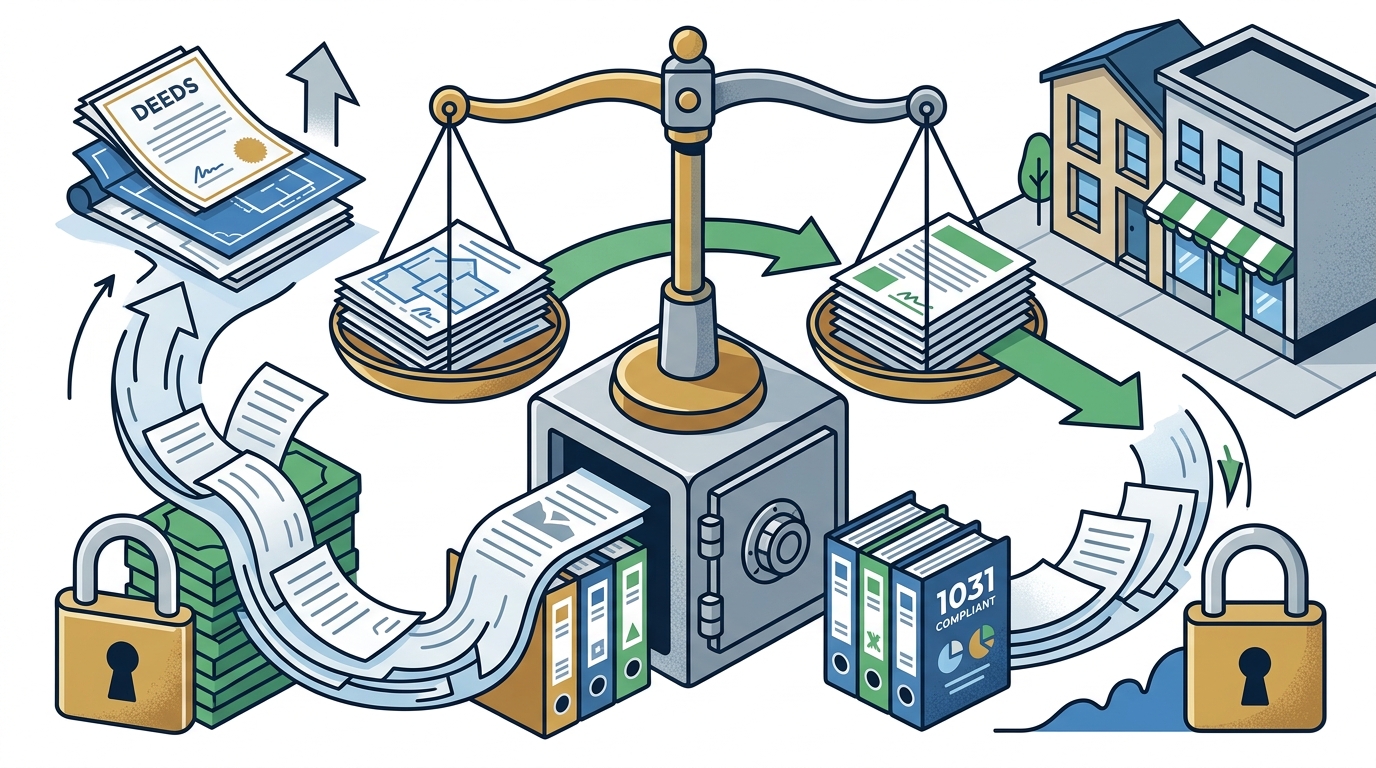
Why Your QI Choice Can Make or Break Your Exchange
The IRS has explicitly warned investors to be careful in selecting a qualified intermediary. There have been documented cases of intermediaries declaring bankruptcy or failing to meet contractual obligations, leaving taxpayers unable to meet strict exchange deadlines and losing their tax deferral entirely. Your QI will hold potentially millions of dollars in exchange funds. If those funds are mismanaged, commingled, or inaccessible when you need to close, you face an immediate and irreversible tax liability.
A fidelity bond is a type of insurance that protects the investor against loss due to fraudulent acts by the QI. Confirm that your intermediary carries one, along with errors and omissions (E&O) insurance coverage.
7 Key Criteria for Evaluating a QI
Not all qualified intermediaries are created equal. Use these criteria to evaluate any QI before entrusting them with your exchange funds.
| Criterion | What to Look For | Why It Matters |
|---|---|---|
| Experience & Track Record | Years in business, number of exchanges completed | Complex exchanges require deep practical knowledge across market cycles |
| Professional Credentials | CES® (Certified Exchange Specialist) designation from the FEA | Requires 3+ years full-time QI work and ongoing education |
| Fund Security | Segregated, FDIC-insured accounts; never commingled | Protects your capital from the QI's creditors and operational risks |
| Bonding & Insurance | Fidelity bond, E&O coverage | Financial backstop if something goes wrong |
| Independence | Not owned by a title, escrow, or lending company | Avoids conflicts of interest; ensures neutral advice |
| Personal Service | Dedicated counselor, direct phone/email access | Ensures timely communication during deadline-critical periods |
| Exchange Type Expertise | Handles delayed, reverse, improvement, DST, and blended exchanges | Your needs may change; you want one QI for every scenario |
Why CES® Certification Matters
The Certified Exchange Specialist (CES®) designation is the highest professional credential in the 1031 exchange industry. It is awarded by the Federation of Exchange Accommodators (FEA), and candidates must work full time as a QI for at least three years before sitting for the exam. Granite Exchange Services assigns CES® certified counselors to every client engagement.
Red Flags to Watch For
Walk away from any QI that exhibits these warning signs:
- Commingled funds. If the QI pools your money with other clients' funds or their own operating account, your capital is at risk in the event of a lawsuit or bankruptcy.
- No fidelity bond or insurance. Reputable QIs carry financial protection. If they cannot produce proof, move on.
- Vague answers about deadlines. A competent intermediary should explain the 45-day and 180-day rules clearly and proactively.
- Ownership by a title or escrow company. This creates inherent conflicts of interest. An independent QI has loyalty only to the exchanger.
- No direct point of contact. If you are routed to a generic call center, you may struggle to get answers during time-sensitive closings.
Independent vs. Corporate QIs
Large corporate QIs are often subsidiaries of Fortune 500 financial companies. They process high volumes but may funnel clients through call centers and standardized workflows. An independent QI is a company whose sole business is facilitating 1031 exchanges, without ownership ties to title, escrow, or lending entities.
Granite Exchange Services has operated as an independent, relationship-driven QI since 2000. Their counselors have processed over 20,000 exchanges totaling more than $1 billion in secured funds. Every client gets a dedicated counselor with direct phone and email access. Exchange proceeds are held in individually segregated, FDIC-insured accounts and are available for same-day wiring at closing.
For investors who value hands-on guidance over corporate scale, an independent QI often provides a better experience, particularly for complex transactions like reverse exchanges or business property exchanges.
Key Takeaways
- A qualified intermediary is legally required for any deferred 1031 exchange; without one, the IRS treats the sale as fully taxable.
- Your QI holds your exchange funds, prepares all IRS-required documents, and enforces the 45-day and 180-day deadlines.
- Always verify that funds are held in segregated, FDIC-insured accounts and never commingled.
- Look for CES® certification, FEA membership, fidelity bonding, and E&O insurance as baseline qualifications.
- An independent QI avoids the conflicts of interest that come with title-company or lender ownership.
- Direct access to a dedicated counselor is critical during time-sensitive closing periods.
- Granite Exchange Services has served investors across all 50 states since 2000 with 20,000+ completed exchanges.
Frequently Asked Questions
What is a qualified intermediary in a 1031 exchange?
A qualified intermediary is an independent third party who holds exchange proceeds, prepares required documentation, and ensures the transaction complies with IRS rules under IRC Section 1031. The QI prevents you from taking constructive receipt of funds, which would disqualify the exchange.
Is a qualified intermediary required by the IRS?
Yes. For any deferred 1031 exchange, the IRS mandates a QI to handle funds and paperwork. Exchange documents must be signed before the relinquished property closes, or the transaction is treated as a taxable sale.
How do I know if a QI is trustworthy?
Look for a long track record, CES® certification from the FEA, segregated FDIC-insured accounts, fidelity bonding, E&O insurance, and verifiable client testimonials. Ask for references and confirm their independence from title, escrow, and lending companies.
What happens if my QI goes bankrupt?
If your QI becomes insolvent while holding your funds and those funds are commingled, you may lose access to the money and miss IRS deadlines. This disqualifies the exchange and triggers immediate capital gains taxes. Always confirm that funds are held in segregated accounts.
Can my attorney or CPA act as my qualified intermediary?
No. The IRS prohibits anyone who has acted as your agent within the previous two years, including attorneys, CPAs, real estate agents, and brokers, from serving as your QI.
What is the CES® designation?
The Certified Exchange Specialist (CES®) is a professional credential awarded by the Federation of Exchange Accommodators. Candidates must work full time as a QI for at least three years and pass a comprehensive exam covering IRC Section 1031 and related regulations.
Does my QI need to be in my state?
No. Because 1031 exchanges are governed by federal tax code, your QI can be located anywhere in the United States. Granite Exchange Services is based in Granite Bay, California, and serves investors in all 50 states.
What types of exchanges can a QI handle?
A full-service QI handles all exchange structures, including delayed (forward) exchanges, reverse exchanges, improvement or build-to-suit exchanges, DST exchanges, and blended or multi-asset transactions.
Start Your 1031 Exchange With a Trusted QI
Ready to defer your capital gains taxes with expert guidance from start to finish? Granite Exchange Services has been helping investors protect their wealth through IRS-compliant 1031 exchanges for over 25 years. Call 800-899-6959 or contact us online to speak directly with a CES® certified exchange counselor today.