

A reverse 1031 exchange lets you acquire a replacement property before selling the one you already own. It is one of the most complex structures in tax-deferred real estate investing, and not every Qualified Intermediary has the expertise to manage it correctly. The process involves strict IRS timelines, an Exchange Accommodation Titleholder (EAT), and meticulous documentation under Revenue Procedure 2000-37. In this guide, we break down what reverse exchanges require, the types of companies that facilitate them, and how to choose the right partner for your transaction.
What Is a Reverse 1031 Exchange?
A reverse 1031 exchange is a transaction in which a real estate investor acquires replacement property before selling the relinquished property. This structure is governed by IRC Section 1031 and is especially valuable in competitive markets where a desirable property will not wait for your existing asset to sell.
Unlike a standard delayed exchange, the reversed sequence introduces additional complexity. The investor must still identify the relinquished property within 45 days and complete the entire exchange within 180 days. Both properties must be held for investment or business use, and the replacement must be of equal or greater value to fully defer capital gains taxes.
Revenue Procedure 2000-37 and the EAT Structure
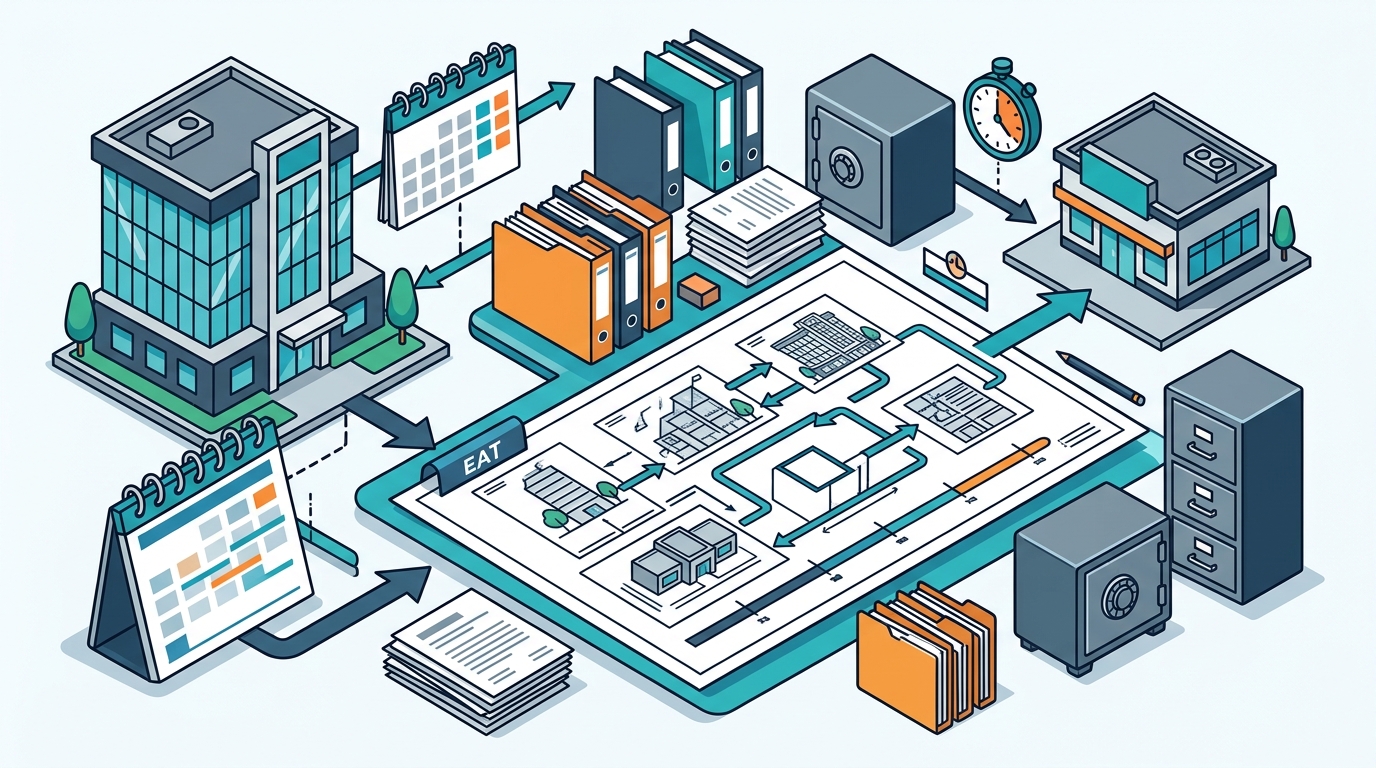
Revenue Procedure 2000-37 is the IRS safe harbor that formally recognized reverse exchange structures. Published in 2000, it created the framework under which an Exchange Accommodation Titleholder (EAT) temporarily holds legal title to either the replacement or relinquished property for up to 180 days.
What Is an EAT?
An Exchange Accommodation Titleholder is an independent entity that takes temporary legal ownership of a property on behalf of the taxpayer during a reverse exchange. The EAT and the investor enter into a Qualified Exchange Accommodation Arrangement (QEAA) within five days of the property being "parked." This arrangement allows the IRS to treat the EAT as the beneficial owner for federal tax purposes.
Key Provisions
Rev. Proc. 2000-37 permits several arrangements that make the transaction practical: the taxpayer can loan funds to the EAT, guarantee third-party financing, lease the parked property, and even manage improvements. These provisions give investors flexibility while maintaining the legal separation required for tax deferral.
Types of Companies That Handle Reverse Exchanges
Not all Qualified Intermediaries offer reverse exchange services. The added legal structure, EAT formation, and financing coordination require specialized expertise. Companies that handle reverse 1031 exchanges generally fall into three categories:
- Independent, full-service QIs that specialize exclusively in 1031 exchanges and offer direct counselor access. Granite Exchange Services is an example, having facilitated reverse exchanges as part of its 20,000+ completed transactions since 2000.
- Large national QI firms backed by parent companies in the title, escrow, or financial services industries. These firms handle high volume but may route clients through call centers.
- Law firms and CPAs who occasionally act as QIs for their clients' transactions, though they may lack dedicated exchange infrastructure.
What to Look for in a Reverse Exchange QI
Choosing the right company is critical. A failed reverse exchange becomes fully taxable. Here are the factors that matter most:
Experience and Credentials
Look for a QI with a CES® (Certified Exchange Specialist) designation. This credential, awarded by the Federation of Exchange Accommodators (FEA), represents the highest professional standard in the 1031 exchange industry and requires ongoing continuing education.
Fund Security
Your exchange proceeds should be held in individually segregated, FDIC-insured accounts. Funds should never be commingled with operating capital or other clients' exchanges. Ask how the QI protects your money before you sign any agreement.
Direct Access
Reverse exchanges have tight, overlapping deadlines. You need a counselor who answers the phone, not a queue. A dedicated point of contact can mean the difference between a smooth closing and a missed deadline.
Reverse Exchange Cost Comparison
Reverse exchanges cost significantly more than standard delayed exchanges because of the EAT structure, additional legal documentation, and increased risk to the QI. Here is a general pricing overview:
| Exchange Type | Typical Fee Range | Complexity |
|---|---|---|
| Delayed (Forward) Exchange | $250 - $2,500 | Standard |
| Reverse Exchange | $3,000 - $7,500+ | High |
| Improvement / Build-to-Suit | $3,000 - $7,500+ | High |
| Blended (Reverse + Improvement) | $5,000 - $10,000+ | Very High |
Fees vary based on the number of properties, capital involved, and special requirements. A transparent QI will provide flat-fee pricing with no hidden charges. Granite Exchange Services offers flat-fee pricing across all exchange types.
Independent QIs vs. Corporate QIs
A Qualified Intermediary is a neutral third-party facilitator required by the IRS to hold exchange funds and manage the transaction documentation. Independence matters. A QI that is owned by a title company, escrow firm, or lender may face conflicts of interest that an independent accommodator does not.
Independent firms like Granite Exchange Services are dedicated entirely to 1031 exchanges. Their loyalty is to the client, not a parent company. This independence is especially important in reverse exchanges, where the QI often also serves as the EAT and must act as a genuinely neutral party.
Corporate QIs may offer brand recognition, but investors frequently report impersonal service, call-center routing, and slower response times. In a transaction with hard 45-day and 180-day deadlines, responsiveness is not optional.
Key Takeaways
- A reverse 1031 exchange allows you to buy replacement property before selling your current investment, structured under IRS Rev. Proc. 2000-37.
- The transaction requires both a Qualified Intermediary and an Exchange Accommodation Titleholder (EAT) to hold temporary title.
- Not all QIs handle reverse exchanges. Look for firms with dedicated reverse exchange experience and CES® certification.
- Reverse exchange fees typically range from $3,000 to $7,500 or more, reflecting the additional complexity and risk.
- Independent QIs offer a conflict-free, client-focused experience that is particularly valuable for complex transactions.
- Fund security is non-negotiable. Insist on individually segregated, FDIC-insured accounts.
- The same 45-day identification and 180-day exchange period deadlines apply to reverse exchanges as to forward exchanges.
Frequently Asked Questions
What is a reverse 1031 exchange?
A reverse 1031 exchange is a tax-deferred transaction in which the investor acquires the replacement property before selling the relinquished property. It is structured under IRS Revenue Procedure 2000-37 using an Exchange Accommodation Titleholder.
What companies handle reverse 1031 exchanges?
Qualified Intermediaries that specialize in 1031 exchanges handle reverse transactions. Independent firms such as Granite Exchange Services provide full-service reverse exchange facilitation, including EAT setup, fund management, and documentation. Large national firms also offer the service, though the experience may differ.
How much does a reverse 1031 exchange cost?
Reverse exchange fees typically range from $3,000 to $7,500 or more, compared to $250 to $2,500 for a standard delayed exchange. The higher cost reflects the EAT structure, additional legal documents, and increased risk to the QI.
What is an Exchange Accommodation Titleholder (EAT)?
An Exchange Accommodation Titleholder is an independent entity that temporarily holds legal title to a property during a reverse exchange. The EAT is recognized as the beneficial owner for federal tax purposes under the QEAA framework established by Rev. Proc. 2000-37.
What are the deadlines for a reverse 1031 exchange?
The investor must identify the relinquished property within 45 days of the EAT acquiring the replacement property. The entire exchange, including the sale of the relinquished property and transfer of the replacement property, must be completed within 180 days.
Can my regular QI also serve as the EAT?
Yes. Revenue Procedure 2000-37 explicitly permits the EAT to also act as the Qualified Intermediary in the exchange transaction. Many full-service QIs, including Granite Exchange Services, serve in both roles.
Why choose an independent QI for a reverse exchange?
An independent QI is not owned by a title, escrow, or lending company, which eliminates potential conflicts of interest. Independent firms typically offer dedicated counselor access and personalized service, which is critical during the compressed timelines of a reverse exchange.
Do all states allow reverse 1031 exchanges?
Yes. Section 1031 is a federal statute, so reverse exchanges are valid in all 50 states. Most states conform to federal 1031 treatment, meaning the state capital gains tax is also deferred. Granite Exchange Services serves investors nationwide from its base in Granite Bay, California.
Start Your Reverse Exchange Today
Reverse 1031 exchanges require precision, speed, and expertise. If you have found the perfect replacement property and need to close before your current asset sells, contact the CES® certified team at Granite Exchange Services. Call 800-899-6959 or request a free consultation to discuss your reverse exchange strategy.