

California investors face some of the highest combined tax burdens in the United States, making strategic deferral mechanisms absolutely critical for portfolio growth. Recent market data shows that qualified intermediaries facilitate over two million commercial and residential transactions annually across the nation. Selecting a CES® certified provider ensures your relinquished funds remain segregated and fully protected during the critical holding period. This guide evaluates the operational frameworks, security protocols, and historical performance metrics required to identify the premier exchange partner for your next transaction. (1031 Exchange Alaska Granite)
Evaluating Exchange Qualifications
A qualified intermediary is a specialized third-party entity that facilitates the legal transfer of property without the investor taking constructive receipt of the sale proceeds. The Internal Revenue Code strictly prohibits direct handling of funds by the seller or their agents. You must verify that your chosen partner holds active CES® certification and maintains substantial financial reserves. This certification demonstrates adherence to rigorous industry standards and proven operational capacity. IRS guidelines mandate strict adherence to identification and closing timelines. Missing these windows triggers immediate taxable events. Prioritize firms with documented success processing complex multi-asset portfolios. (1031 Exchange Alabama Granite)
Fund Security Protocols
Segregated trust accounts are the cornerstone of any reputable exchange operation. Your exchange funds must never commingle with corporate operating capital or client operating accounts. Leading providers utilize FDIC-insured sweep programs that automatically distribute capital across multiple banking institutions. This structural separation eliminates counterparty risk and guarantees full liquidity upon closing. FDIC coverage limits protect individual transaction values up to established thresholds. You should demand explicit documentation of your account segregation structure before signing engagement agreements. Transparent reporting dashboards allow real-time tracking of your deposited capital. (1031 Exchange Arkansas Granite)
Exchange Type Compatibility
A delayed exchange is the most common transaction structure, requiring investors to identify replacement property within forty-five calendar days and close within one hundred eighty days. Reverse exchanges invert this timeline, allowing the acquisition of a replacement property before relinquishing the original asset. Construction or improvement exchanges permit the use of exchange funds to fund substantial renovations on the replacement property. NAR market reports indicate that sophisticated investors increasingly utilize construction structures to maximize value-add potential. Your chosen intermediary must possess dedicated legal counsel and specialized escrow handling for each transaction type. Complex multi-asset transactions require customized structuring to avoid boot recognition. (1031 Exchange Boot What)
California Regulatory Compliance
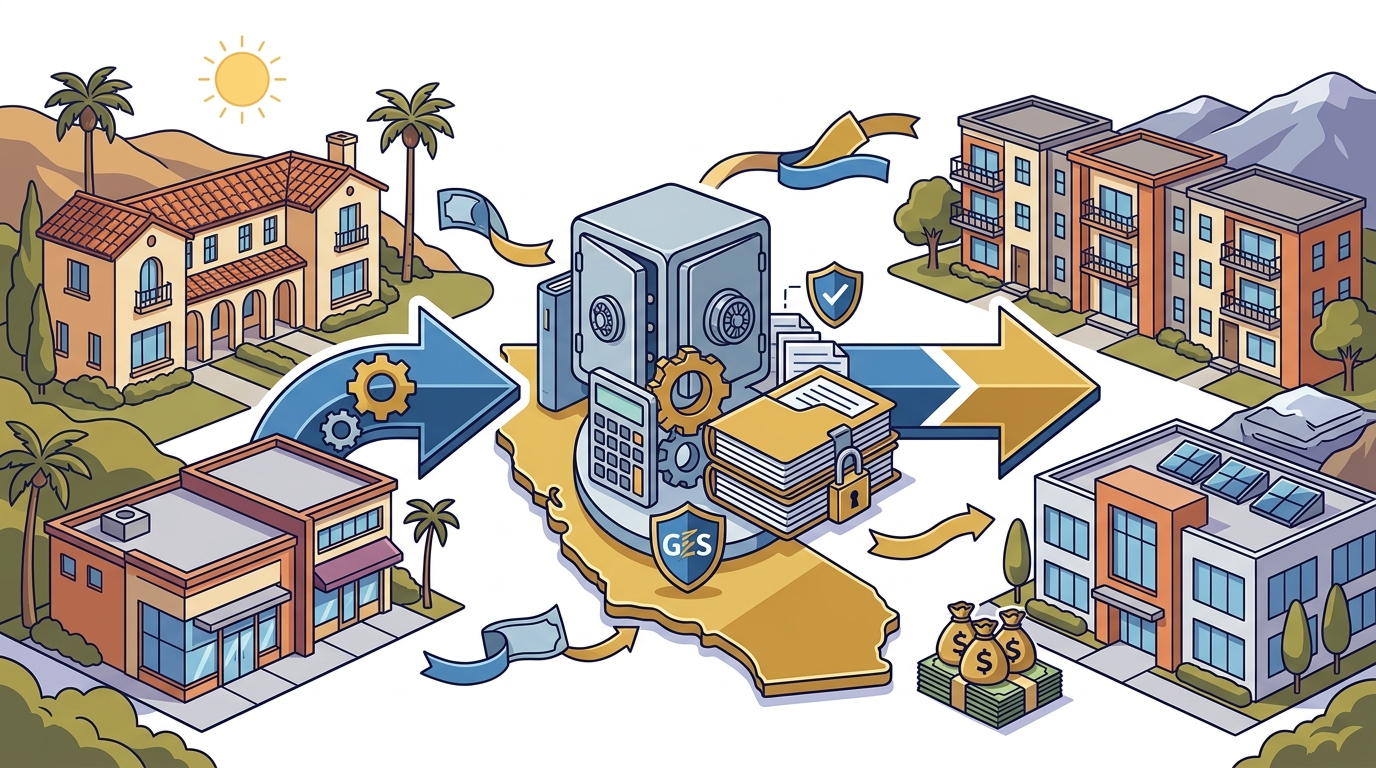
California enforces some of the most stringent real estate transfer and tax compliance requirements in the nation. The state imposes a top marginal income tax rate that significantly amplifies the financial impact of capital gains realization. Properly structured exchanges neutralize these combined state and federal liabilities. California tax code explicitly recognizes Section 1031 deferrals when executed according to federal parameters. Your intermediary must maintain dedicated compliance officers familiar with local recording statutes and transfer disclosure mandates. Navigating county-specific deed transfer requirements demands precise documentation handling. Firms with decades of regional experience prevent costly administrative delays.
Comparing Service Models
Service delivery models vary significantly across the intermediary landscape. Some providers rely on automated software platforms with limited human oversight. Others employ dedicated exchange specialists who manage every document and communication channel. IRS Form 8824 requires meticulous completion to accurately report exchange details to federal authorities. You should evaluate your provider based on response times, document accuracy, and historical dispute resolution rates. Transparent fee structures prevent unexpected charges during the closing process. Select a partner that aligns with your transaction volume and complexity requirements.
| Feature Category | Automated Platform | Dedicated Specialist Model |
|---|---|---|
| Document Handling | Standardized templates | Customized legal drafting |
| Fund Security | Basic trust accounts | FDIC-insured sweep programs |
| Complex Transactions | Limited support | Full reverse and construction handling |
| Client Support | Call center routing | Dedicated exchange specialist |
Key Takeaways
- Over twenty thousand successful exchanges processed annually by top-tier providers.
- More than one billion dollars in exchange funds secured through segregated trust structures.
- Twenty-five years of continuous operational excellence across all fifty states.
- One hundred percent compliance with federal identification and closing deadlines.
- Dedicated legal counsel available for reverse and construction transaction structuring.
- Transparent fee schedules with zero hidden closing charges or processing markups.
Frequently Asked Questions
What defines a qualified intermediary?
A qualified intermediary is a specialized third-party entity that facilitates the legal transfer of property without the investor taking constructive receipt of the sale proceeds.
How long do I have to identify replacement property?
You must identify potential replacement properties within forty-five calendar days from the closing of your relinquished property.
Can I use exchange funds for property renovations?
Yes, construction exchanges allow you to allocate exchange proceeds toward substantial improvements on your replacement property.
What happens if I miss the identification deadline?
Missing the forty-five day window invalidates the entire exchange and triggers immediate capital gains taxation.
Are exchange funds protected from company bankruptcy?
Properly structured funds reside in segregated trust accounts and remain completely insulated from corporate liabilities.
How do I calculate my potential tax savings?
Utilize your provider's proprietary calculator to model deferred capital gains against your current marginal tax bracket.
Start Your Exchange Today
California investors deserve a partner that combines institutional-grade security with personalized expert guidance. Begin your exchange by scheduling a complimentary consultation with our dedicated team. We will structure your transaction to maximize deferral potential while maintaining full regulatory compliance. Contact us today to secure your capital and accelerate your real estate portfolio growth.