

Selecting the right qualified intermediary directly impacts your ability to defer capital gains taxes on investment property sales. According to the Internal Revenue Service, over 45,000 like-kind exchanges were filed annually in recent tax cycles, representing billions in deferred tax liabilities across commercial and residential markets. Investors who partner with an experienced provider avoid costly compliance errors while preserving maximum portfolio value. This guide outlines the exact operational benchmarks you must verify before signing a service agreement. (1031 Exchange Alaska Granite)
Understanding the Role of a Qualified Intermediary
A qualified intermediary is a specialized financial entity that facilitates like-kind property swaps without triggering immediate tax liabilities. The Internal Revenue Code strictly prohibits sellers from receiving or having actual or constructive receipt of sale proceeds. Your accommodator must hold those funds in a segregated trust account until the replacement property closes. This structural separation ensures the transaction remains compliant with federal tax statutes.
You should verify that your provider maintains active IRS compliance standards and carries professional liability insurance. Many investors overlook the importance of dedicated exchange specialists who understand complex valuation metrics. A seasoned team prevents accidental boot generation and ensures your transaction timeline aligns perfectly with statutory deadlines.
Evaluating Fund Security and Insurance Standards
Protecting your exchange proceeds requires rigorous financial safeguards. You must confirm that your accommodator utilizes FDIC-insured depository accounts for all held funds. This insurance covers principal balances up to statutory limits, eliminating counterparty risk during the holding period. Granite Exchange Services maintains segregated, FDIC-insured fund security to protect every dollar throughout the exchange lifecycle.
Look for providers that publish transparent fee schedules and charge flat transaction rates rather than percentage-based models. Percentage fees erode your net proceeds, especially on high-value commercial transactions. You should also verify that your provider holds CES certification, which demonstrates adherence to industry best practices and continuous education requirements. This certification guarantees your intermediary follows updated regulatory guidelines and maintains strict operational controls.
Assessing Exchange Type Versatility and Complexity
Your accommodator must support multiple exchange structures to match your specific investment strategy. A delayed exchange allows you to sell first and purchase later within statutory windows. A reverse exchange enables you to acquire replacement property before selling your current asset. Both structures require precise timing and specialized escrow arrangements.
Advanced investors often require construction or improvement exchanges, which allow you to fund renovations on the replacement property. You should also verify support for Delaware Statutory Trust transactions, which provide fractional ownership in institutional-grade assets. Complex multi-asset exchanges handle mixed property types, including equipment, fixtures, and real estate. Granite Exchange Services offers delayed exchange, reverse exchange, construction exchange, and DST exchange capabilities to match your portfolio goals.
Verifying State Compliance and Geographic Coverage
State tax regulations significantly impact your overall exchange strategy. You must confirm your provider actively serves all fifty states and understands regional recording requirements. Some jurisdictions impose transfer taxes, documentary stamps, or specific deed formatting rules. A knowledgeable accommodator navigates these local nuances without delaying your closing timeline.
Investors in high-tax states benefit from providers who offer state-specific guidance and localized compliance checklists. Granite Exchange Services has guided investors across the country for over twenty-five years, including specialized support for Alabama exchanges and Alaska exchanges. You should request a state compliance matrix before signing your agreement. This document outlines recording fees, transfer taxes, and local filing deadlines for your target jurisdiction.
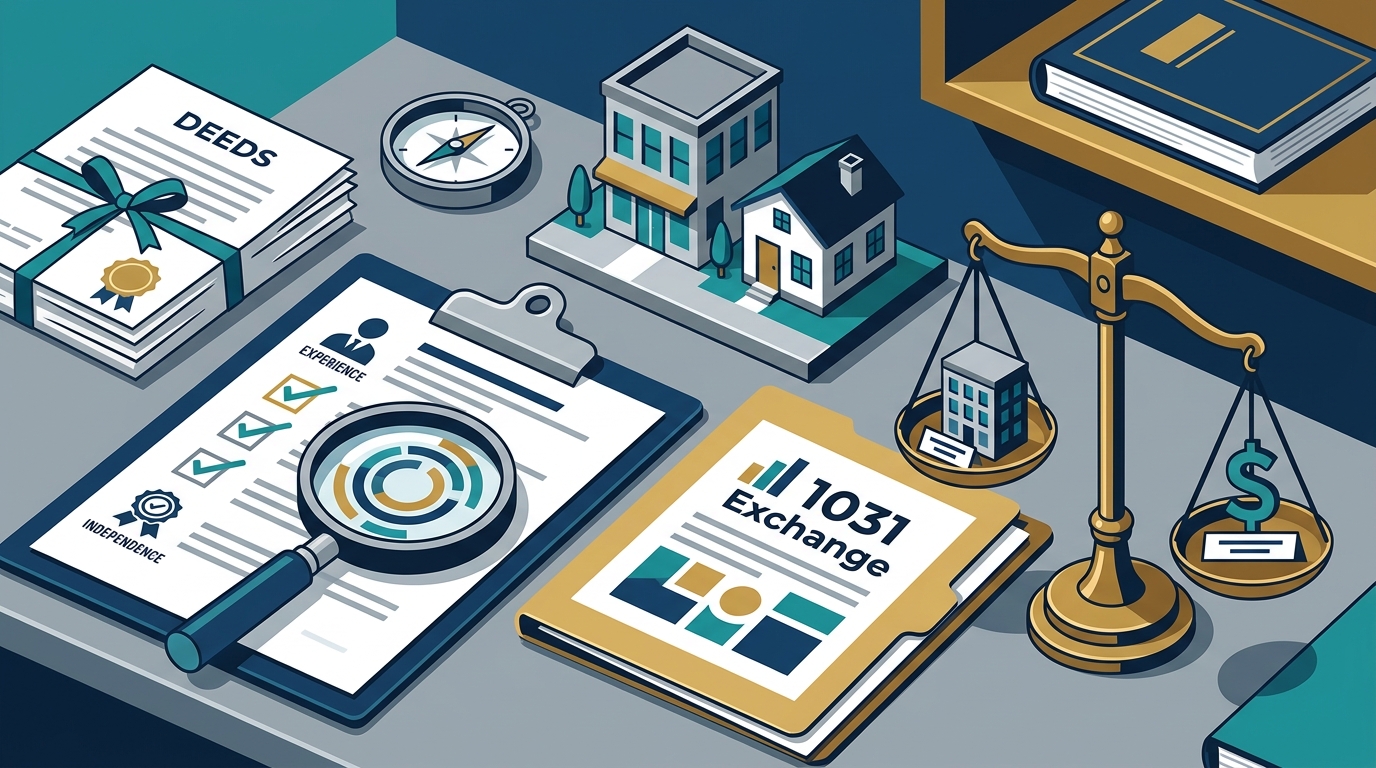
Reviewing Documentation and Reporting Protocols
Accurate recordkeeping prevents IRS audits and ensures smooth transaction processing. Your accommodator must generate comprehensive exchange packages, including identification letters, assignment agreements, and closing statements. You should verify that your provider tracks all statutory deadlines using automated calendar systems. Missing a single deadline invalidates your entire exchange and triggers immediate tax liability.
Form 8824 reporting requires precise matching of relinquished and replacement property values. Your provider should supply detailed reconciliation reports that highlight any boot generation or cash-down scenarios. Granite Exchange Services provides Form 8824 reporting support and maintains a dedicated compliance team. You should request sample documentation packages before committing to a provider. This review process reveals their attention to detail and operational maturity.
| Exchange Structure | Primary Use Case | Key Requirement | Granite Service Link |
|---|---|---|---|
| Delayed Exchange | Sell first, purchase later | 45-day identification window | Delayed Exchange |
| Reverse Exchange | Purchase first, sell later | Exchange accommodation titleholder | Reverse Exchange |
| Construction Exchange | Fund renovations on replacement | Improvement value tracking | Construction Exchange |
| DST Exchange | Fractional institutional ownership | Qualified trustee management | DST Exchange |
Key Takeaways
- Verify FDIC-insured fund segregation and CES certification before signing agreements.
- Confirm support for delayed, reverse, construction, and DST exchange structures.
- Ensure all fifty states are covered with localized compliance checklists.
- Review automated deadline tracking systems to prevent statutory violations.
- Request sample Form 8824 packages to assess documentation accuracy.
- Compare flat transaction fees against percentage-based pricing models.
- Confirm over twenty-five years of operational history and successful exchange volume.
Frequently Asked Questions
What is the primary legal requirement for a qualified intermediary?
A qualified intermediary is a specialized financial entity that facilitates like-kind property swaps without triggering immediate tax liabilities. Federal law prohibits sellers from receiving actual or constructive receipt of sale proceeds during the exchange process.
How long do I have to identify replacement property?
You must identify potential replacement properties within forty-five calendar days from the transfer of your relinquished property. This strict window begins on the closing date of your sale transaction.
What happens if I miss the identification deadline?
Missing the identification window invalidates your entire exchange and triggers immediate capital gains tax liability. Your accommodator cannot extend statutory deadlines under any circumstances.
Are exchange fees tax-deductible?
Exchange fees are generally considered ordinary and necessary business expenses. You should consult your tax advisor regarding specific deduction eligibility for your business structure.
Can I exchange multiple properties simultaneously?
You can structure complex multi-asset exchanges that handle mixed property types, including equipment, fixtures, and real estate. Your accommodator must track each asset separately to ensure proper valuation matching.
What is boot in a 1031 exchange?
Boot is any non-like-kind property or cash received during the exchange process. Boot triggers immediate taxation on the portion of proceeds that do not reinvest into qualifying replacement assets.
How does a Delaware Statutory Trust work?
A Delaware Statutory Trust is a legal entity that holds title to institutional-grade real estate. Investors purchase fractional interests while a qualified trustee manages daily operations and tenant relations.
What documentation do I receive after closing?
You receive a complete exchange package containing identification letters, assignment agreements, closing statements, and Form 8824 reconciliation reports. Your provider should deliver these documents within ten business days of closing.
Next Steps for Your Exchange
Partnering with an experienced provider ensures your transaction remains compliant while maximizing tax deferral benefits. You should schedule a consultation to review your specific property portfolio and exchange timeline. Granite Exchange Services has guided over twenty thousand successful exchanges and secured more than one billion dollars in exchange funds. Visit our main page to begin your exchange today.