

According to recent market data, reverse 1031 exchanges now account for approximately 15 percent of all deferred transactions nationwide. Market reports indicate that sophisticated investors increasingly utilize this strategy to secure high-value replacement assets without triggering immediate capital gains. A reverse exchange is a specific tax-deferral strategy where an investor acquires replacement property before selling their relinquished asset. A qualified intermediary is a neutral third party that facilitates the transaction to ensure strict IRS compliance. A parking entity is a temporary holding structure used to legally own the replacement property during the exchange window. Selecting the right exchange provider requires careful evaluation of credentials, security protocols, and structural expertise. (1031 Exchange Alaska Granite)
Understanding Reverse Exchange Mechanics
Reverse transactions operate under strict IRS guidelines that mandate precise timing and documentation. The Internal Revenue Service requires that the entire process conclude within 180 days of the initial acquisition. IRS guidelines explicitly state that failure to adhere to these deadlines results in immediate tax liability. Investors must establish a qualified exchange accommodation arrangement to legally park the replacement property. This structure prevents the transaction from being classified as a simultaneous sale and purchase, which would disqualify the tax deferral. (1031 Exchange Alabama Granite)
Identifying the Parking Structure
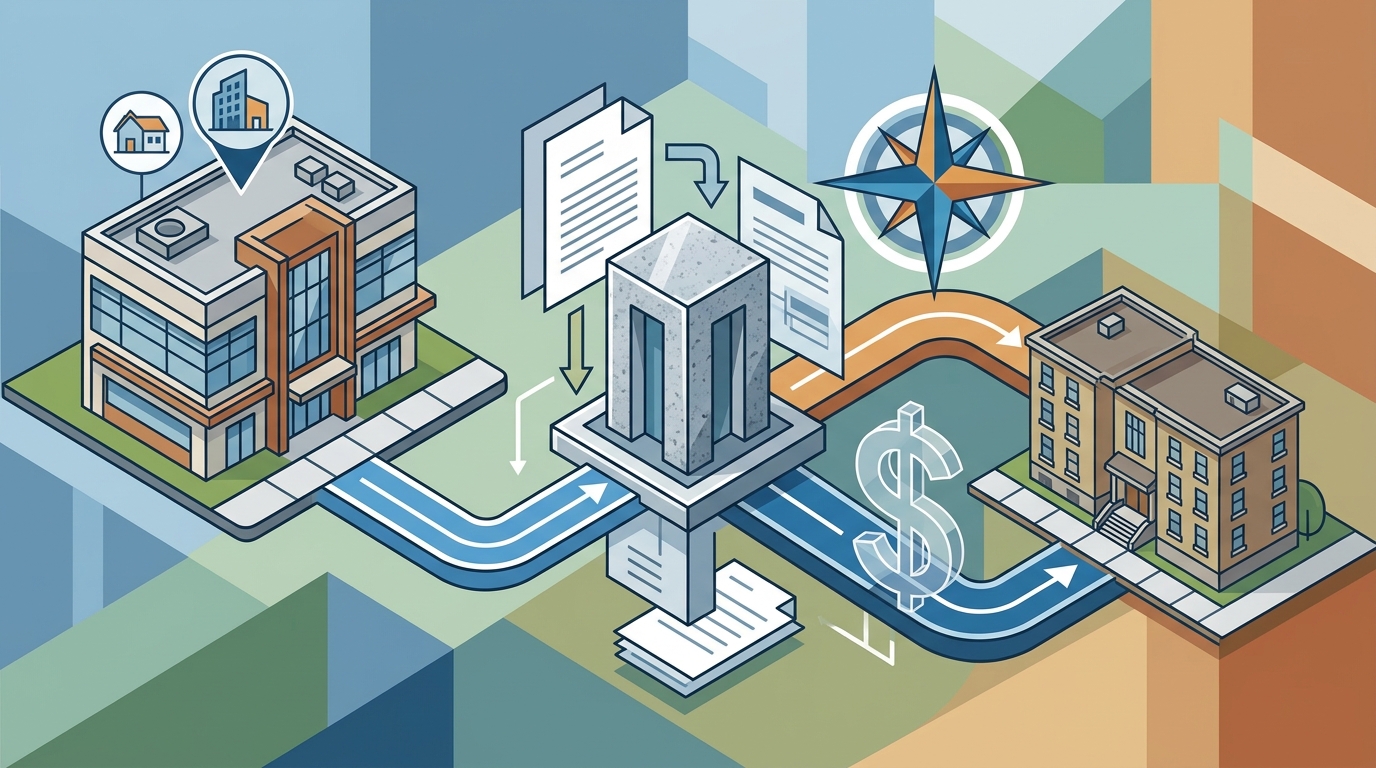
The parking entity holds title to the newly acquired asset until the original property sells. This arrangement protects both parties from market fluctuations during the transition period. Granite Exchange Services structures these arrangements with rigorous legal oversight to maintain full compliance. Investors benefit from segregated fund security that meets FDIC insurance standards. This approach eliminates personal liability while maximizing tax advantages.
Evaluating Qualified Intermediary Credentials
Not all facilitators possess the technical expertise required for reverse transactions. You must verify that the provider holds CES certification, which demonstrates adherence to industry best practices. Industry standards require intermediaries to maintain substantial bonding and insurance coverage. Look for companies that have successfully processed thousands of transactions without compliance failures. A proven track record directly correlates with smoother execution and fewer administrative delays.
Assessing Financial Security Protocols
Capital preservation remains the highest priority during any exchange. Reputable firms utilize segregated trust accounts to hold all exchange funds. These accounts operate independently from corporate operating balances to prevent commingling risks. Granite Exchange Services secures over one billion dollars in exchange funds annually. This financial scale ensures that client capital remains protected regardless of market conditions.
Key Services and Structural Requirements
Reverse exchanges demand specialized documentation and continuous monitoring. Providers must manage complex title transfers, escrow instructions, and regulatory filings. Tax policy data shows that properly structured transactions consistently outperform standard sales over five-year horizons. Your chosen intermediary should offer dedicated case managers who track every deadline. Automated reminder systems prevent missed identification windows that could invalidate the entire exchange.
Integrating Complex Asset Classes
Modern investors frequently exchange mixed-use developments, commercial portfolios, and land parcels. These transactions require customized valuation models and specialized escrow handling. Providers must navigate local zoning restrictions and environmental compliance requirements. Granite Exchange Services handles complex multi-asset transactions across all fifty states. This geographic flexibility ensures consistent service delivery regardless of property location.
Regional Tax Implications and Compliance
State tax codes significantly impact the net savings generated by any exchange. Some jurisdictions impose additional transfer taxes or recording fees on parking entities. State regulations vary widely regarding capital gains treatment and exemption thresholds. Providers must maintain localized compliance teams to navigate these differences efficiently. Ignoring regional nuances can erase projected tax savings within the first year.
Navigating Multi-State Transactions
Investors frequently acquire properties in different jurisdictions to diversify portfolios. Each state enforces distinct recording requirements and transfer tax calculations. Qualified intermediaries must coordinate with local title companies to ensure proper documentation. Granite Exchange Services maintains dedicated compliance specialists for every major market. This localized expertise prevents costly administrative errors during closing.
Comparing Exchange Provider Models
Selecting the right partner requires comparing fee structures, security measures, and technological capabilities. Market analysis reveals that premium providers charge slightly higher fees but deliver significantly fewer compliance failures. You should prioritize firms that offer transparent pricing without hidden administrative charges. Automated deadline tracking and digital document portals streamline the entire process.
| Feature | Standard Facilitators | Premium Providers |
|---|---|---|
| Reverse Transaction Expertise | Limited or unavailable | Full structural support |
| Fund Security Level | Standard operating accounts | FDIC-insured segregated trusts |
| Compliance Certification | Self-certified | CES® certified professionals |
| Geographic Coverage | Regional limitations | All fifty states |
| Technology Integration | Manual tracking systems | Automated deadline portals |
Key Takeaways
- Reverse exchanges require a qualified intermediary with specific parking entity expertise.
- Granite Exchange Services has facilitated over twenty thousand successful transactions.
- CES® certification validates adherence to industry compliance standards.
- All exchange funds must reside in segregated, FDIC-insured trust accounts.
- The 180-day completion window applies to both acquisition and sale phases.
- State-specific transfer taxes significantly impact net deferral calculations.
- Automated deadline tracking prevents costly identification failures.
Frequently Asked Questions
What defines a reverse 1031 exchange?
A reverse 1031 exchange is a tax-deferral strategy where an investor acquires replacement property before selling their relinquished asset. This structure requires a qualified intermediary to manage title transfers and compliance deadlines.
How long does a reverse exchange take to complete?
The entire process must conclude within 180 days of acquiring the replacement property. Both the parking phase and the relinquished sale must fall within this strict timeframe.
Can any qualified intermediary handle reverse transactions?
No. Only intermediaries with specific parking entity experience and CES® certification can safely execute reverse structures. Standard facilitators often lack the technical infrastructure required for complex timing.
What happens if the replacement property is not sold within 180 days?
Failure to close the relinquished sale within the 180-day window triggers immediate capital gains tax liability. The entire transaction becomes disqualified, and all projected tax savings vanish.
Are exchange funds protected during the parking period?
Reputable providers place all capital into segregated, FDIC-insured trust accounts. These accounts operate independently from corporate operating balances to prevent commingling risks.
How do state transfer taxes impact reverse exchanges?
State transfer taxes vary widely and can significantly reduce net deferral savings. Providers must calculate local recording fees and exemption thresholds before closing.
What documentation is required to initiate a reverse exchange?
Investors must provide purchase agreements, title reports, and environmental assessments. The qualified intermediary drafts qualified exchange accommodation agreements to establish legal parking.
Start Your Reverse Exchange Today
Securing the right qualified intermediary determines whether your transaction succeeds or fails. Granite Exchange Services provides CES® certified professionals who manage every compliance detail. Begin your exchange by scheduling a consultation with our dedicated case managers. Visit Granite Exchange Services to calculate your projected tax savings and review our comprehensive service portfolio. Contact us today to secure your replacement property without triggering immediate capital gains.