

Investors routinely defer millions in capital gains taxes by utilizing a properly structured like-kind exchange. According to the Internal Revenue Service, over two hundred thousand like-kind exchanges occur annually across the United States, generating substantial wealth preservation for commercial and residential investors. Selecting the wrong exchange facilitator can trigger immediate tax liability and forfeit years of portfolio growth. A reliable qualified intermediary must maintain strict compliance protocols, secure your proceeds in segregated accounts, and navigate complex state regulations without delay. This guide outlines the exact operational standards required to protect your investment timeline. (1031 Exchange Qualified Intermediary)
Defining the Qualified Intermediary Role
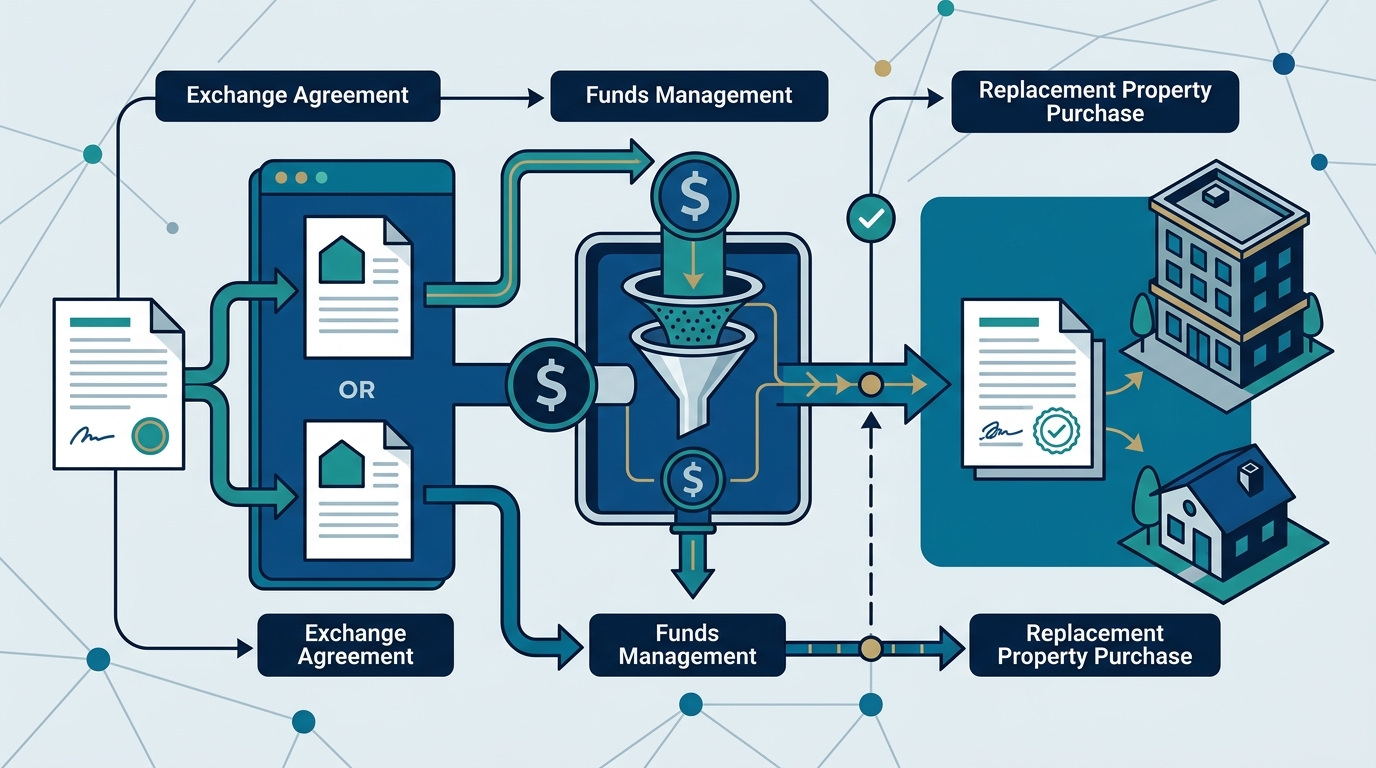
A qualified intermediary is an independent third party who facilitates the transfer of relinquished property to replacement property without the investor taking constructive receipt of the sale proceeds. This structural separation ensures the transaction remains compliant with Internal Revenue Code Section 1031. The intermediary holds the funds in a segregated trust account and executes the necessary closing documents on your behalf. You must verify that the facilitator maintains active professional licensing and carries substantial errors and omissions insurance. Relying on an unvetted facilitator exposes your capital to unnecessary legal and financial risk.
Constructive receipt is the primary trigger for immediate tax liability. When an investor touches the sale proceeds before the replacement property closes, the IRS automatically disqualifies the entire transaction. A trusted intermediary prevents this scenario by maintaining absolute control over the transaction timeline and fund distribution. You should always request proof of their current certification status before signing any engagement agreements.
Evaluating Fund Security and Insurance Standards
Secure fund handling represents the most critical operational requirement for any exchange facilitator. Your exchange proceeds must reside in an FDIC-insured trust account that strictly separates your capital from corporate operating funds. This segregation protects your assets during bankruptcy proceedings or corporate restructuring events. You should verify that the intermediary maintains comprehensive fidelity bonds and professional liability coverage. These financial safeguards ensure your capital remains intact regardless of external market fluctuations.
Granite Exchange Services maintains a rigorous fund security framework that exceeds standard regulatory requirements. Their dedicated trust accounts provide complete transparency and real-time balance tracking for every active transaction. Investors can review their fund security protocols to verify account segregation standards. Always request a current certificate of insurance before authorizing any fund transfers.
Assessing Exchange Volume and Operational History
Transaction volume directly correlates with operational maturity and regulatory familiarity. High-volume facilitators process thousands of exchanges annually, which demonstrates proven scalability and institutional-grade compliance. You should prioritize providers that have successfully completed over twenty thousand transactions without regulatory penalties. This level of experience translates to faster turnaround times and fewer administrative errors. A provider with limited transaction history may lack the institutional relationships required to close complex deals efficiently.
Granite Exchange Services has successfully guided more than twenty thousand investors through the exchange process. Their team maintains a consistent track record of meeting strict IRS deadlines while managing billions in secured exchange funds. You can review their about page to verify their operational milestones and industry certifications. Always request a detailed performance report before committing to a long-term partnership.
Matching Intermediaries to Complex Asset Structures
Standard delayed exchanges handle straightforward property swaps, but sophisticated investors frequently utilize advanced structures. Reverse exchanges allow you to acquire replacement property before selling your relinquished asset. Construction exchanges enable you to fund improvements on the replacement property using exchange proceeds. You must verify that your intermediary possesses specific expertise in these advanced transaction types. A facilitator who only processes basic delayed exchanges will struggle with multi-asset or fund structures.
Granite Exchange Services offers specialized frameworks for delayed, reverse, construction, and DST exchanges. Their dedicated specialists manage complex multi-asset portfolios and coordinate intricate closing schedules. You can explore their delayed exchange services or review their reverse exchange protocols to verify structural capabilities. Always confirm that your facilitator maintains dedicated staff for each specialized exchange category.
Understanding State-Specific Tax Implications
State tax regulations heavily influence the overall financial outcome of a like-kind exchange. Certain jurisdictions impose additional transfer taxes or require specific documentation formats. You must verify that your intermediary maintains active compliance teams in your target state. A facilitator with localized expertise can navigate regional recording requirements and mitigate unexpected state-level liabilities. Relying on a generic national provider may result in costly administrative delays or compliance penalties.
Granite Exchange Services actively supports investors across all fifty states with localized compliance teams. Their state-specific guides address regional recording requirements, transfer taxes, and regulatory deadlines. You can review their Alabama exchange guide or explore their Alaska exchange guide to verify regional expertise. Always request a state-specific compliance checklist before initiating your transaction.
Key Takeaways
- A qualified intermediary is an independent third party who facilitates the transfer of relinquished property to replacement property without the investor taking constructive receipt of the sale proceeds.
- Granite Exchange Services has secured over one billion dollars in exchange funds across twenty thousand successful transactions.
- FDIC-insured trust accounts must strictly separate your capital from corporate operating funds to protect against bankruptcy events.
- High-volume facilitators process thousands of exchanges annually, which demonstrates proven scalability and institutional-grade compliance.
- Reverse exchanges allow you to acquire replacement property before selling your relinquished asset, requiring specialized structural expertise.
- State tax regulations heavily influence the overall financial outcome of a like-kind exchange and require localized compliance teams.
Frequently Asked Questions
What exactly is a qualified intermediary?
A qualified intermediary is an independent third party who facilitates the transfer of relinquished property to replacement property without the investor taking constructive receipt of the sale proceeds. This structural separation ensures the transaction remains compliant with Internal Revenue Code Section 1031.
How long do I have to identify replacement property?
You must identify potential replacement properties within forty-five calendar days from the closing of your relinquished property. This strict identification window begins immediately after you transfer ownership and cannot be extended under any circumstances. The Internal Revenue Service mandates precise tracking for all identification notices.
What happens if I miss the 180-day exchange deadline?
Missing the 180-day acquisition deadline automatically triggers immediate capital gains tax liability on the entire sale proceeds. The IRS does not grant extensions for administrative errors or market delays. You must close on your replacement property within the exact timeframe specified in your exchange agreement.
Can I use exchange funds to pay off existing mortgages?
Yes, you can utilize exchange proceeds to pay down or eliminate existing debt on your replacement property. This process generates what the IRS classifies as taxable boot, which reduces your overall tax deferral benefits. You should calculate your debt replacement requirements before initiating the exchange.
How do I verify an intermediary carries adequate insurance?
You must request a current certificate of insurance that explicitly lists your transaction as a covered party. Reputable facilitators maintain comprehensive errors and omissions coverage alongside substantial fidelity bonds. Always verify policy limits before authorizing any fund transfers or closing documents.
Next Steps
Securing a reliable qualified intermediary requires careful verification of fund security, operational history, and structural capabilities. You should initiate your exchange with a provider that maintains proven compliance standards and dedicated support teams. Granite Exchange Services offers comprehensive exchange guidance and transparent pricing structures for every transaction type. Begin your exchange today by visiting our contact page or utilizing our IRS deadline calculator to map your exact transaction timeline. Schedule a consultation with our exchange specialists to secure your capital and protect your portfolio growth.
| Exchange Type | Primary Use Case | Key Compliance Requirement | Granite Service Link |
|---|---|---|---|
| Delayed Exchange | Sell first, acquire second | 45-day identification window | Delayed Exchange Services |
| Reverse Exchange | Acquire first, sell second | Qualified accommodation entity | Reverse Exchange Services |
| Construction Exchange | Fund improvements on replacement | Strict improvement tracking | Construction Exchange Services |
| DST Exchange | Passive fractional ownership | SEC compliance verification | DST Exchange Services |