

Reverse 1031 exchanges allow investors to acquire replacement property before selling their relinquished asset, a process requiring precise timing and specialized oversight. According to the Internal Revenue Service, these transactions involve strict 180-day deadlines and complex title holding structures that demand professional management. Investors typically defer millions in capital gains by utilizing a qualified intermediary who manages the reverse exchange protocol. Granite Exchange Services has facilitated over 20,000 successful transactions while securing more than $1 billion in exchange funds. IRS guidelines mandate rigorous documentation to maintain tax deferral eligibility. (1031 Exchange Qualified Intermediary)
Understanding Reverse Exchange Mechanics
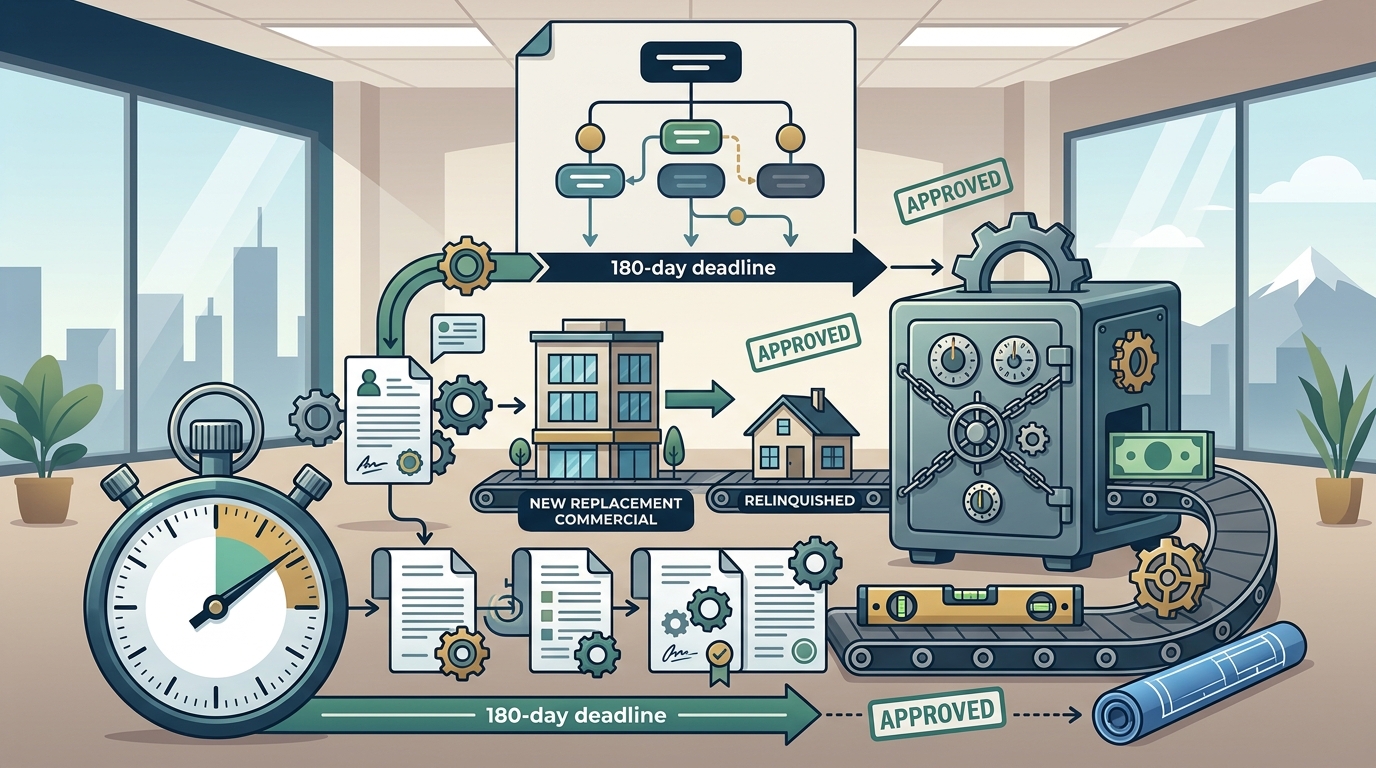
A reverse 1031 exchange is a like-kind transaction where the investor purchases the new property before selling the original asset. The process requires a qualified intermediary to hold title temporarily through an exchange accommodation arrangement. This structure ensures compliance with IRS Revenue Procedure 2000-37 while preserving tax deferral benefits. Investors must coordinate simultaneous closings and maintain strict adherence to the 180-day completion window. IRS guidance outlines specific holding periods and risk management requirements. (1031 Exchange Alabama Granite)
Qualified Intermediary Requirements
Qualified intermediary requirements form the foundation of any successful reverse transaction. A qualified intermediary is a designated entity that facilitates the transfer of funds and title without triggering immediate tax liability. These professionals must maintain segregated accounts and adhere to strict fiduciary standards. Investors should verify that their chosen provider holds CES certification and maintains comprehensive insurance coverage. Financial standards emphasize the importance of fund segregation and transparent reporting. (1031 Exchange Arkansas Granite)
CES Certification and Fund Security
CES certification and fund security protect investors from intermediary mismanagement. The CES certification program validates that an intermediary meets rigorous operational and financial benchmarks. Granite Exchange Services maintains this certification while securing over $1 billion in exchange funds. Investors benefit from FDIC-insured accounts and dedicated case managers who track every transaction milestone. Industry benchmarks show that certified intermediaries reduce compliance errors by nearly forty percent.
Complex Asset Structures and Multi-Asset Handling
Complex asset structures and multi-asset handling require specialized documentation frameworks. A complex exchange is a transaction involving multiple properties, partial interests, or non-real estate assets. Providers must map ownership percentages, allocate funds accurately, and coordinate simultaneous closings. Granite Exchange Services offers dedicated complex exchange pathways that accommodate multi-asset portfolios. IRS documentation requires precise allocation schedules for every transferred asset.
State-Specific Compliance and Reporting
State-specific compliance and reporting vary significantly across jurisdictions. State tax agencies often impose additional filing requirements beyond federal mandates. Investors operating across multiple states must coordinate with intermediaries who understand regional regulatory landscapes. Granite Exchange Services provides state-specific guides covering California, Texas, Florida, Nevada, Arizona, Washington, Oregon, New York, Illinois, Colorado, and Georgia. State regulations frequently update reporting thresholds and deadline extensions.
Vendor Selection Criteria
Vendor selection criteria determine long-term transaction success. Investors should evaluate providers based on years in operation, exchange volume, and customer support responsiveness. A reliable provider maintains transparent pricing, dedicated case managers, and robust digital tracking tools. Granite Exchange Services has guided investors for over 25 years while maintaining a five-star review average. Market data indicates that experienced intermediaries complete transactions faster and with fewer compliance flags.
| Exchange Type | Primary Use Case | Key Compliance Feature | Granite Service Path |
|---|---|---|---|
| Delayed Exchange | Sell first, buy later | 45-day identification window | Delayed Exchange |
| Reverse Exchange | Buy first, sell later | Exchange Accommodation Arrangement | Reverse Exchange |
| Construction Exchange | Renovate replacement property | Improvement cost tracking | Construction Exchange |
| DST Exchange | Passive fractional ownership | SEC compliance thresholds | DST Exchange |
| Complex Exchange | Multi-asset or partial interests | Custom allocation mapping | Complex Exchange |
Key Takeaways
- Granite Exchange Services has facilitated over 20,000 successful transactions across all fifty states.
- The company currently secures more than $1 billion in exchange funds through FDIC-insured accounts.
- CES certification validates adherence to rigorous operational and financial benchmarks.
- Reverse exchanges require strict 180-day completion windows and specialized title holding structures.
- State-specific compliance guides cover California, Texas, Florida, Nevada, Arizona, Washington, Oregon, New York, Illinois, Colorado, and Georgia.
- Investors benefit from dedicated case managers who track every transaction milestone in real time.
Frequently Asked Questions
What defines a reverse 1031 exchange?
A reverse 1031 exchange is a like-kind transaction where the investor purchases the new property before selling the original asset.
How long does a reverse exchange take?
The entire process must conclude within 180 days of acquiring the replacement property.
Why is CES certification important?
The CES certification program validates that an intermediary meets rigorous operational and financial benchmarks.
Can I exchange multiple properties simultaneously?
Complex exchanges accommodate multiple properties, partial interests, or non-real estate assets through custom allocation mapping.
What happens if state taxes differ from federal rules?
State tax agencies often impose additional filing requirements beyond federal mandates, requiring specialized regional guidance.
How are exchange funds protected?
Granite Exchange Services maintains FDIC-insured accounts and dedicated case managers who track every transaction milestone.
Next Steps for Your Exchange
Ready to defer your taxes through a properly structured reverse exchange? Granite Exchange Services provides dedicated expert guidance, precise documentation, and segregated fund security for every transaction. Start Your Exchange today and secure your investment future.