

Investors routinely defer millions in capital gains by utilizing like-kind exchanges. According to the Internal Revenue Service, over two hundred thousand transactions occur annually across the United States. Selecting the wrong intermediary can trigger immediate tax liability and forfeit years of portfolio growth. You must evaluate their operational framework before signing any agreement. This guide outlines the critical benchmarks for securing your exchange proceeds. (1031 Exchange Alaska Granite)
Understanding the Qualified Intermediator Role
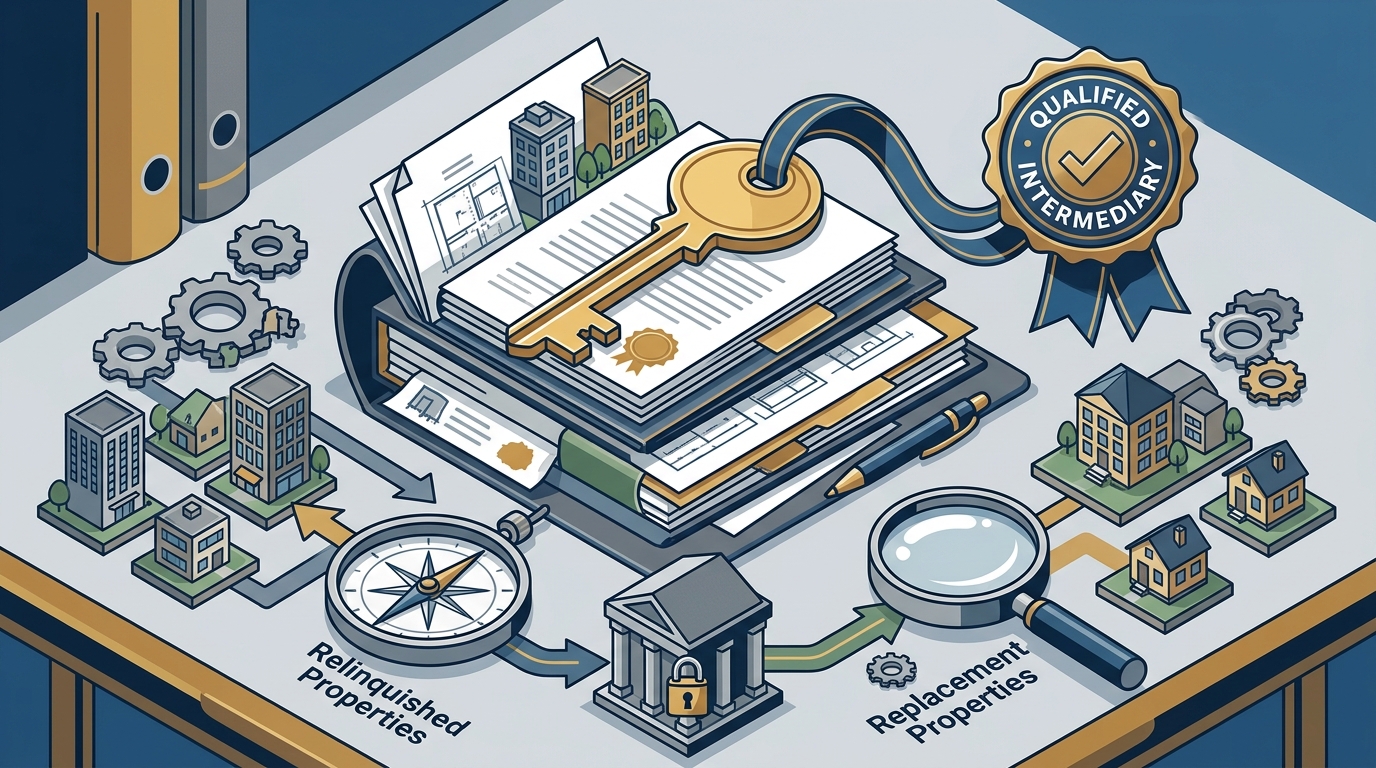
A qualified intermediary is a neutral third party who facilitates the transfer of proceeds during a like-kind exchange. You cannot complete this transaction without delegating the sale proceeds to this designated entity. The intermediary holds your funds, drafts the necessary assignment documents, and ensures strict adherence to federal timelines. Many investors mistakenly attempt to handle the transfer themselves, which immediately voids the tax deferral. You should verify that the company maintains active certification through recognized industry bodies. This credential guarantees they follow current regulatory standards. Your provider must demonstrate a clear separation between client funds and corporate operating capital. You should request their operating history and verify their standing with the Better Business Bureau. A seasoned provider understands the precise legal boundaries that protect your deferral status.
Evaluating Fund Security and Insurance Protocols
Fund security refers to the legal segregation of exchange proceeds within FDIC-insured trust accounts. Your capital must never commingle with corporate operating funds or client operating accounts. Reputable firms utilize dedicated trust accounts that protect your principal from business liabilities or bankruptcy proceedings. You should request proof of their fidelity bonds and error and omission insurance coverage. These policies provide additional financial protection if administrative errors occur during the transfer process. Always confirm that your funds remain fully accessible upon successful acquisition of the replacement property. You should also verify that their trust accounts meet current banking regulatory requirements. A provider lacking robust insurance coverage exposes your entire portfolio to unnecessary financial risk. You must prioritize firms that publish their security protocols transparently.
Assessing Exchange Type Versatility and Complexity
The standard delayed exchange requires you to identify a replacement property within forty-five days. You must close on that property within one hundred and eighty days. Advanced investors often utilize reverse exchanges to acquire replacement property before selling their current asset. Construction exchanges allow you to fund improvements on the replacement property using your exchange proceeds. You should verify that your accommodator supports delayed, reverse, construction, and DST structures. A single provider handling multiple exchange types reduces administrative friction and ensures consistent documentation standards. You should also confirm their ability to manage complex multi-asset transactions. A rigid provider will force you to engage multiple vendors, increasing your compliance costs. You must select a partner capable of scaling alongside your growing portfolio.
Verifying State-Specific Compliance and Reporting Standards
State tax agencies maintain distinct reporting requirements for like-kind transactions. You must ensure your intermediary files Form 8824 accurately and submits required state disclosures. Certain jurisdictions impose additional transfer taxes or recording fees that impact your overall return. Your provider should maintain updated guides for every state where you hold investment properties. This localized expertise prevents costly filing errors and ensures full regulatory compliance. You should also confirm their ability to handle multi-state transactions without requiring multiple third-party vendors. According to the National Association of Real Estate Investment Trusts, cross-state transactions require precise jurisdictional mapping. Your provider must demonstrate a proven track record of navigating these regional nuances. You should request their state-specific documentation templates before committing to their services.
Reviewing Technology Integration and Deadline Tracking
Modern exchanges rely on automated deadline calculators and secure document portals. You should demand a transparent tracking system that sends automated alerts before critical dates expire. Manual tracking increases the risk of missing the forty-five day identification window. Your provider must offer a secure online dashboard for uploading assignment documents and tracking fund disbursements. Real-time visibility allows you to monitor your exchange status without constant phone calls. You should verify that their platform integrates seamlessly with your title company and legal counsel. A robust technology stack reduces human error and accelerates document processing. You should also confirm that their system generates automated reminders for your legal team. Technology integration is no longer optional for high-volume investors.
| Accommodator Feature | Standard Provider | Elite Provider Standard |
|---|---|---|
| Fund Segregation | Commingled operating accounts | Dedicated FDIC-insured trust accounts |
| Exchange Types | Delayed exchanges only | Delayed, reverse, construction, and DST structures |
| State Compliance | Generic federal filing support | Multi-state specific guides and Form 8824 handling |
| Technology Access | Email-based document exchange | Secure client portal with automated deadline tracking |
| Industry Certification | Self-certified operations | CES certified with active fidelity bonds |
Key Takeaways
- A qualified intermediary is a neutral third party who facilitates the transfer of proceeds during a like-kind exchange.
- Fund security refers to the legal segregation of exchange proceeds within FDIC-insured trust accounts.
- Boot occurs when the replacement property value or equity falls short of the relinquished property, triggering immediate taxable gains.
- Elite providers support delayed, reverse, construction, and DST structures under one operational umbrella.
- Multi-state compliance requires updated guides and precise Form 8824 handling for every jurisdiction.
- Automated deadline tracking prevents missed identification windows and protects your tax deferral.
- Industry certification and active fidelity bonds provide essential financial protection for your capital.
Frequently Asked Questions
What defines a qualified intermediary?
A qualified intermediary is a neutral third party who facilitates the transfer of proceeds during a like-kind exchange. They hold your sale proceeds, draft assignment documents, and ensure strict adherence to federal timelines.
How are exchange funds protected?
Fund security refers to the legal segregation of exchange proceeds within FDIC-insured trust accounts. Your capital never commingles with corporate operating funds or client operating accounts.
What happens if I miss the identification deadline?
Missing the forty-five day window invalidates your entire exchange. You become immediately liable for all capital gains taxes and depreciation recapture on the original sale.
Can one accommodator handle multiple exchange types?
Yes, elite providers support delayed, reverse, construction, and DST structures under one operational umbrella. This consolidation reduces administrative friction and ensures consistent documentation standards.
How do state regulations impact my exchange?
State tax agencies maintain distinct reporting requirements for like-kind transactions. Your intermediary must file Form 8824 accurately and submit required state disclosures to avoid penalties.
What is boot in a 1031 exchange?
Boot occurs when the replacement property value or equity falls short of the relinquished property, triggering immediate taxable gains. You must equalize property values and debt to avoid triggering this tax event.
Secure Your Exchange with Precision
Stop guessing which provider meets your complex requirements. Our team has guided over twenty thousand successful transactions across all fifty states. We utilize CES certified protocols, FDIC-insured fund security, and automated deadline tracking to protect your capital. Start your exchange today and defer your taxes with absolute confidence. Our experts are ready to handle your delayed, reverse, or construction exchange with institutional-grade precision.