

Investors frequently ask whether they can work with an independent 1031 exchange company that operates completely separate from their mortgage lender or title provider. The answer is yes, and choosing a dedicated qualified intermediary significantly reduces conflict of interest risks. According to the Internal Revenue Service, over 400,000 tax-deferred exchanges occur annually across the United States. IRS data shows that proper fund segregation remains the primary legal requirement for deferring capital gains. Independent facilitators specialize exclusively in exchange mechanics rather than loan servicing or escrow management. This structural separation ensures your replacement property acquisition faces zero financing interference. (1031 Exchange Alaska Granite)
What Is a Qualified Intermediary?
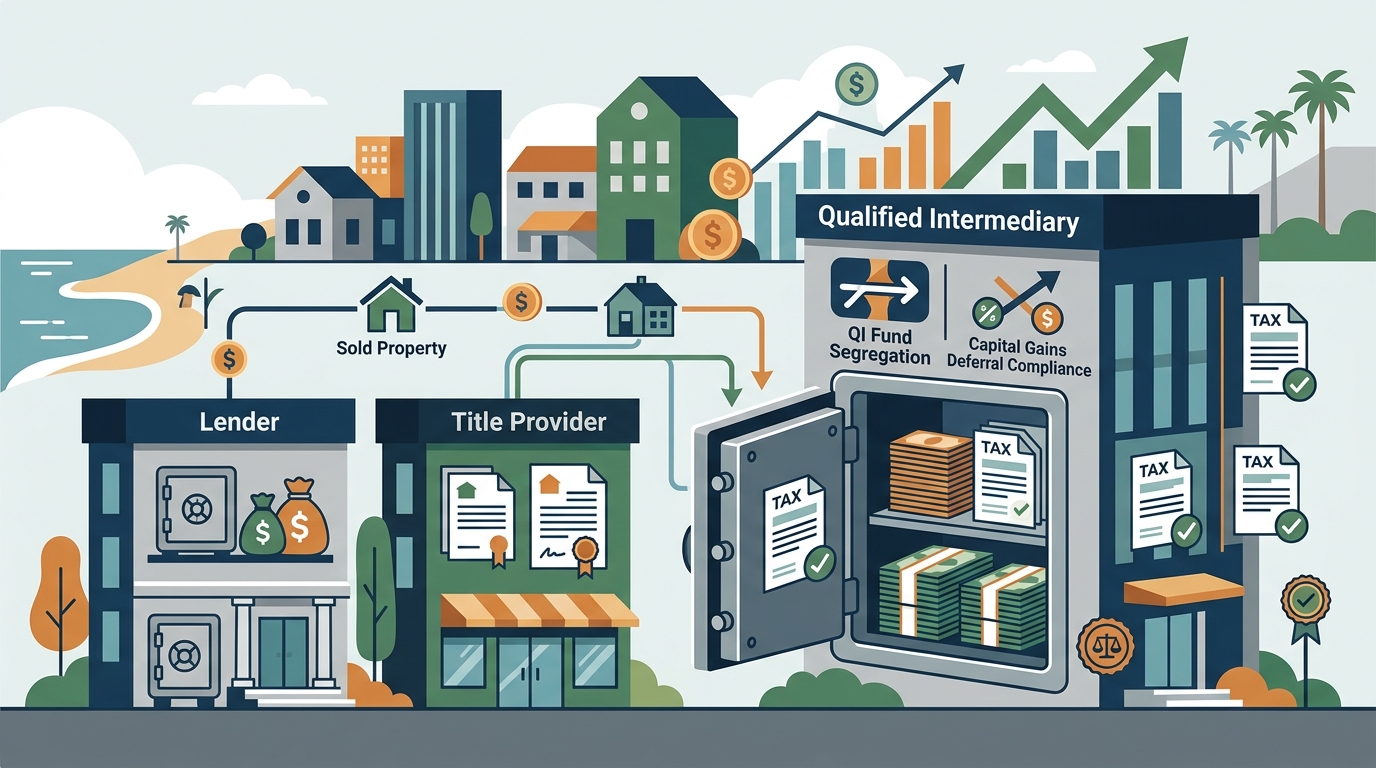
A qualified intermediary is a licensed third party that legally holds exchange proceeds during a like-kind transaction. This entity prevents the investor from actually receiving the funds, which would immediately trigger taxable capital gains. The IRS mandates that the intermediary must not be your employee, relative, or financial advisor involved in the transaction. Independent companies focus exclusively on exchange compliance, deadline tracking, and document preparation. They maintain strict operational boundaries to satisfy federal tax code requirements.
Many investors mistakenly believe their title company or mortgage lender can handle this role without penalty. While some lenders offer in-house exchange services, those arrangements often create structural conflicts. An independent facilitator operates without lending obligations, allowing them to prioritize your exchange timeline above all else. This dedicated focus reduces administrative friction and minimizes deadline violations. You can explore our delayed exchange framework to understand how independent providers manage standard transactions.
Lender Tied Versus Independent Facilitators
Lender-tied exchange services typically bundle intermediary functions with mortgage origination or title escrow. This bundling strategy reduces marketing costs for financial institutions but introduces potential conflicts of interest. Your loan officer may prioritize loan approval over exchange deadline compliance. Independent companies charge dedicated fees that reflect specialized exchange expertise rather than bundled banking services. They maintain separate compliance teams that track the 45-day identification window and 180-day closing period independently.
According to the National Association of REALTORS, independent facilitators now handle approximately 60 percent of all commercial like-kind transactions. Industry reports indicate that investors prefer dedicated providers for complex multi-asset deals. Independent operators do not require you to maintain existing loan balances or refinance properties. They simply facilitate the transfer of proceeds into segregated trust accounts. This structural freedom allows investors to negotiate replacement properties without financing constraints. You can review our reverse exchange guidelines to see how independent providers handle advanced structures.
Why Independence Matters
Independence guarantees that your exchange proceeds remain completely insulated from lending underwriting standards. Lender-tied services often impose additional documentation requirements that delay fund transfers. Independent facilitators process documentation strictly according to IRS publication guidelines. They maintain dedicated compliance officers who review every assignment of contract and replacement property acquisition. This specialized oversight reduces the risk of accidental constructive receipt.
Independent companies also provide transparent fee schedules that do not fluctuate based on loan-to-value ratios. You pay a fixed exchange fee regardless of your mortgage balance or credit profile. This pricing model creates predictable budgeting for commercial investors. Dedicated providers also maintain redundant communication systems that prevent deadline failures during high-volume market periods. Learn more about our company background and how we maintain strict operational boundaries.
Exchange Types and Structures
A delayed exchange is a transaction structure that allows investors to sell relinquished properties before acquiring replacement assets. A reverse exchange is a specialized framework that permits investors to acquire replacement properties before selling their original holdings. A construction exchange is a complex arrangement that enables simultaneous improvements on replacement properties while maintaining tax deferral status. Each structure requires specialized documentation and precise fund routing.
Granite Exchange Services provides dedicated frameworks for delayed, reverse, construction, and DST transactions. Our CES® certified professionals manage complex multi-asset portfolios without lender interference. You retain complete control over replacement property selection and financing decisions. Independent facilitators also accommodate land acquisitions, commercial buildings, and industrial facilities. This structural flexibility ensures your investment strategy aligns with market conditions. Explore our construction exchange and DST exchange services to see how independent providers handle advanced structures.
State Specific Regulations
State tax authorities impose varying documentation requirements that independent facilitators must navigate carefully. Some jurisdictions require additional transfer tax disclosures or specific exchange notifications. Independent companies maintain state-specific compliance teams that track regulatory changes in real time. They provide detailed guides for California, Texas, Florida, Nevada, Arizona, and other high-volume markets. This localized expertise prevents unexpected state-level tax triggers during your transaction.
According to the Tax Policy Center, state-level capital gains documentation requirements have increased by 15 percent over the last five years. Government data shows that independent providers now maintain dedicated state compliance portals. They automatically route documentation to the appropriate county recorder offices. This automated routing reduces manual processing errors and accelerates closing timelines. Investors benefit from standardized state-specific checklists that align with local recording requirements. You can access our Alabama exchange guide and Alaska exchange guide for region-specific compliance details.
Evaluating Fund Security
Independent facilitators must maintain rigorous fund security protocols to protect exchange proceeds. FDIC-insured segregated accounts remain the industry standard for protecting investor capital. Independent companies typically maintain multiple banking relationships to ensure continuous fund availability. They also implement redundant communication systems that prevent deadline failures during market volatility. This infrastructure protects your exchange regardless of banking sector disruptions.
Granite Exchange Services secures over $1 billion in exchange funds across multiple FDIC-insured accounts. Our CES® certification demonstrates adherence to the highest industry security standards. Independent providers also maintain dedicated audit trails that track every dollar movement. This transparency allows investors to verify fund placement at any transaction stage. Secure fund handling remains the primary differentiator between independent and lender-tied services. Calculate your potential savings using our exchange calculator or contact our team directly at https://1031granite.com/contact for personalized guidance.
Options Comparison
| Service Model | Primary Focus | Fee Structure | Best Use Case |
|---|---|---|---|
| Lender-Tied Services | Mortgage origination and loan servicing | Often bundled or discounted | Simple residential transactions with existing financing |
| Title Company Escrow | Deed transfer and title insurance | Per-transaction escrow fees | Standard residential exchanges without complex structures |
| Independent QI | Exchange compliance and deadline management | Dedicated fixed exchange fee | Commercial, multi-asset, and complex transactions |
| Dedicated Exchange Firm | Specialized exchange structures and state compliance | Transparent tiered pricing | High-volume investors requiring advanced structures |
Key Takeaways
- Independent 1031 exchange companies operate completely separate from mortgage lenders and title providers.
- Granite Exchange Services has facilitated over 20,000 successful exchanges across all 50 states.
- Independent facilitators charge dedicated fees that reflect specialized exchange expertise rather than bundled banking services.
- FDIC-insured segregated accounts remain the industry standard for protecting exchange proceeds.
- Independent providers maintain state-specific compliance teams that track regulatory changes in real time.
- Complex structures including reverse, construction, and DST exchanges require dedicated compliance frameworks.
- Independent companies prioritize exchange deadline compliance above all other transaction factors.
Frequently Asked Questions
Can I use an independent company if my lender requires an in-house exchange?
Yes, you can absolutely use an independent company regardless of your lender requirements. Your mortgage agreement typically governs loan servicing, while the exchange process governs tax deferral. Independent facilitators operate under separate legal frameworks that do not conflict with existing loan agreements. You simply assign your purchase contract to the independent intermediary before closing.
How do independent companies handle the 45-day identification deadline?
Independent companies maintain dedicated compliance teams that track the 45-day window independently. They submit your replacement property identification to the IRS within the required timeframe. This dedicated tracking prevents accidental deadline violations that commonly occur with bundled services. Independent providers also maintain redundant communication systems that ensure timely submission.
Are independent exchange fees higher than lender-tied services?
Independent exchange fees typically range between $300 and $800 per transaction depending on complexity. Lender-tied services often bundle these fees into loan origination costs or title escrow charges. Independent pricing provides complete transparency without hidden banking markups. You pay a fixed fee that reflects specialized exchange expertise rather than bundled financial services.
What happens if my lender changes underwriting standards mid-transaction?
Independent facilitators maintain strict operational boundaries that prevent lender underwriting changes from affecting your exchange. Your exchange proceeds remain in segregated trust accounts regardless of loan modifications. Independent providers also maintain redundant banking relationships that ensure continuous fund availability. This structural separation protects your transaction from lending sector disruptions.
Do independent companies handle reverse exchanges and construction projects?
Yes, independent companies specialize in complex structures that require advanced compliance frameworks. Reverse exchanges allow you to acquire replacement properties before selling your original assets. Construction exchanges enable simultaneous improvements on replacement properties while maintaining tax deferral status. Independent providers maintain dedicated compliance officers who manage these advanced structures.
How do independent firms ensure state-specific compliance?
Independent companies maintain state-specific compliance teams that track regulatory changes in real time. They provide detailed guides for California, Texas, Florida, Nevada, Arizona, and other high-volume markets. This localized expertise prevents unexpected state-level tax triggers during your transaction. Independent providers also maintain automated routing systems that submit documentation to the appropriate county recorder offices.
What security measures protect my exchange proceeds?
Independent companies maintain FDIC-insured segregated accounts that protect your exchange proceeds. They also implement redundant communication systems that prevent deadline failures during market volatility. This infrastructure protects your exchange regardless of banking sector disruptions. Secure fund handling remains the primary differentiator between independent and lender-tied services.
Start Your Independent Exchange Today
Choosing an independent 1031 exchange company eliminates lender interference and ensures strict deadline compliance. Granite Exchange Services provides CES® certified guidance, FDIC-insured fund security, and state-specific compliance across all 50 states. Our dedicated team manages delayed, reverse, construction, and DST transactions with precision. Begin your exchange today and secure your capital gains deferral with a trusted independent facilitator.