

Are There Independent 1031 Exchange Companies That Are Not Owned by a Lender or Title Company?
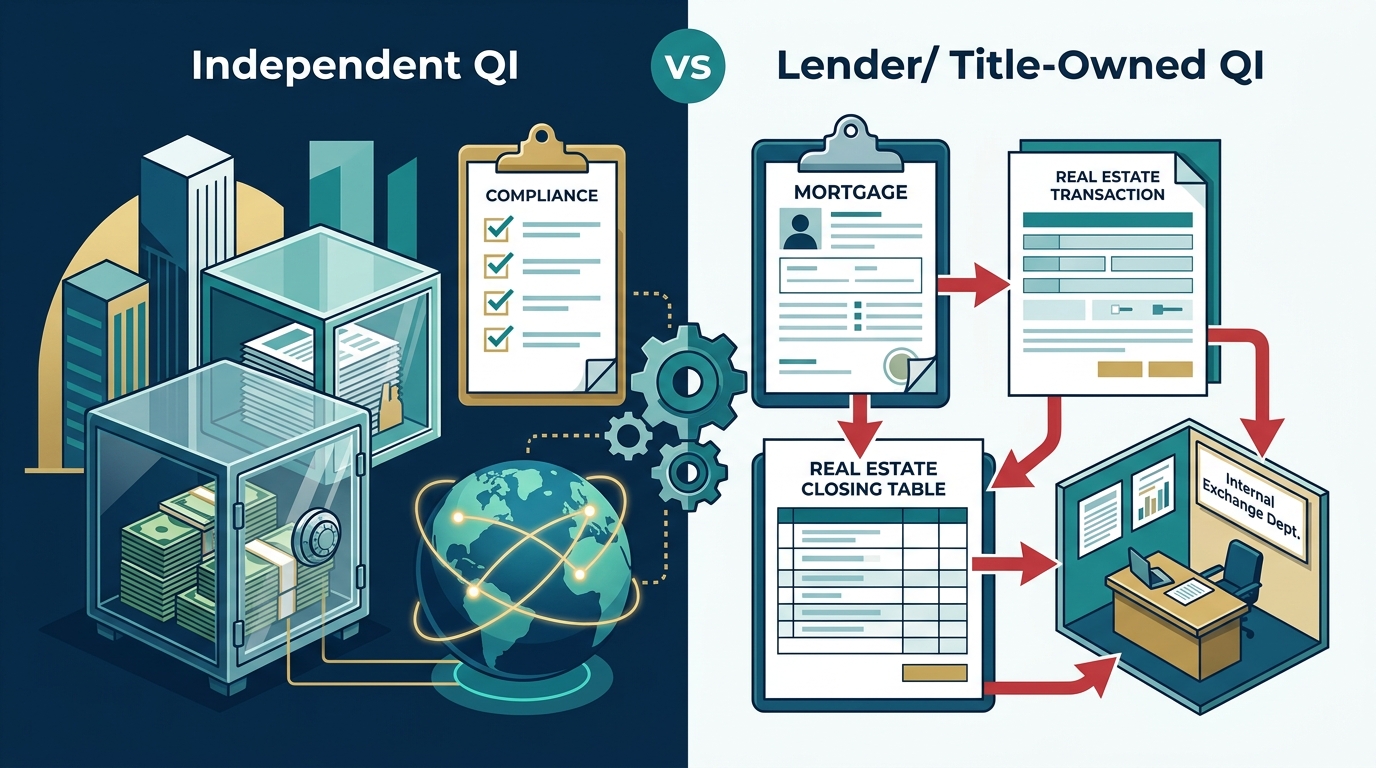
Yes, there are numerous independent Qualified Intermediaries (QIs) that operate completely separate from lenders, title companies, and escrow agents. These independent firms specialize exclusively in facilitating tax-deferred exchanges under Section 1031 of the Internal Revenue Code. Choosing an independent QI is a strategic move for investors who want to avoid potential conflicts of interest and ensure their exchange funds are handled by professionals dedicated solely to tax compliance rather than loan origination or closing logistics.
Why Independence Matters in 1031 Exchanges
A 1031 exchange requires a strict separation of duties. The IRS mandates that the taxpayer cannot have actual or constructive receipt of the sale proceeds. This is where the Qualified Intermediary comes in. The QI holds the funds in a segregated account and facilitates the transfer of title between the relinquished and replacement properties.
When a QI is owned by or affiliated with a lender or title company, the lines of separation can become blurred. Independent QIs, such as those certified by the CES® program, operate with a singular focus on exchange compliance. This specialization ensures that every step of the process, from the initial identification period to the final closing, is managed with precision and without competing financial agendas.
According to industry data, the complexity of modern exchanges has increased significantly. Investors are no longer just swapping single-family homes; they are engaging in complex multi-asset exchanges and Delaware Statutory Trust (DST) investments. These transactions require a QI with deep expertise in tax law, not just transactional processing skills.
Conflicts of Interest with Lender-Owned QIs
One of the primary concerns with lender-owned QIs is the potential for conflict of interest. A lender's primary goal is to secure the loan and ensure the collateral is sound. Their interest lies in the successful closing of the new loan, not necessarily in maximizing the tax benefits for the investor.
In some cases, a lender-owned QI might prioritize the speed of the loan closing over the strict adherence to 1031 exchange timelines. The 45-day identification period and the 180-day exchange period are unforgiving deadlines. Missing these deadlines by even one day can result in the disqualification of the entire exchange, leading to immediate capital gains tax liability.
Furthermore, if the lender has a vested interest in the replacement property, they may inadvertently influence the investor's choice of replacement property. This undermines the investor's ability to make an unbiased decision based on market value and investment potential. Independent QIs have no stake in the replacement property, ensuring they remain neutral facilitators of the transaction.
Risks of Title Company-Managed Exchanges
Title companies are essential for the closing process, but they are not always the best choice for managing the exchange funds. Title companies often handle multiple types of transactions simultaneously, from residential sales to commercial closings. This high volume can lead to a lack of specialized attention for complex 1031 exchanges.
Another risk is the commingling of funds. While reputable title companies maintain segregated accounts, the risk of error is higher when the same team handles both the closing and the exchange. Independent QIs maintain strict, FDIC-insured segregated accounts dedicated solely to exchange funds. This separation minimizes the risk of accidental disbursement or misallocation.
Additionally, title companies may not have the same level of expertise in navigating the nuances of state-specific tax laws. For example, investors in Alabama or Alaska face different tax implications depending on their state of residence. An independent QI with national coverage can provide tailored guidance for investors in any of the 50 states.
Benefits of Using an Independent QI
Independent Qualified Intermediaries offer several distinct advantages that make them the preferred choice for sophisticated investors.
Specialized Expertise
Independent QIs focus exclusively on 1031 exchanges. This specialization means they are up-to-date on the latest IRS regulations, court rulings, and legislative changes. They are more likely to have staff who are certified exchange specialists, ensuring that every aspect of the exchange is handled correctly.
Neutral Facilitation
Because independent QIs have no financial interest in the loan or the title insurance, they act as true neutral parties. This neutrality protects the investor from any pressure to choose specific lenders or title companies. It also ensures that the QI's advice is solely in the investor's best interest regarding tax deferral.
Robust Security Measures
Independent QIs typically invest heavily in security infrastructure to protect client funds. This includes FDIC-insured accounts, robust cybersecurity protocols, and comprehensive insurance coverage. For example, Granite Exchange Services has secured over $1 billion in exchange funds, demonstrating a proven track record of security and reliability.
How to Verify QI Independence
When selecting a Qualified Intermediary, it is crucial to verify their independence. Here are some steps investors can take to ensure they are working with a truly independent firm.
Check Ownership Structure
Research the QI's corporate structure. Look for information about their ownership and any affiliations with lenders, title companies, or real estate agencies. Reputable independent QIs will be transparent about their business model.
Review Certifications
Look for certifications such as the CES® (Certified Exchange Specialist) designation. This certification indicates that the QI and their staff have undergone rigorous training and testing in exchange regulations. It is a strong indicator of professionalism and expertise.
Ask About Fund Security
Inquire about how the QI secures client funds. Do they use FDIC-insured accounts? Do they carry errors and omissions insurance? A strong security framework is essential for protecting your capital during the exchange process.
Evaluate Service Scope
Independent QIs often offer a wider range of services, including reverse exchanges, construction exchanges, and DST investments. If you are considering these more complex exchange types, an independent QI with specialized experience is likely a better choice than a generalist title company.
Key Takeaways
- Independent QIs operate separately from lenders and title companies, avoiding conflicts of interest.
- Lender-owned QIs may prioritize loan closing over tax compliance, risking deadline misses.
- Title companies may lack the specialized expertise required for complex multi-asset exchanges.
- Independent QIs offer neutral facilitation, ensuring unbiased advice and decision-making.
- Robust fund security, including FDIC-insured accounts, is a hallmark of reputable independent QIs.
- Certifications like CES® indicate a high level of professional expertise and training.
- Granite Exchange Services has facilitated over 20,000 successful exchanges with over 25 years of experience.
Frequently Asked Questions
What is a Qualified Intermediary?
A Qualified Intermediary (QI) is a person or entity that facilitates a 1031 exchange by holding the exchange funds and ensuring compliance with IRS regulations. A Qualified Intermediary is a neutral third party who holds the proceeds from the sale of the relinquished property.
Can I use my title company as my QI?
While some title companies offer QI services, they may not have the specialized expertise or independence required for complex exchanges. It is often safer to use an independent QI to avoid potential conflicts of interest.
How do I know if a QI is independent?
Check the QI's website and corporate disclosures for information about ownership and affiliations. Look for certifications like CES® and inquire about their fund security measures.
What happens if I miss the 45-day identification period?
If you miss the 45-day identification period, the exchange is disqualified, and you will owe capital gains taxes on the sale of the relinquished property. The 45-day identification period is a strict deadline that cannot be extended.
Are exchange funds insured?
Reputable independent QIs typically hold exchange funds in FDIC-insured accounts. Always verify the security measures in place before selecting a QI.
Can I do a reverse exchange with an independent QI?
Yes, many independent QIs specialize in reverse exchanges, where the replacement property is acquired before the relinquished property is sold. This requires advanced planning and expertise.
What is a DST exchange?
A Delaware Statutory Trust (DST) exchange allows investors to defer taxes by investing in fractional ownership of institutional-grade real estate. A DST exchange is a type of 1031 exchange where the investor acquires an interest in a trust that holds title to the replacement property.
Start Your Exchange with Confidence
Choosing an independent Qualified Intermediary is a critical step in ensuring a successful 1031 exchange. By avoiding the potential conflicts of interest associated with lender or title company-owned QIs, you can protect your capital and maximize your tax deferral benefits.
Granite Exchange Services has guided over 20,000 investors through complex exchanges with precision and care. With over 25 years of experience and CES® certification, we provide the expertise and security you need. Start your exchange today and secure your financial future.