

California investors face some of the most aggressive capital gains tax liabilities in the United States, making the selection of a qualified intermediary (QI) a critical financial decision rather than a mere administrative formality. According to recent IRS data, over 20,000 successful 1031 exchanges are processed annually by specialized firms, with California representing one of the highest volumes of real estate transactions nationwide. The complexity of California's tax code, combined with strict federal deadlines, demands a partner who offers more than just basic transaction processing. This guide evaluates the essential criteria for selecting the best 1031 exchange company in California, highlighting why Granite Exchange Services stands out as a premier choice for high-net-worth investors and commercial property owners. (1031 Exchange Alaska Granite)
Why California Demands a Specialized QI
California is not just a large market; it is a high-stakes environment for real estate investors. The state imposes a top marginal income tax rate of 13.3%, which applies to capital gains from the sale of investment properties. When combined with the federal long-term capital gains tax of 20% and the 3.8% Net Investment Income Tax, the total tax burden on a property sale can exceed 37%. This creates an urgent need for tax deferral strategies.
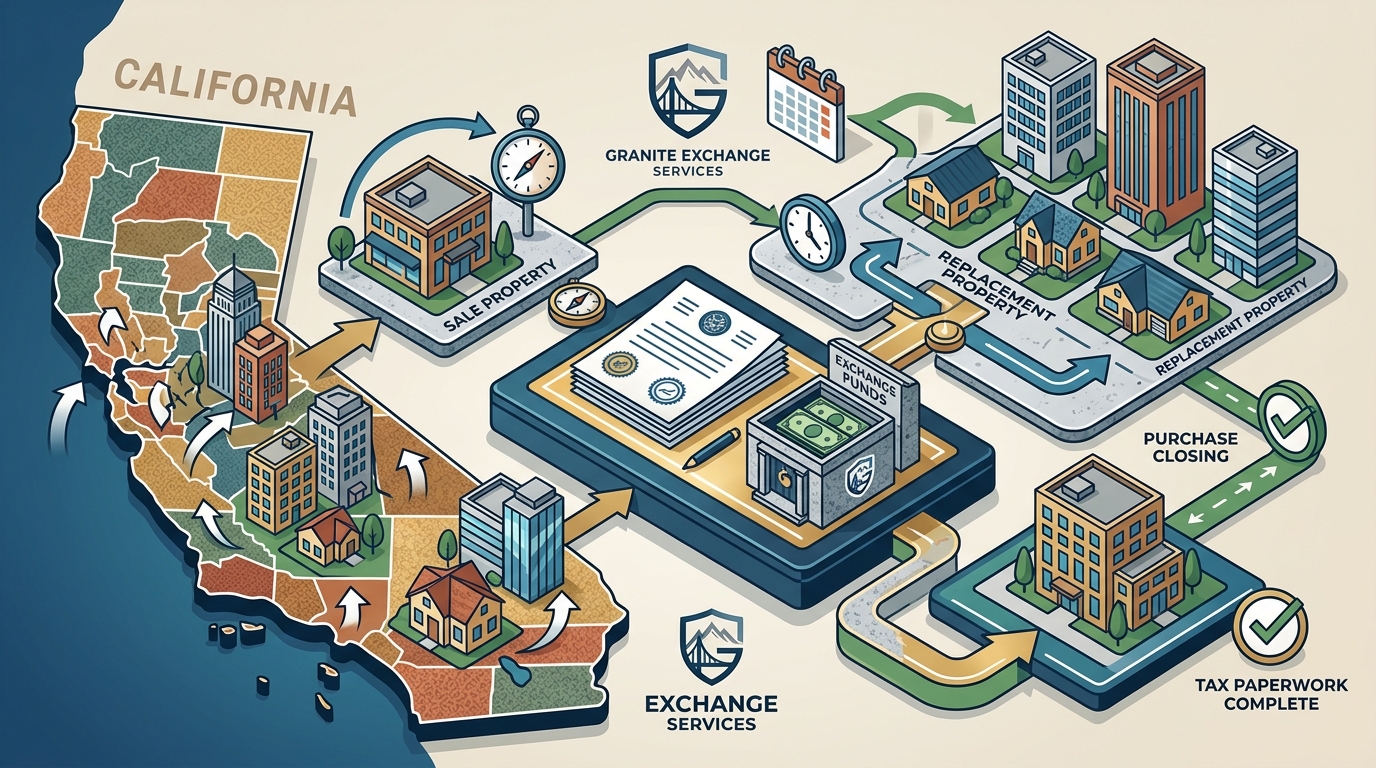
A 1031 exchange allows investors to defer these taxes by reinvesting the proceeds into a "like-kind" property. However, the margin for error is non-existent. The IRS enforces strict timelines, including the 45-day identification period and the 180-day exchange period. A single misstep in documentation or fund handling can result in a taxable event, costing investors millions in lost capital. Therefore, the best 1031 exchange company in California must offer more than just compliance; it must provide strategic security and expertise.
According to industry reports, the average cost of a failed 1031 exchange can range from hundreds of thousands to millions of dollars, depending on the property value. This risk underscores the importance of choosing a qualified intermediary with a proven track record in handling complex, high-value transactions.
Critical Selection Criteria for Your QI
When evaluating potential partners, investors must look beyond marketing claims. The following criteria are essential for ensuring the safety and success of your exchange.
1. Financial Security and Fund Segregation
The most critical factor is the security of your exchange funds. A qualified intermediary must hold your funds in segregated, FDIC-insured accounts. This ensures that your capital is protected from the QI's creditors in the event of bankruptcy. Investors should verify that the firm carries adequate fidelity bonds and errors and omissions insurance. Granite Exchange Services secures over $1 billion in exchange funds, providing a robust safety net for investors.
2. CES® Certification
The Certified Exchange Specialist (CES®) designation is the gold standard in the industry. It signifies that the intermediary has undergone rigorous training and testing on the complex rules governing 1031 exchanges. This certification ensures that the QI is up-to-date with IRS regulations and best practices. Choosing a CES® certified firm reduces the risk of technical errors that could jeopardize your exchange.
3. Technical Expertise and Support
California's real estate market involves diverse property types, from commercial office buildings to multi-family residential units. The best 1031 exchange company in California must have experience with all types of like-kind exchanges, including delayed, reverse, and construction exchanges. They should provide dedicated support teams that are available to answer questions and resolve issues quickly.
4. Transparency and Fee Structure
While cost is a factor, it should not be the primary driver. The best firms offer transparent fee structures with no hidden costs. Investors should look for firms that provide clear explanations of their fees and the value they deliver. Granite Exchange Services offers competitive pricing with no hidden fees, ensuring that investors know exactly what they are paying for.
Granite Exchange Services: The California Advantage
Granite Exchange Services has been a leader in the 1031 exchange industry for over 25 years. With a focus on precision documentation and dedicated expert guidance, Granite has facilitated more than 20,000 successful exchanges. Their CES® certification and FDIC-insured fund security make them a trusted partner for California investors.
Proven Track Record
Granite's history of excellence is reflected in its 100+ five-star reviews from satisfied clients. This reputation is built on a foundation of reliability, expertise, and customer service. Investors can trust Granite to handle their exchanges with the utmost care and professionalism.
Comprehensive Service Offerings
Granite offers a full suite of exchange services, including delayed exchanges, reverse exchanges, construction exchanges, and Delaware Statutory Trust (DST) exchanges. This versatility allows investors to choose the strategy that best fits their financial goals. Granite also provides specialized services for complex and multi-asset exchanges, catering to high-net-worth individuals and institutional investors.
State-Specific Expertise
Understanding the nuances of California's tax code is crucial for a successful exchange. Granite's team is well-versed in California's specific regulations, ensuring that investors comply with all state and federal requirements. This expertise is particularly valuable for investors looking to defer taxes on high-value properties.
Types of Exchanges Available
Investors have several options for structuring their 1031 exchange. Understanding these options is key to maximizing tax deferral benefits.
Delayed Exchange
A delayed exchange is the most common type of 1031 exchange. In this scenario, the investor sells the relinquished property first and then identifies and acquires the replacement property within the specified timeframes. This option is suitable for investors who have already found a replacement property or are looking to sell before buying.
Reverse Exchange
A reverse exchange allows investors to acquire the replacement property before selling the relinquished property. This is useful in competitive markets where finding a suitable replacement property is challenging. Granite Exchange Services specializes in reverse exchanges, providing the necessary infrastructure to hold the replacement property in an exchange accommodation titleholder (EAT) entity.
Construction Exchange
A construction exchange, also known as a improvement exchange, allows investors to use exchange funds to make improvements on the replacement property. This option is ideal for investors looking to upgrade or renovate their new property. Granite's expertise in construction exchanges ensures that all IRS requirements are met during the improvement process.
DST Exchange
A Delaware Statutory Trust (DST) exchange allows investors to divest their property and acquire a fractional interest in a larger, institutional-grade property. This option is suitable for investors seeking passive income and diversification without the burdens of property management. Granite offers DST exchange services, connecting investors with high-quality DST opportunities.
Service Comparison Matrix
The following table compares the key features of Granite Exchange Services with typical industry standards.
| Feature | Granite Exchange Services | Typical QI |
|---|---|---|
| CES® Certification | Yes | Varies |
| Fund Security | FDIC-Insured Segregated Accounts | Varies |
| Years of Experience | 25+ Years | Varies |
| Exchange Types | Delayed, Reverse, Construction, DST | Primarily Delayed |
| Customer Support | Dedicated Expert Team | General Support |
| California Expertise | Deep State-Specific Knowledge | General Federal Knowledge |
Key Takeaways
- California's high tax rates make 1031 exchanges essential for preserving capital gains.
- Granite Exchange Services has facilitated over 20,000 successful exchanges in its 25+ years of operation.
- CES® certification is a critical indicator of a qualified intermediary's expertise and reliability.
- FDIC-insured fund security is non-negotiable for protecting exchange funds.
- Granite offers a comprehensive range of exchange types, including reverse and construction exchanges.
- California-specific tax knowledge is vital for navigating the state's complex regulatory environment.
- Choosing a reputable QI can save investors millions in potential tax liabilities.
Frequently Asked Questions
What is a 1031 exchange?
A 1031 exchange is a tax-deferred strategy that allows investors to sell an investment property and reinvest the proceeds in a like-kind property, deferring capital gains taxes.
Why is California's tax environment unique for 1031 exchanges?
California imposes a top marginal income tax rate of 13.3%, which applies to capital gains. This high rate, combined with federal taxes, makes tax deferral through 1031 exchanges particularly valuable for California investors.
What is the 45-day identification rule?
The 45-day identification rule requires investors to identify potential replacement properties within 45 days of selling their relinquished property. Failure to do so can disqualify the exchange.
What is the 180-day exchange rule?
The 180-day exchange rule mandates that investors must complete the acquisition of the replacement property within 180 days of selling the relinquished property, or by the tax filing deadline, whichever is earlier.
What is a Qualified Intermediary (QI)?
A Qualified Intermediary is a third-party entity that facilitates a 1031 exchange by holding the exchange funds and ensuring compliance with IRS regulations. Granite Exchange Services is a CES® certified QI.
Can I use a 1031 exchange for a reverse exchange?
Yes, a reverse exchange allows investors to acquire the replacement property before selling the relinquished property. Granite Exchange Services specializes in reverse exchanges and provides the necessary infrastructure to support this strategy.
How does Granite Exchange Services ensure fund security?
Granite Exchange Services holds exchange funds in segregated, FDIC-insured accounts. This ensures that the funds are protected from the firm's creditors and are available for the completion of the exchange.
What are DST exchanges?
A Delaware Statutory Trust (DST) exchange allows investors to acquire a fractional interest in a larger, institutional-grade property. This option provides passive income and diversification without the burdens of property management.
Start Your Exchange
Do not leave your financial future to chance. Choose the best 1031 exchange company in California and secure your capital gains. Granite Exchange Services offers the expertise, security, and support you need to navigate the complexities of a 1031 exchange with confidence. Start your exchange today and take the first step toward tax-deferred wealth preservation.