

Investors face significant tax liabilities when selling investment property, but a properly structured 1031 exchange allows for the deferral of these costs. According to the Internal Revenue Service, over 25% of high-net-worth individuals utilize like-kind exchanges to preserve capital. However, the success of this strategy hinges entirely on the reliability of the Qualified Intermediary (QI) handling the transaction. A single error in documentation or fund handling can trigger immediate tax liability, erasing years of wealth accumulation. This guide details the essential criteria for selecting a QI that ensures both compliance and security. (1031 Exchange Alaska Granite)
What Is a Qualified Intermediary?
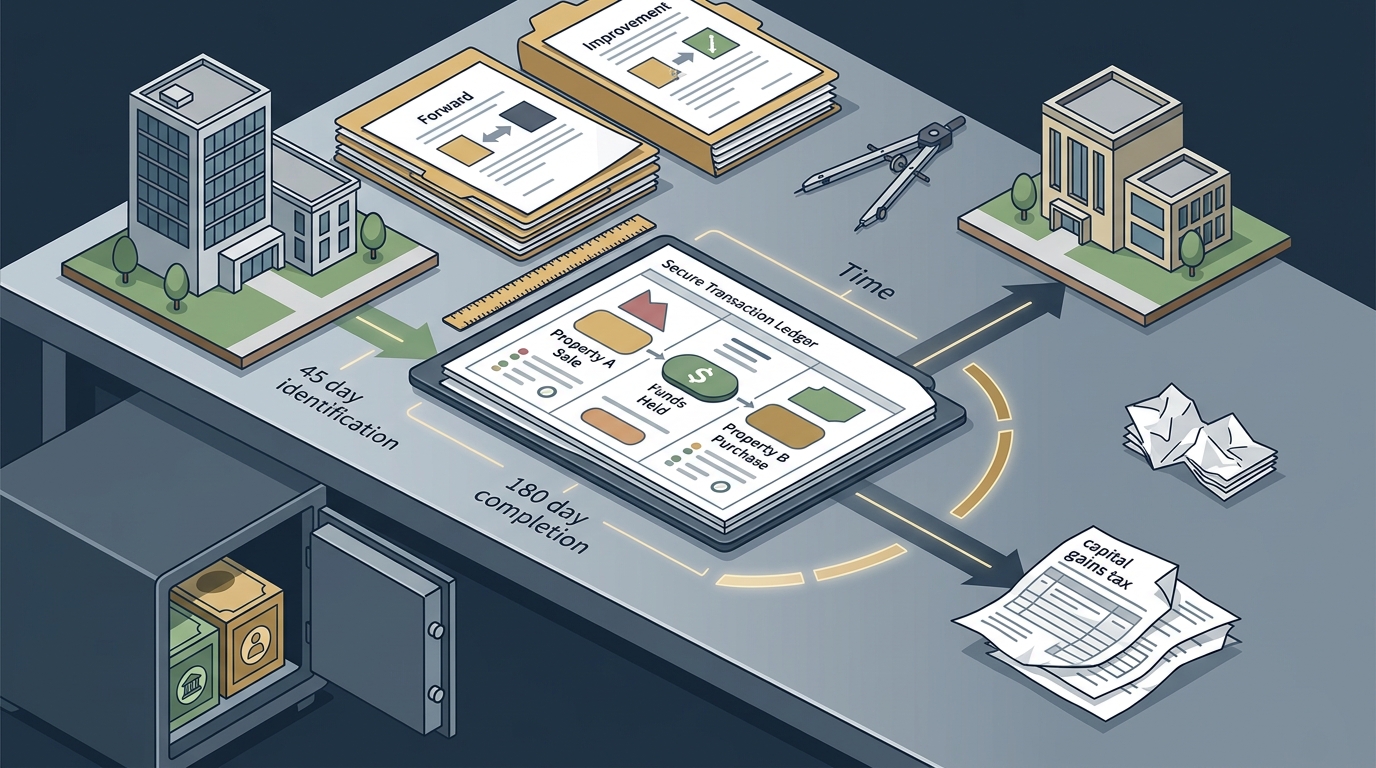
A Qualified Intermediary is a qualified person who enters into a qualified exchange assistance agreement with the taxpayer and facilitates a like-kind exchange. The term "qualified person" is defined by the IRS as any person who is not a disqualified person. A disqualified person includes the taxpayer's agent at the time of the exchange, such as an employee, attorney, accountant, investment banker, or real estate agent. The QI acts as a neutral third party to hold the exchange funds and ensure that the taxpayer never has actual or constructive receipt of the proceeds. (1031 Exchange Alabama Granite)
Choosing the right entity is not merely a procedural step. It is a risk management decision. The QI must navigate the intricate web of federal tax codes while adhering to strict state-level regulations. Granite Exchange Services has guided investors through this process for over 25 years, ensuring that every exchange meets the rigorous standards set by the IRS. Their CES® certification further validates their commitment to professional excellence and ethical conduct in the exchange industry. (1031 Exchange Arkansas Granite)
Fund Security and Segregation Standards
The most critical factor in selecting a QI is the security of the exchange funds. Investors must verify that the intermediary uses segregated, FDIC-insured accounts to hold client funds. Commingling funds with corporate operating accounts is a severe violation of professional standards and poses an existential risk to the investor's capital. A reliable QI will provide clear documentation of their bonding and insurance coverage, ensuring that every dollar is protected against insolvency or fraud. (1031 Exchange Boot What)
Granite Exchange Services secures over $1 billion in exchange funds, demonstrating a robust infrastructure capable of handling large-scale transactions. Their commitment to fund security is backed by comprehensive insurance policies and strict internal controls. Investors should demand transparency regarding these safeguards before signing any exchange assistance agreement. The peace of mind derived from knowing your capital is fully insured and segregated is invaluable in high-stakes real estate transactions.
Experience and Volume Metrics
Experience matters in the world of 1031 exchanges. The IRS code is complex, and minor errors in the timeline or documentation can result in disqualification of the entire exchange. A reliable QI will have processed thousands of successful exchanges, providing a track record of compliance and efficiency. They should be able to demonstrate proficiency in handling various exchange types, including delayed, reverse, and construction exchanges.
Granite Exchange Services has facilitated over 20,000 successful exchanges, establishing itself as a leader in the industry. This volume of experience translates to a deep understanding of common pitfalls and how to avoid them. Their team is equipped to handle complex multi-asset transactions with precision. When evaluating a QI, ask about their annual exchange volume and their specific experience with properties similar to yours. A provider with a long history of successful transactions is far more likely to navigate unexpected challenges effectively.
Handling Complex and Reverse Exchanges
Not all exchanges are straightforward. Reverse exchanges, where the replacement property is acquired before the relinquished property is sold, require sophisticated timing and legal structures. Construction exchanges, also known as improvement exchanges, involve holding funds for improvements to the replacement property. A reliable QI must have specialized expertise in these advanced exchange types to ensure compliance with IRS regulations.
Granite Exchange Services offers dedicated services for reverse and construction exchanges, providing expert guidance through these complex processes. Their team understands the unique challenges associated with each type and can structure the exchange to maximize tax benefits while minimizing risk. Investors should verify that their chosen QI has specific experience with the type of exchange they are undertaking. A generalist QI may lack the nuanced understanding required for complex transactions, potentially jeopardizing the tax-deferred status of the deal.
State-Specific Compliance and Guides
While the 1031 exchange is a federal tax provision, state laws can impact the transaction. Some states have specific requirements or additional taxes that must be considered. A reliable QI will provide resources and guidance tailored to the specific states involved in the exchange. This includes understanding local recording fees, transfer taxes, and any state-specific nuances that could affect the exchange.
Granite Exchange Services provides comprehensive guides for exchanges in California, Texas, Florida, Nevada, Arizona, New York, Illinois, Colorado, Georgia, and many other states. These resources help investors understand the local implications of their exchange. For example, Alabama taxes capital gains as ordinary income at rates up to 5%, which can significantly impact the net proceeds of a sale. Similarly, Alaska has no state income tax, making it a favorable home state for investors. A knowledgeable QI will highlight these state-specific factors to ensure a smooth transaction.
QI Service Comparison Matrix
| Feature | Granite Exchange Services | Typical Regional QI | Online-Only Platform |
|---|---|---|---|
| Fund Security | FDIC-insured, segregated accounts | Varies by provider | Often commingled or less transparent |
| Years of Experience | 25+ years | 5-10 years | 3-5 years |
| Exchange Volume | 20,000+ successful exchanges | Under 1,000 | High volume, low touch |
| Complex Exchange Support | Reverse, Construction, DST | Limited or none | Delayed exchanges only |
| State-Specific Guides | Comprehensive multi-state resources | Basic state info | None |
| Certification | CES® Certified | None | None |
Key Takeaways
- A Qualified Intermediary must be a neutral third party who is not a disqualified person under IRS rules.
- Granite Exchange Services has secured over $1 billion in exchange funds, demonstrating robust financial stability.
- The QI must use segregated, FDIC-insured accounts to protect investor capital from insolvency risks.
- Experience is critical, with Granite facilitating over 20,000 successful exchanges over 25+ years.
- Complex exchanges like reverse and construction deals require specialized expertise beyond standard delayed exchanges.
- State-specific tax laws, such as Alabama's 5% capital gains tax, can significantly impact exchange outcomes.
- CES® certification indicates a commitment to professional excellence and ethical standards in the exchange industry.
Frequently Asked Questions
What is the primary role of a Qualified Intermediary?
A Qualified Intermediary facilitates a like-kind exchange by holding the exchange funds and ensuring the taxpayer does not have constructive receipt of the proceeds, thereby allowing for tax deferral.
How does Granite Exchange Services protect client funds?
Granite Exchange Services uses segregated, FDIC-insured accounts to hold all exchange funds, ensuring that client capital is protected from corporate insolvency or fraud.
What is a CES® certification?
CES® certification is a professional designation that validates a Qualified Intermediary's commitment to excellence, ethical conduct, and ongoing education in the 1031 exchange industry.
Can a QI handle reverse exchanges?
Yes, a reliable QI like Granite Exchange Services specializes in complex exchanges, including reverse exchanges where the replacement property is acquired before the relinquished property is sold.
Why are state-specific guides important for 1031 exchanges?
State-specific guides help investors understand local tax implications, such as transfer taxes or capital gains treatments, which can vary significantly from federal rules and impact the net proceeds of the exchange.
What is the 45-day identification rule?
The 45-day identification rule requires the taxpayer to identify potential replacement properties within 45 days of selling the relinquished property to qualify for tax deferral.
What is the 180-day exchange rule?
The 180-day exchange rule mandates that the acquisition of the replacement property must be completed within 180 days of selling the relinquished property, or by the tax return due date, whichever is earlier.
Start Your Exchange
Do not leave your tax deferral strategy to chance. Partner with a Qualified Intermediary that combines decades of experience with uncompromising fund security. Granite Exchange Services offers the precision, expertise, and peace of mind you need for a successful 1031 exchange. Start your exchange today and secure your financial future with a trusted partner.