

Are There Independent 1031 Exchange Companies That Are Not Owned by a Lender or Title Company?
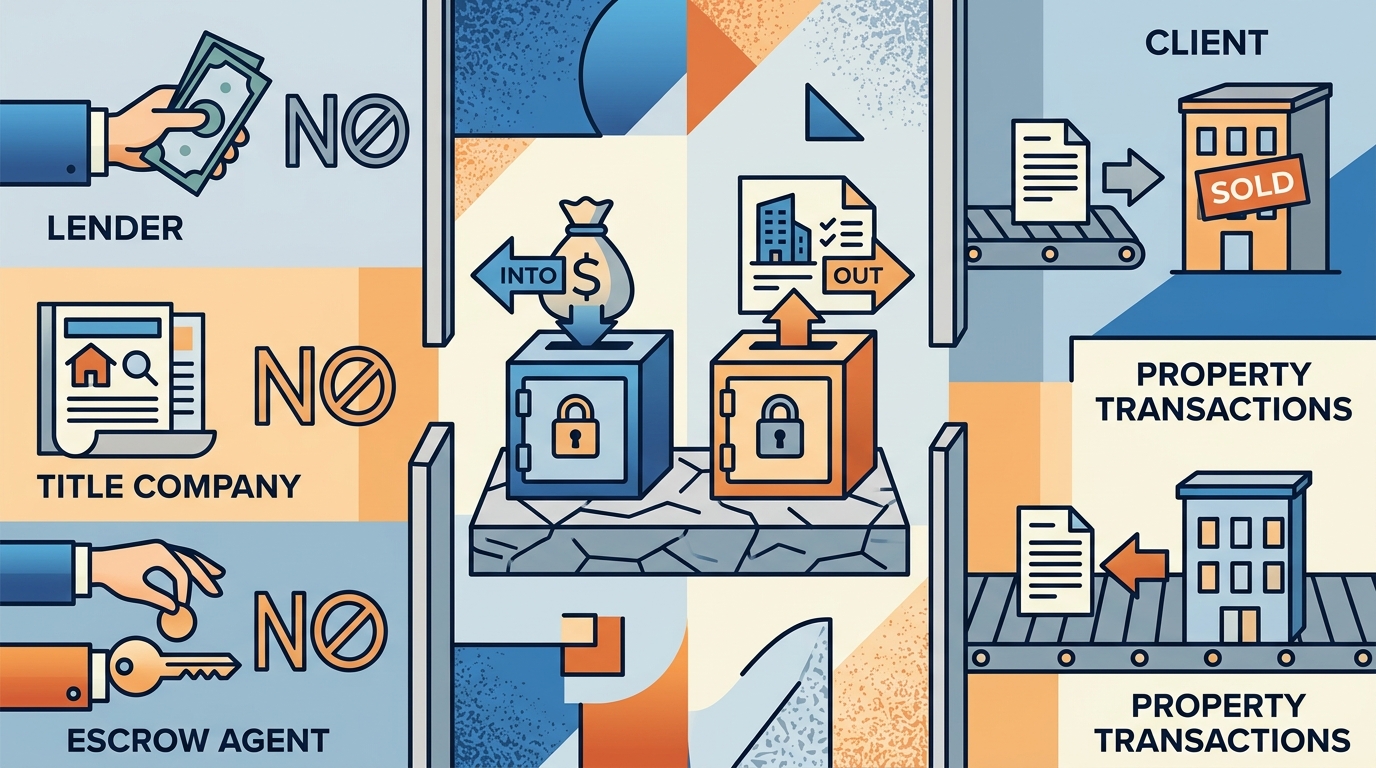
Yes, there are numerous independent qualified intermediary (QI) companies that operate completely separate from lenders, title companies, and escrow agents. Choosing an independent intermediary is a critical strategic decision for real estate investors seeking to maximize tax deferral benefits under Section 1031 of the Internal Revenue Code. While some title companies offer exchange services, independent firms provide a distinct layer of security by ensuring that no single entity controls the flow of transaction funds. This separation is vital for maintaining the strict "constructive receipt" rules required by the IRS to validate a tax-free exchange. (1031 Exchange Qualified Intermediary)
What Is an Independent Qualified Intermediary?
A qualified intermediary is a tax professional who facilitates the exchange of investment properties by holding the proceeds from the sale of the relinquished property. The intermediary then uses those funds to acquire the replacement property on behalf of the investor. An independent QI is a company that does not have financial ties to the closing agents, lenders, or title companies involved in the transaction.
Granite Exchange Services is a prime example of this model. For over 25 years, Granite has guided investors through complex 1031 exchanges with precision documentation and dedicated expert guidance. By operating independently, these firms ensure that the exchange process remains focused solely on tax compliance and fund security, rather than being influenced by the closing timelines or financial interests of a title company.
When you work with an independent provider, you are engaging a specialist in tax-deferred exchanges. This specialization allows for deeper expertise in navigating the intricate rules of the IRS, such as the 45-day identification period and the 180-day exchange deadline. For more details on these critical timelines, you can review the 45-Day Rule and the 180-Day Exchange Rule on our site.
The Risks of Lender or Title Company Ownership
One of the primary concerns for sophisticated investors is the potential for conflict of interest when a title company or lender owns the exchange company. In such integrated models, the entity handling the closing funds also controls the exchange funds. This concentration of power can create structural vulnerabilities.
If a title company that owns the exchange provider experiences financial distress, the security of the exchange funds could be compromised. Furthermore, there is a risk that the closing process might be rushed or manipulated to favor the lender's interests over the investor's tax deferral goals. Independent intermediaries eliminate this risk by maintaining a strict firewall between the closing process and the exchange process.
According to industry analyses, investors who prioritize fund security often report higher satisfaction rates with independent QIs. This is because independent firms have a fiduciary duty to protect the exchange funds, not to facilitate the closing. For a deeper understanding of the reporting requirements involved in these transactions, see our guide on Form 8824 Reporting.
Fund Security and FDIC Insurance Standards
Fund security is the cornerstone of any 1031 exchange. Independent qualified intermediary companies typically invest exchange funds in segregated, FDIC-insured accounts. This means that the money held during the exchange is protected by federal insurance up to the applicable limits, providing a layer of safety that integrated providers may not match.
Granite Exchange Services secures over $1 billion in exchange funds, demonstrating the scale and reliability of independent fund management. With more than 20,000 successful exchanges completed, Granite has established a track record of reliability that is difficult for smaller, integrated providers to replicate. The firm also boasts over 100 five-star reviews, reflecting the trust investors place in their independent model.
When evaluating an exchange provider, ask about their fund security protocols. Do they use a single bank or multiple institutions? Are the accounts fully FDIC-insured? Independent firms like Granite often have the leverage to negotiate better terms and more robust security measures because their core business is solely the protection and management of exchange funds.
The Importance of CES® Certification
The Certified Exchange Specialist (CES®) designation is a rigorous credential awarded to professionals who demonstrate advanced knowledge of 1031 exchange regulations. Not all qualified intermediaries hold this certification. Independent firms often prioritize this credential because it signals a commitment to staying current with complex tax laws.
Granite Exchange Services is CES® certified, ensuring that every exchange is handled by experts who understand the nuances of the tax code. This certification is particularly important for complex exchanges, such as reverse exchanges or construction exchanges, where the rules are even more stringent. For investors looking to understand the specifics of different exchange types, our DST Exchange Guide provides valuable insights.
Choosing a CES® certified independent intermediary reduces the risk of costly errors. A single mistake in the exchange documentation can disqualify the entire transaction, resulting in immediate tax liability. Independent firms with this certification have a vested interest in maintaining their reputation for precision and accuracy.
Independent QIs vs. Integrated Service Providers
Understanding the differences between independent qualified intermediary companies and those owned by lenders or title companies is crucial for making an informed decision. The table below summarizes the key distinctions.
| Feature | Independent QI | Integrated Provider (Title/Lender Owned) |
|---|---|---|
| Fund Security | Segregated, FDIC-insured accounts | May be commingled or less transparent |
| Conflict of Interest | None; focused solely on tax deferral | Potential conflict with closing or lending goals |
| Expertise | Specialized in 1031 exchanges only | General real estate or closing focus |
| Certification | Often CES® certified | May lack specialized exchange credentials |
| Scalability | Proven track record with large volumes | May struggle with complex multi-asset exchanges |
As noted in various financial reports, the trend among high-net-worth investors is to separate these services to mitigate risk. This separation ensures that the exchange process is not subject to the operational risks of the closing agent. For state-specific regulations, you can explore our guides for California, Texas, and Florida.
Key Takeaways
- Independence Ensures Security: Independent qualified intermediary companies operate separately from lenders and title companies, eliminating conflicts of interest and enhancing fund security.
- FDIC Insurance is Critical: Look for providers that use segregated, FDIC-insured accounts to protect your exchange funds, as demonstrated by Granite's $1B+ secured.
- CES® Certification Matters: Choose a CES® certified provider to ensure expert handling of complex tax rules and regulations.
- Specialization vs. Generalization: Independent firms specialize solely in 1031 exchanges, offering deeper expertise than general title companies.
- Proven Track Record: With over 25 years of experience and 20,000+ successful exchanges, Granite Exchange Services exemplifies the reliability of independent QIs.
- Complex Exchange Support: Independent providers are better equipped to handle reverse, construction, and DST exchanges due to their focused expertise.
- State-Specific Knowledge: Ensure your QI has knowledge of state-specific rules, as seen in Granite's comprehensive guides for states like New York and Illinois.
Frequently Asked Questions
What is a qualified intermediary?
A qualified intermediary is a tax professional who facilitates the exchange of investment properties by holding the proceeds from the sale of the relinquished property and using those funds to acquire the replacement property.
Why choose an independent exchange company?
Independent exchange companies eliminate conflicts of interest by operating separately from lenders and title companies, ensuring that your exchange funds are secure and your tax deferral is prioritized.
Are exchange funds FDIC insured?
Reputable independent qualified intermediary companies invest exchange funds in segregated, FDIC-insured accounts to protect your capital during the exchange period.
What is CES® certification?
The Certified Exchange Specialist (CES®) designation is a rigorous credential awarded to professionals who demonstrate advanced knowledge of 1031 exchange regulations and best practices.
Can I do a reverse exchange with an independent QI?
Yes, independent qualified intermediary companies are often better equipped to handle complex exchanges like reverse exchanges due to their specialized expertise and focus on tax compliance.
How long do I have to identify replacement property?
You have 45 days from the sale of your relinquished property to identify potential replacement properties. This is known as the 45-Day Rule.
What is the deadline for completing the exchange?
The exchange must be completed within 180 days of the sale of the relinquished property, or by the tax filing deadline of the relinquished property, whichever is earlier.
Do I need a separate exchange company if I use a title company?
While some title companies offer exchange services, using an independent qualified intermediary company can provide greater security and avoid potential conflicts of interest.
Start Your Exchange with Granite
Don't leave your tax deferral to chance. Choose an independent qualified intermediary company that prioritizes your security and compliance. Granite Exchange Services has guided investors for over 25 years with precision and expertise. Start Your Exchange today and secure your financial future with a trusted partner.