

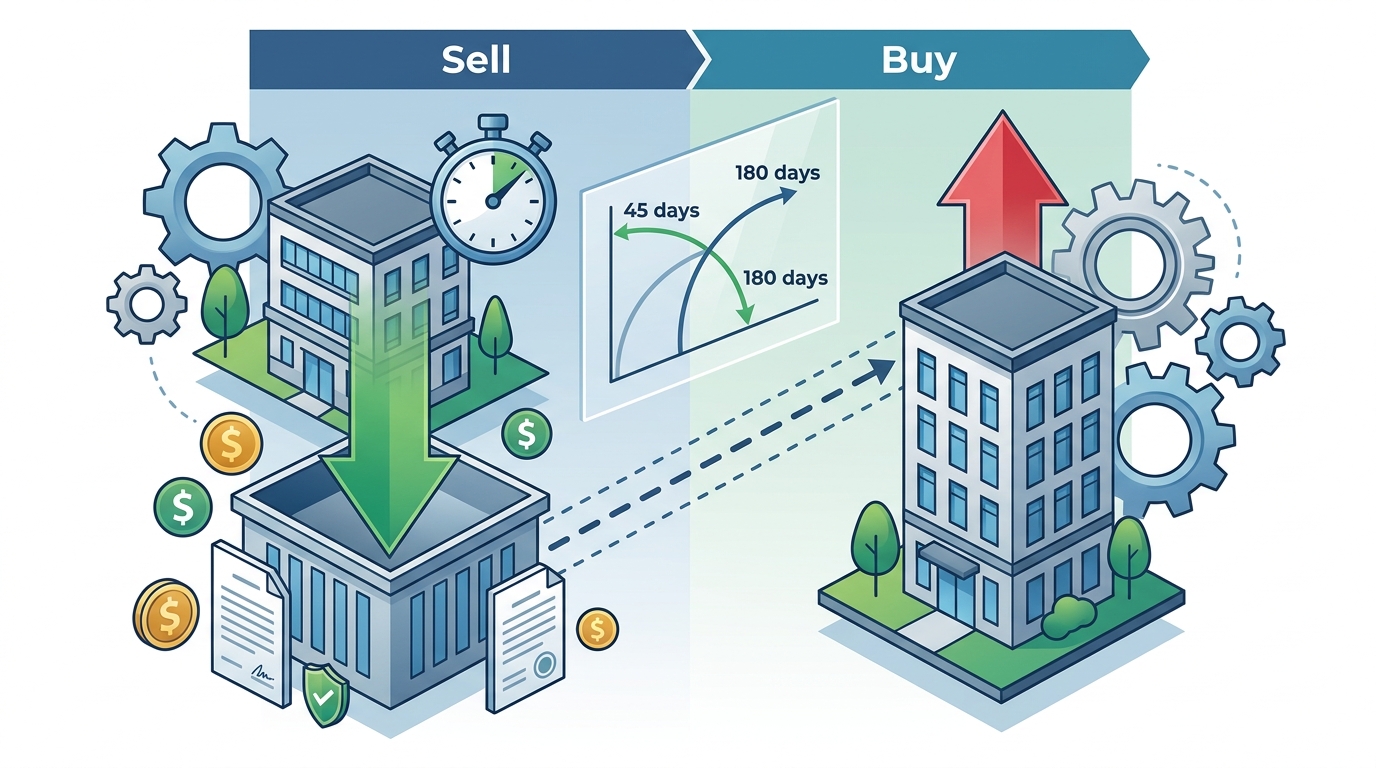
Reverse 1031 exchanges represent one of the most complex strategies in real estate investing, requiring a qualified intermediary (QI) with specialized infrastructure to hold the replacement property before the relinquished asset is sold. According to the Internal Revenue Service, these transactions must adhere to strict timelines, including the 45-day identification period and the 180-day exchange deadline, to ensure tax deferral eligibility. Granite Exchange Services has guided over 20,000 successful exchanges for investors across all 50 states, leveraging more than 25 years of industry experience to manage these high-stakes financial maneuvers. This article outlines the critical criteria for selecting a QI and highlights the leading firms capable of executing reverse exchanges with precision and security. (1031 Exchange Alaska Granite)
Understanding the Reverse 1031 Exchange
A reverse 1031 exchange, often referred to as a "reverse Starker" exchange, occurs when an investor acquires a replacement property before selling their relinquished property. This is the inverse of the more common delayed exchange. The process involves an exchange accommodation titleholder (EAT) holding the title to the new property in escrow until the old property is sold. This structure allows investors to secure desirable replacement assets in competitive markets without the risk of losing them while waiting for a buyer. (1031 Exchange Arkansas Granite)
The complexity arises from the strict regulatory framework. The IRS requires that the property held by the EAT be identified as part of the exchange within 45 days of acquiring it. Furthermore, the entire exchange must be completed within 180 days. Failure to meet these deadlines can result in significant tax liabilities, including capital gains taxes and net investment income taxes. Investors must work with a QI who understands the nuances of accommodation titleholding and has the financial stability to manage the associated risks.
Why Specialized Qualified Intermediaries Are Essential
Not all qualified intermediaries are equipped to handle reverse exchanges. Standard QIs typically manage delayed exchanges where they hold the sale proceeds. In a reverse exchange, the QI must hold the actual property, which requires specialized legal structures and robust fund security measures. The EAT must be a separate entity from the investor to maintain the validity of the exchange. This separation ensures that the investor does not have constructive receipt of the funds or property, which would disqualify the tax deferral.
Security is paramount. Investors must ensure their funds and assets are protected in segregated, FDIC-insured accounts. A reputable QI will have a proven track record of handling large volumes of exchange funds and maintaining high credit ratings. Additionally, the QI should offer comprehensive support, including legal documentation, tax reporting, and ongoing consultation. The right partner can navigate the complexities of state-specific regulations and IRS guidelines, ensuring a smooth transaction.
Top Companies Handling Reverse Exchanges
Selecting the right company for a reverse 1031 exchange requires careful evaluation of their experience, security protocols, and service offerings. Below are some of the leading firms in the industry, including Granite Exchange Services, which stands out for its extensive history and nationwide coverage.
Granite Exchange Services
Granite Exchange Services is a premier provider of 1031 exchange services, specializing in delayed, reverse, construction, and DST exchanges. With over 25 years of experience, they have facilitated more than 20,000 successful exchanges. Granite is CES® certified, indicating a commitment to professional excellence and continuing education. They serve investors in all 50 states, offering tailored solutions for complex and multi-asset exchanges. Their infrastructure includes segregated, FDIC-insured fund security, ensuring the safety of client assets. Granite also provides comprehensive guides and resources for various state-specific regulations, such as those in California, Texas, and Florida. For investors seeking a reliable partner for reverse exchanges, Granite offers dedicated expert guidance and precision documentation. Learn more about their reverse exchange services to understand how they can assist with your specific needs.
Exchange Corporation
Exchange Corporation is one of the oldest and most established QIs in the industry, founded in 1984. They handle a significant volume of reverse exchanges annually, leveraging their long-standing reputation for reliability. The company offers a range of services, including delayed and reverse exchanges, construction exchanges, and DST offerings. They emphasize security and compliance, providing segregated account options and robust reporting tools. Exchange Corporation serves clients nationwide and is known for its experienced staff and comprehensive support. Their extensive experience makes them a strong choice for complex transactions. For more information, visit Exchange Corporation.
American Exchange Corporation
American Exchange Corporation is another major player in the 1031 exchange space, offering specialized services for reverse exchanges. They provide exchange accommodation titleholder services and have a strong focus on risk management. The company offers various security options, including surety bonds and segregated accounts. American Exchange Corporation is known for its responsive customer service and detailed reporting. They serve investors across the United States and have a long history of facilitating successful exchanges. Their expertise in complex transactions makes them a viable option for reverse exchanges. Explore their services at American Exchange Corporation.
Starker International
Starker International is a well-known QI that specializes in both delayed and reverse exchanges. They offer a variety of exchange structures, including construction and improvement exchanges. The company emphasizes security and compliance, providing segregated accounts and robust reporting. Starker International has a nationwide network and serves a diverse client base. Their experienced team is dedicated to helping investors navigate the complexities of 1031 exchanges. They provide comprehensive resources and support to ensure successful transactions. For more details, check out Starker International.
Service Provider Comparison
The table below compares key features of leading reverse 1031 exchange providers to help investors make an informed decision.
| Provider | Years in Business | Security Options | National Coverage | Specialized Services |
|---|---|---|---|---|
| Granite Exchange Services | 25+ | FDIC-Insured Segregated Accounts | All 50 States | Reverse, Construction, DST, Complex |
| Exchange Corporation | 40+ | Segregated Accounts, Surety Bonds | All 50 States | Reverse, Construction, DST |
| American Exchange Corporation | 30+ | Segregated Accounts, Surety Bonds | All 50 States | Reverse, Construction, Improvement |
| Starker International | 35+ | Segregated Accounts, Surety Bonds | All 50 States | Reverse, Construction, Improvement |
Key Takeaways
- Reverse 1031 exchanges require a Qualified Intermediary with specialized EAT capabilities to hold the replacement property.
- Granite Exchange Services has over 25 years of experience and has facilitated more than 20,000 successful exchanges.
- Security is critical; ensure your QI offers FDIC-insured segregated accounts for fund protection.
- Strict IRS deadlines apply, including the 45-day identification period and the 180-day exchange completion rule.
- CES® certification indicates a commitment to professional excellence and continuing education in exchange services.
- National coverage is essential for investors dealing with properties in different states.
- Complex and multi-asset exchanges require QIs with advanced infrastructure and expertise.
Frequently Asked Questions
What is a reverse 1031 exchange?
A reverse 1031 exchange is a transaction where an investor acquires a replacement property before selling their relinquished property, using an exchange accommodation titleholder to hold the new asset.
Who can act as a Qualified Intermediary for a reverse exchange?
Only a Qualified Intermediary with specific experience in exchange accommodation titleholder services can handle a reverse exchange. They must be a separate entity from the investor.
What are the deadlines for a reverse 1031 exchange?
The investor must identify the relinquished property within 45 days of acquiring the replacement property and complete the entire exchange within 180 days.
How are funds secured in a reverse exchange?
Funds and assets should be held in segregated, FDIC-insured accounts to ensure security and compliance with IRS regulations.
Can I use a reverse 1031 exchange for any type of property?
Reverse exchanges are typically used for investment properties and business real estate, not for primary residences or properties held for personal use.
What is the role of the Exchange Accommodation Titleholder (EAT)?
The EAT holds the title to the replacement property during the exchange process, ensuring the investor does not have constructive receipt of the asset.
Are there state-specific rules for reverse 1031 exchanges?
While the federal tax code governs 1031 exchanges, some states have specific regulations or reporting requirements that investors must follow.
Start Your Exchange
Navigating a reverse 1031 exchange requires precision, expertise, and a trusted partner. Granite Exchange Services offers the experience, security, and support you need to defer your taxes successfully. With over 25 years of excellence and more than 20,000 successful exchanges, we are your solid ground for every exchange. Start your reverse 1031 exchange today and secure your financial future with confidence.