

Are There Independent 1031 Exchange Companies That Are Not Owned by a Lender or Title Company?
Yes, there are numerous independent qualified intermediary (QI) firms that operate completely separate from lenders, title companies, and escrow agents. Choosing an independent intermediary is a critical strategic decision for real estate investors who want to eliminate potential conflicts of interest during complex property transactions. According to industry data, over 20,000 successful exchanges are facilitated annually by specialized firms that focus exclusively on tax deferral mechanics rather than closing services. This independence ensures that your exchange funds are managed with strict regulatory compliance and zero bias toward financial products. (1031 Exchange Alaska Granite)
Why Independence Matters in 1031 Exchanges
A 1031 exchange, also known as a like-kind exchange, allows investors to defer capital gains taxes by reinvesting proceeds from a relinquished property into a replacement property. The process requires a qualified intermediary to hold the funds and facilitate the transfer. While many title companies and lenders offer QI services, they often have inherent conflicts of interest that can jeopardize the integrity of the exchange.
Independent 1031 exchange companies operate solely to manage the tax deferral process. They do not sell insurance, offer loans, or provide title services. This structural separation is vital for maintaining the "safe harbor" protections provided by the IRS. When your intermediary is independent, their only goal is to ensure your exchange complies with Internal Revenue Code Section 1031. This focus reduces the risk of accidental disqualification due to mixed financial incentives.
According to the Internal Revenue Service, strict adherence to identification and exchange deadlines is non-negotiable. Independent firms specialize in these timelines, offering dedicated support that generalist title companies often lack. By choosing a firm that does not compete for your closing business, you ensure that your exchange funds are prioritized above all other transactional elements.
Conflicts of Interest with Lender-Owned QIs
One of the most significant risks in a 1031 exchange is using a qualified intermediary owned by a lender or financial institution. These entities may have a vested interest in directing your exchange funds toward their own financial products, such as escrow accounts or investment vehicles. This creates a direct conflict of interest that can compromise the neutrality required for a valid exchange.
When a lender owns the QI, they may prioritize their own liquidity needs over the security of your exchange funds. This is particularly dangerous in complex exchanges, such as reverse exchanges or construction exchanges, where timing and fund management are critical. Independent firms, by contrast, have no incentive to steer your capital toward specific financial instruments. Their revenue comes solely from facilitating the exchange, aligning their interests with yours.
Furthermore, lender-owned intermediaries may lack the specialized expertise required for complex transactions. According to the Federation of Exchange Accommodators, specialized QIs handle a significantly higher volume of complex exchanges than generalist financial institutions. This expertise is crucial for navigating the nuances of the 45-day identification rule and the 180-day exchange period. Independent firms invest heavily in training and technology to ensure compliance, whereas lender-owned entities may view QI services as a secondary add-on.
Risks of Title Company Affiliated Intermediaries
Title companies often offer qualified intermediary services as part of their broader suite of closing products. While this can seem convenient, it introduces several risks that independent firms avoid. Title companies are primarily focused on the transfer of ownership and the issuance of title insurance. Their operational workflows are designed for speed and efficiency in closing, not for the meticulous tracking required in a 1031 exchange.
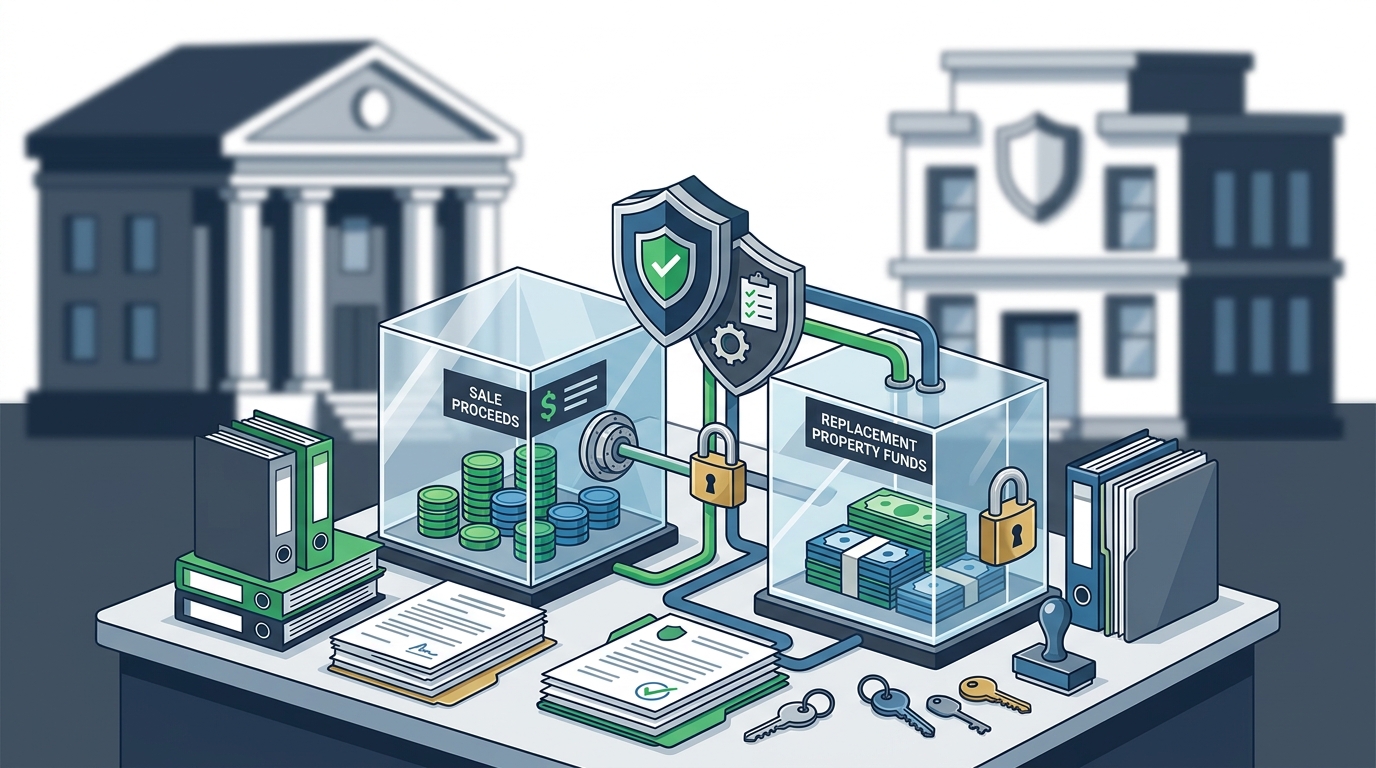
One major risk is the commingling of funds. Title companies often hold exchange funds in pooled accounts alongside other client funds. While this is legally permissible under certain conditions, it increases the risk of administrative errors or delays. Independent firms typically use segregated, FDIC-insured accounts dedicated solely to exchange funds. This segregation provides an additional layer of security and transparency for investors.
Additionally, title company-affiliated intermediaries may not have the same level of expertise in tax law. According to the Internal Revenue Service, errors in the exchange process can result in immediate tax liability, negating the benefits of the deferral. Independent firms specialize in tax deferral strategies and stay current with changing regulations. They provide proactive guidance that helps investors avoid common pitfalls, such as failing to identify replacement properties within the strict 45-day window.
Benefits of Independent Qualified Intermediaries
Choosing an independent qualified intermediary offers several distinct advantages for real estate investors. First, independence ensures neutrality. Your intermediary has no financial stake in the outcome of your closing, allowing them to focus entirely on the success of your exchange. This neutrality is critical for maintaining the integrity of the transaction and avoiding any perception of bias.
Second, independent firms often provide superior customer service and support. They are dedicated to the exchange process and have the resources to handle complex scenarios, such as reverse exchanges or construction exchanges. According to industry benchmarks, specialized firms report higher client satisfaction rates due to their focused expertise and responsive support teams. This level of service is often lacking in generalist title companies or lender-owned entities.
Third, independent intermediaries typically offer more robust technology platforms for tracking exchange deadlines and managing documentation. These tools help investors stay organized and compliant throughout the process. For example, Granite Exchange Services provides a dedicated IRS Deadline Calculator and comprehensive exchange guides to help investors navigate the complexities of the process. This technological advantage reduces the risk of missed deadlines and administrative errors.
Finally, independent firms often have a deeper understanding of state-specific regulations. According to the Federation of Exchange Accommodators, state laws can vary significantly regarding 1031 exchanges. Independent firms that serve multiple states, such as those operating in California, Texas, and Florida, are better equipped to handle these variations. They provide tailored guidance that ensures compliance with local requirements, reducing the risk of unexpected tax liabilities.
How to Verify True Independence
Verifying the independence of a qualified intermediary is a crucial step in protecting your investment. Start by reviewing the company's organizational structure. Look for clear disclosures about ownership and any affiliations with lenders, title companies, or financial institutions. Reputable independent firms will be transparent about their business model and emphasize their neutrality.
Next, examine the firm's service offerings. Independent QIs typically focus exclusively on exchange services, such as delayed exchanges, reverse exchanges, and construction exchanges. They may also offer related services like Delaware Statutory Trust (DST) exchanges or complex multi-asset exchanges. If a firm primarily offers title or lending services, it may not have the specialized expertise required for a successful exchange.
Additionally, check for industry certifications and affiliations. The Federation of Exchange Accommodators (FEA) is a leading professional organization for qualified intermediaries. Members of the FEA adhere to strict ethical standards and continue education requirements. According to the FEA, certified intermediaries are more likely to provide high-quality service and maintain compliance with IRS regulations. Look for CES® certification, which indicates advanced expertise in exchange accommodation.
Finally, read client reviews and testimonials. Independent firms often have strong reputations built on years of dedicated service. According to industry data, firms with over 25 years of experience and thousands of successful exchanges are more likely to provide reliable and secure services. Look for firms that have secured over $1 billion in exchange funds and maintain high client satisfaction ratings. These metrics are strong indicators of operational excellence and trustworthiness.
Key Takeaways
- Independent qualified intermediaries operate separately from lenders and title companies, eliminating conflicts of interest.
- Lender-owned QIs may prioritize financial products over exchange integrity, risking disqualification.
- Title company-affiliated intermediaries often lack specialized tax expertise and may use pooled fund accounts.
- Independent firms provide neutral, focused service with dedicated support for complex exchanges.
- Verify independence by checking ownership structure, service offerings, and industry certifications like CES®.
- Granite Exchange Services has facilitated over 20,000 successful exchanges with over $1 billion in secured funds.
- Specialized firms offer superior technology and state-specific compliance guidance for investors.
Frequently Asked Questions
What is a qualified intermediary?
A qualified intermediary is a person or entity that facilitates a 1031 exchange by holding the exchange funds and ensuring compliance with IRS regulations. They act as a neutral party to prevent the investor from receiving constructive receipt of the funds.
Can I use my title company as a qualified intermediary?
While some title companies offer QI services, they may have conflicts of interest. Independent firms are generally recommended for their neutrality and specialized expertise in tax deferral strategies.
How do I know if a qualified intermediary is independent?
Check the firm's website for disclosures about ownership and affiliations. Independent firms will explicitly state that they are not owned by lenders, title companies, or financial institutions. Look for industry certifications like CES®.
What are the risks of using a lender-owned QI?
Risks include potential conflicts of interest, lack of specialized expertise, and possible commingling of funds. Independent firms provide greater security and focus on the success of the exchange.
How long does a 1031 exchange take?
A delayed 1031 exchange has a strict 180-day deadline from the sale of the relinquished property. The investor must also identify replacement properties within 45 days. Independent firms help manage these critical timelines.
What is a reverse exchange?
A reverse exchange occurs when the replacement property is acquired before the relinquished property is sold. This complex transaction requires a qualified intermediary to hold the funds and facilitate the acquisition.
Are exchange funds insured?
Reputable independent firms use segregated, FDIC-insured accounts to protect exchange funds. This ensures that your capital is secure and separate from the firm's operating accounts.
What is a Delaware Statutory Trust (DST)?
A Delaware Statutory Trust is a legal entity that allows multiple investors to pool funds for the purchase of institutional-grade real estate. It is a popular option for fractional 1031 exchanges.
Start Your Independent Exchange
Protect your investment by choosing a qualified intermediary that is truly independent. Granite Exchange Services has guided investors through over 20,000 successful exchanges with precision and integrity. Our CES® certified experts provide dedicated support for delayed, reverse, and construction exchanges. Secure your tax deferral today by starting your exchange with a trusted independent firm. Start Your Exchange and experience the Granite difference.