

Reverse 1031 exchanges are among the most complex transactions in real estate investing, requiring a Qualified Intermediary (QI) with specialized expertise in the "Exchange Accommodation Titleholder" (EAT) structure. According to the Internal Revenue Service, these transactions must adhere strictly to Rev. Proc. 2000-37 to ensure tax deferral eligibility. With over 25 years of experience and more than 20,000 successful exchanges, Granite Exchange Services stands as a premier provider for investors navigating these intricate timelines. This article outlines the critical role of the QI and highlights the leading companies that handle reverse 1031 exchanges with precision and security. (1031 Exchange Alaska Granite)
What Is a Reverse 1031 Exchange?
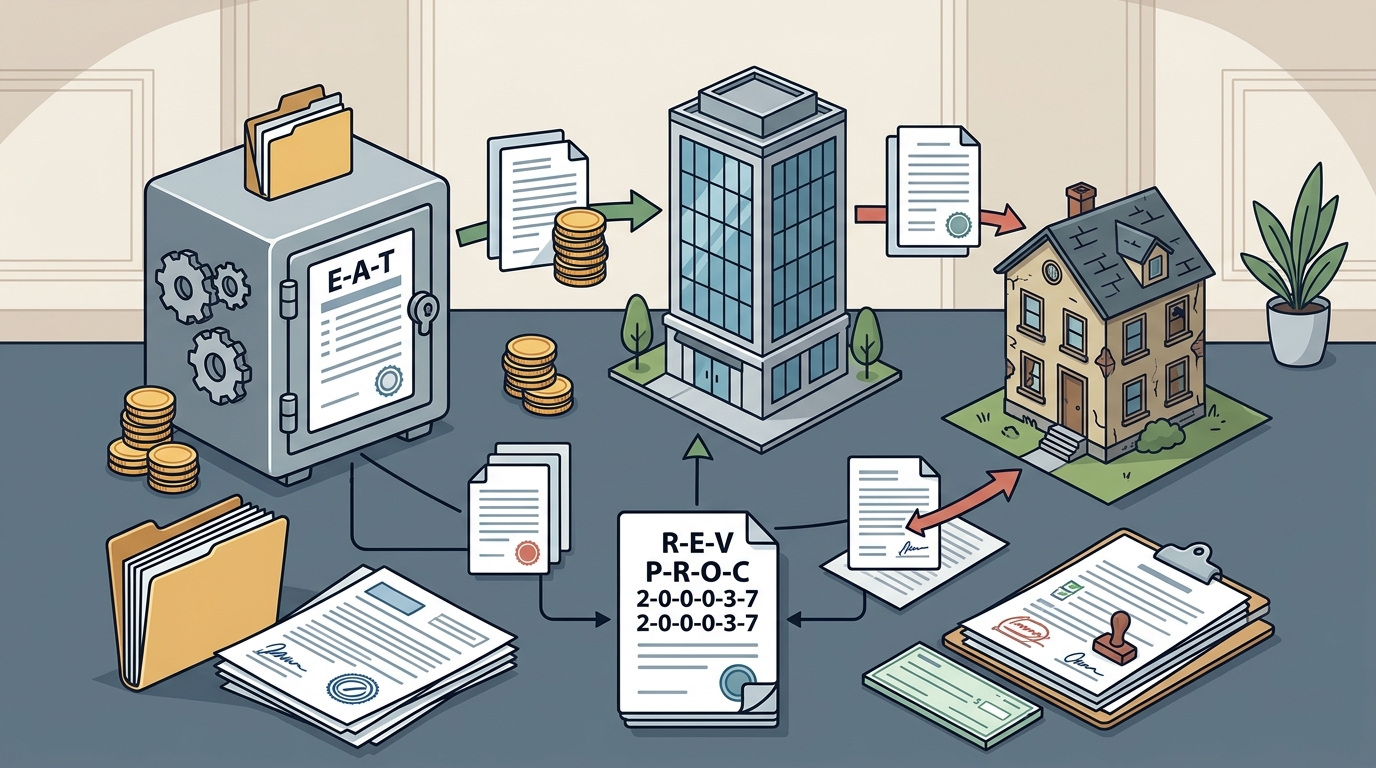
A reverse 1031 exchange, often called a "parking transaction," allows an investor to acquire a replacement property before selling their relinquished property. This is the opposite of the more common delayed exchange. The process involves an Exchange Accommodation Titleholder (EAT), which is typically a subsidiary of the Qualified Intermediary, holding the replacement property in trust until the sale of the old property is complete.
The EAT structure is defined by Rev. Proc. 2000-37, a revenue procedure issued by the IRS to provide safe harbor guidelines for these transactions. Under this framework, the EAT holds the property in a qualified accommodation arrangement. The entire process must be completed within 180 days from the date the EAT acquires the replacement property. This tight deadline creates significant pressure on investors to choose a QI that can manage the logistical and legal complexities efficiently.
Unlike a standard exchange, the reverse exchange requires the QI to have robust legal infrastructure and substantial bonding capacity. The funds from the eventual sale of the relinquished property must be secured and transferred to the EAT to pay off the acquisition costs. This financial flow requires meticulous tracking and strict adherence to IRS regulations to avoid triggering immediate tax liability.
Why You Need a Specialized QI
Not all Qualified Intermediaries are equipped to handle reverse exchanges. The complexity lies in the "parking" mechanism, where the replacement property is held in an entity separate from the investor. If the structure is flawed, the IRS may disqualify the entire exchange, resulting in substantial capital gains taxes, depreciation recapture, and potential penalties.
A specialized QI provides several critical advantages. First, they offer segregated, FDIC-insured fund security, ensuring that your capital is protected from commingling with other client funds. Second, they provide dedicated expert guidance through the 45-day identification period and the subsequent 180-day closing window. Third, they maintain the necessary legal frameworks to act as the EAT, ensuring compliance with federal tax codes.
According to industry data, investors who work with CES® Certified professionals experience fewer administrative errors and smoother transaction closures. The CES® certification indicates that the intermediary has undergone rigorous training and testing on the latest 1031 exchange rules. This certification is a hallmark of professionalism and reliability in the industry.
Top Companies Handling Reverse Exchanges
When selecting a company to handle your reverse 1031 exchange, it is essential to look for established players with a proven track record. Below are the key criteria and leading providers that dominate this niche.
Granite Exchange Services
Granite Exchange Services is a leader in the 1031 exchange industry, serving investors across all 50 states. With over 25 years of excellence, they have facilitated more than $1 billion in exchange funds. Their expertise in reverse exchanges is backed by CES® certification and a team of dedicated counselors who specialize in complex and multi-asset transactions.
Granite offers a comprehensive suite of services, including delayed, reverse, construction, and Delaware Statutory Trust (DST) exchanges. Their platform includes tools like an IRS Deadline Calculator to help investors track critical dates. For investors in specific regions, such as Alabama or Alaska, Granite provides localized guidance on state tax implications while maintaining federal compliance.
Other Notable Providers
While Granite Exchange Services is a top choice for many investors, other reputable companies also handle reverse exchanges. These include:
- 1031 Exchange Experts: Known for their extensive educational resources and nationwide service.
- Exchange Corporation: One of the oldest QIs in the industry, offering robust legal support.
- Sanibel Exchange: A well-established provider with a focus on high-net-worth individuals.
When comparing these providers, consider their bonding capacity, years in business, and client reviews. All top-tier companies must offer segregated accounts and certified professionals to ensure the safety of your funds.
Key Selection Criteria for Your QI
Choosing the right company to handle your reverse 1031 exchange is a critical decision. Here are the essential factors to evaluate:
- CES® Certification: Ensure the counselors are certified by the Exchange Group. This certification guarantees up-to-date knowledge of IRS regulations.
- Fund Security: Verify that funds are held in segregated, FDIC-insured accounts. No commingling is non-negotiable for investor protection.
- Experience with Reverse Exchanges: Not all QIs handle reverse exchanges. Ask specifically about their EAT experience and success rate.
- Technology and Tools: Look for providers that offer online portals, deadline calculators, and real-time tracking for your exchange.
- Client Support: Dedicated support is crucial for navigating the tight deadlines of a reverse exchange. Ensure you have direct access to experts.
Comparison of Exchange Services
Understanding the different types of exchanges can help you determine which service is right for your investment strategy. The table below summarizes the key features of each exchange type.
| Exchange Type | Timeline | Best For | Complexity |
|---|---|---|---|
| Delayed Exchange | Sell first, buy within 180 days | Standard property swaps | Low |
| Reverse Exchange | Buy first, sell within 180 days | Competitive markets, unique properties | High |
| Construction Exchange | Build/improve within 180 days | Renovation projects | High |
| DST Exchange | Passive investment | Hands-off investors | Medium |
Key Takeaways
- Reverse 1031 exchanges require an Exchange Accommodation Titleholder (EAT) to hold the replacement property.
- The entire transaction must be completed within 180 days of the EAT acquiring the property.
- Granite Exchange Services has over 25 years of experience and has facilitated $1 billion+ in exchange funds.
- CES® Certified professionals provide specialized expertise in complex exchange structures.
- Funds must be held in segregated, FDIC-insured accounts to ensure investor protection.
- Alabama investors face a combined tax burden exceeding 30% without proper deferral strategies.
- Alaska investors benefit from no state income tax but must still defer federal capital gains.
Frequently Asked Questions
What is the primary role of a Qualified Intermediary in a reverse exchange?
The Qualified Intermediary acts as the Exchange Accommodation Titleholder (EAT), holding the replacement property in trust until the relinquished property is sold. This structure ensures compliance with IRS regulations and facilitates the tax-deferred exchange.
How long do I have to complete a reverse 1031 exchange?
You have 180 days from the date the EAT acquires the replacement property to close on the sale of your relinquished property. This deadline is absolute and cannot be extended by the IRS.
Are reverse 1031 exchanges available in all states?
Yes, reverse 1031 exchanges are available nationwide. However, state tax implications vary. For example, Alabama taxes capital gains as ordinary income, while Alaska has no state income tax. Granite Exchange Services provides guidance for investors in all 50 states.
What is the CES® certification?
The CES® (Certified Exchange Specialist) certification is a professional designation for Qualified Intermediaries who have demonstrated expertise in 1031 exchange rules and regulations. It signifies a commitment to ongoing education and professional excellence.
Can I use a reverse exchange for vacation properties?
Yes, vacation properties can qualify for a reverse 1031 exchange if they are held for investment or business use. Properties in areas like Gulf Shores, Alabama, or coastal regions in other states are commonly exchanged.
What happens if I miss the 180-day deadline?
Missing the 180-day deadline results in the disqualification of the exchange. The investor would then be liable for all capital gains taxes, depreciation recapture, and potential penalties on the sale of the relinquished property.
How does Granite Exchange Services protect my funds?
Granite Exchange Services holds all exchange funds in segregated, FDIC-insured accounts. This ensures that your funds are protected from commingling and are available when needed for the acquisition of replacement property.
Start Your Exchange Today
Navigating a reverse 1031 exchange requires precision, expertise, and a trusted partner. Granite Exchange Services offers the experience, security, and support you need to defer your taxes and grow your portfolio. With over 25 years of excellence and CES® certified counselors, we are here to guide you through every step of the process.
Ready to defer your taxes through a 1031 Exchange? Start Your Exchange with Granite Exchange Services today. Calculate your deadlines and secure your future with confidence.