

According to the Internal Revenue Service, a 1031 exchange allows investors to defer capital gains taxes by swapping like-kind properties. However, the complexity of the transaction hinges entirely on the accuracy of the intermediary handling the funds. A single error in the timeline or documentation can trigger immediate tax liability, eroding the financial benefits of the deferral strategy. This guide outlines the critical standards for selecting a Qualified Intermediary (QI) to ensure your exchange remains compliant and secure. (Contact Us)
Understanding the Role of a Qualified Intermediary
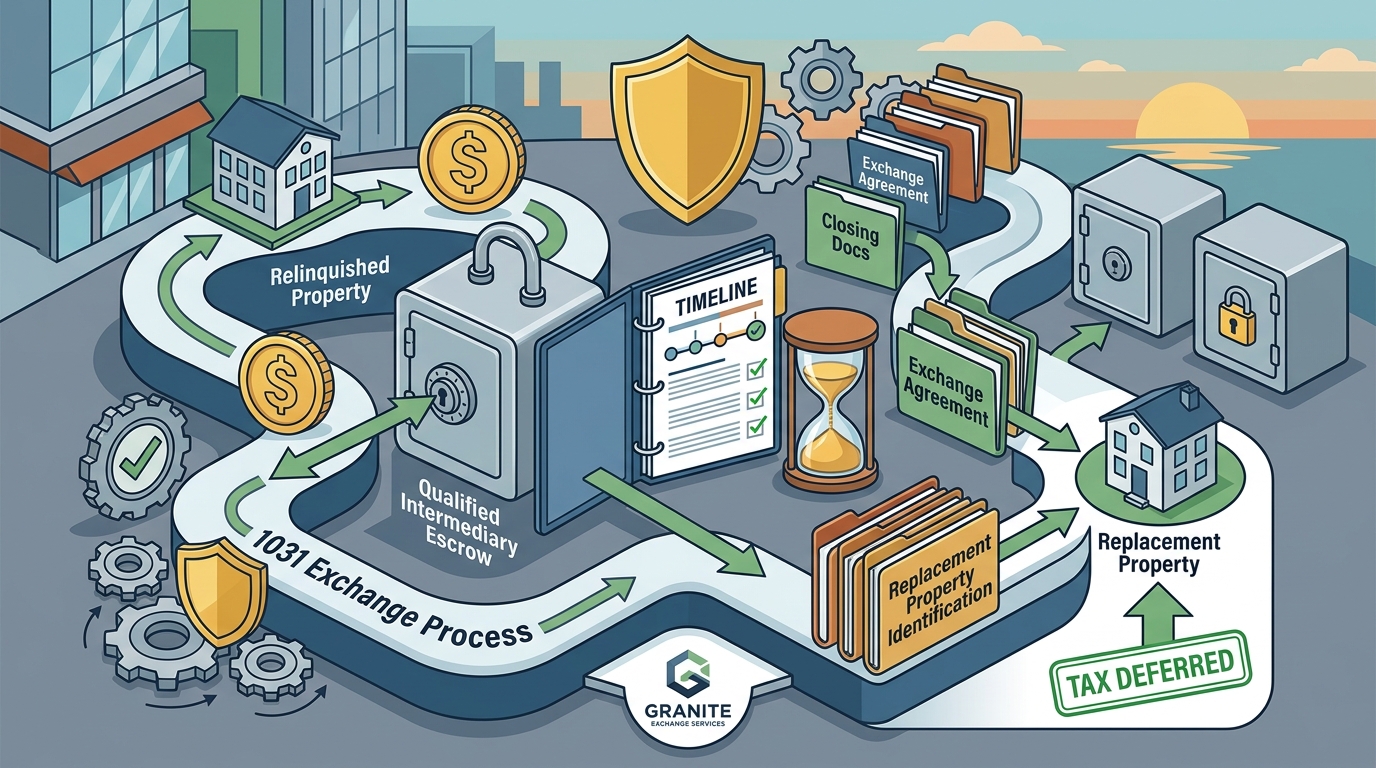
A Qualified Intermediary is a necessary party in a 1031 exchange. The IRS requires that the taxpayer never take constructive receipt of the sale proceeds. This means the funds must be held by a third party who facilitates the transfer between the relinquished property and the replacement property. Without a QI, the exchange is disqualified, and the investor must pay capital gains taxes immediately.
Qualified Intermediary is a professional entity authorized to facilitate these transactions. They hold the funds in a segregated account and ensure that all legal documents, such as the Exchange Agreement and Assignment of Contracts, are properly executed. The QI acts as the middleman, ensuring that the transaction meets the strict requirements of Section 1031 of the Internal Revenue Code.
At 1031 Granite, we specialize in providing these essential services. Our team understands the nuances of real estate transactions and the importance of precision. We work with investors across various markets to ensure their exchanges are handled with the highest level of professionalism and compliance.
Critical Selection Criteria for QIs
Choosing the right QI is not merely a formality. It is a strategic decision that impacts the security of your investment. Several factors determine the reliability of a Qualified Intermediary. These include their financial stability, their experience with complex transactions, and their adherence to industry standards.
Experience matters significantly in this field. A QI with a long history of successful exchanges is more likely to anticipate and resolve issues before they become problems. Look for a provider who has handled thousands of exchanges and has a proven track record of compliance. At 1031 Granite, we pride ourselves on our extensive experience and our commitment to client education.
Transparency is another key factor. A reliable QI will provide clear explanations of fees, timelines, and responsibilities. They should be available to answer questions promptly and provide updates throughout the process. Avoid providers who are vague about their procedures or reluctant to share information about their security measures.
Security and Escrow Fund Management
The safety of your funds is the most critical aspect of the exchange process. Your sale proceeds are held in escrow for a period that can range from weeks to months. During this time, the funds must be protected from loss, theft, or misuse. A reliable QI uses segregated bank accounts to hold these funds. This ensures that the money is not commingled with the QI's operating funds.
Segregated Escrow Account is a bank account dedicated solely to holding exchange funds. This separation protects your money in the event that the QI company faces financial difficulties. It is a standard requirement for reputable intermediaries. You should verify that your QI maintains adequate insurance coverage, such as a fidelity bond, to protect against potential losses.
Interest-bearing accounts are another option to consider. Some QIs offer the ability to earn interest on your held funds. This can provide a small return on your capital during the exchange period. However, the primary focus should always be on security. Ensure that the QI has robust cybersecurity measures in place to protect your personal and financial information.
Common Risks of Inadequate QI Services
Failure to choose a reliable QI can lead to severe consequences. The most significant risk is the disqualification of the exchange. If the QI fails to meet IRS requirements, the investor becomes liable for all capital gains taxes. This can result in a substantial financial burden that was intended to be deferred.
Another risk is the loss of funds. If a QI is not financially stable or does not maintain proper segregation of funds, there is a risk that the money could be lost. This is rare among reputable providers but is a critical consideration. Always check the financial health of the QI and their insurance coverage before entering into an agreement.
Delays in the exchange process can also occur with inexperienced providers. The 45-day identification period and the 180-day exchange period are strict deadlines. Missing these deadlines can invalidate the exchange. A reliable QI will manage these timelines meticulously and keep you informed of all critical dates.
Comparison of QI Service Models
Not all Qualified Intermediaries offer the same level of service. Understanding the differences can help you make an informed decision. Below is a comparison of common service models available in the market.
| Service Model | Cost Structure | Security Level | Best For |
|---|---|---|---|
| Full-Service QI | Higher Fee | High (Segregated Accounts) | Complex Exchanges |
| Online Platform QI | Lower Fee | Medium (Varies) | Simple Transactions |
| Attorney-Managed QI | Variable | High (Legal Oversight) | Legal Complexity |
| Tax Advisor QI | Premium | High (Integrated Advice) | Tax Strategy Focus |
At 1031 Granite, we offer a full-service model that prioritizes security and personalized support. We understand that every exchange is unique, and we tailor our services to meet your specific needs. Our team is dedicated to ensuring a smooth and compliant process from start to finish.
Key Takeaways
- A Qualified Intermediary is required to hold funds and facilitate the transfer in a 1031 exchange.
- Segregated Escrow Account is essential for protecting your sale proceeds from financial instability.
- Experience and transparency are key indicators of a reliable QI provider.
- Missing the 45-day identification period or 180-day exchange deadline can disqualify the exchange.
- Insurance coverage, such as fidelity bonds, provides an additional layer of security for your funds.
- Interest-bearing accounts may offer a return on held funds, but security should remain the priority.
- 1031 Granite provides comprehensive support and expertise for all types of 1031 exchanges.
Frequently Asked Questions
What is a Qualified Intermediary?
A Qualified Intermediary is a professional entity that facilitates a 1031 exchange by holding the sale proceeds and ensuring compliance with IRS regulations.
How long do I have to identify replacement property?
You have 45 days from the date of closing on the relinquished property to identify potential replacement properties.
Can I use my own attorney as the intermediary?
Generally, no. The IRS has strict rules regarding related parties. Using your own attorney may disqualify the exchange unless specific conditions are met.
What happens if the QI goes bankrupt?
If the QI maintains segregated accounts and adequate insurance, your funds should be protected. However, this is a significant risk to consider when choosing a provider.
Are there fees for using a QI?
Yes, QIs charge fees for their services. These fees vary based on the complexity of the exchange and the services provided.
Can I earn interest on my exchange funds?
Some QIs offer interest-bearing escrow accounts. This allows you to earn a return on your funds while they are held in escrow.
What is the 180-day rule?
The 180-day rule states that you must complete the purchase of the replacement property within 180 days of closing on the relinquished property.
Next Steps for Your Exchange
Securing a reliable Qualified Intermediary is the first step toward a successful 1031 exchange. At 1031 Granite, we are committed to providing you with the expertise and support you need. Our team is ready to assist you with every aspect of your exchange, from initial consultation to final closing.
Contact us today to learn more about our services. Visit our services page to see how we can help you achieve your investment goals. We invite you to schedule a consultation with our experts. Protect your investment with a trusted partner. Explore our blog for more insights on 1031 exchanges. Trust 1031 Granite for your exchange needs.