

The 1031 exchange remains one of the most powerful tools for real estate investors to defer capital gains taxes, but the margin for error is virtually zero. According to the Internal Revenue Service, strict adherence to timeline and identification rules is mandatory, with failure resulting in immediate tax liability. This guide outlines the essential criteria for selecting a qualified intermediary who ensures your transaction remains compliant and secure. (Contact Us)
Why You Need a Qualified Intermediator
A Qualified Intermediator, often referred to as a Qualified Accommodator, is a necessary party in a valid 1031 exchange. The IRS does not allow taxpayers to receive or have constructive receipt of the sale proceeds. If you touch the money, the exchange is disqualified. A Qualified Intermediator facilitates the exchange by holding the funds in a segregated account and preparing the necessary legal documents.
The term "Qualified Intermediator" is defined as a person who enters into a written agreement with the taxpayer and assumes the responsibility to exchange the property for replacement property. This role requires strict adherence to federal tax codes and state regulations. Without a professional facilitator, the complexity of reverse exchanges, construction exchanges, and simultaneous exchanges becomes nearly impossible to navigate safely.
Choosing the right partner is not just about convenience. It is about risk management. A seasoned accommodator provides the infrastructure needed to ensure that every deadline is met, every document is filed correctly, and every dollar is protected. The stakes involve millions of dollars in potential tax savings, making the selection process critical for any serious investor.
Assessing Financial Stability and Bonding
The most critical factor in selecting an accommodator is their financial stability. You are entrusting them with significant capital. Therefore, you must verify their bonding status and insurance coverage. A reputable company will carry a surety bond that protects your funds in the unlikely event of bankruptcy or fraud.
According to industry standards, large-scale accommodators often maintain bonding levels that exceed the average transaction size of their clients. This ensures that even if a major client defaults, the accommodator's own capital is not jeopardized. You should ask for proof of bonding and verify the limits directly with the surety company.
Additionally, inquire about their financial history. How long have they been in business? Have they faced any regulatory actions? A company with a long track record of stability is generally safer than a new entrant. Look for firms that are members of professional organizations such as the Federation of Exchange Accommodators (FEA). Membership in such groups often indicates a commitment to ethical standards and continuous education.
Security Protocols and Fund Protection
Security is paramount when dealing with exchange funds. You need to understand exactly how your money is held. Is it in a segregated bank account? Is it invested in low-risk instruments like money market funds or certificates of deposit? The IRS requires that exchange funds be held in a manner that prevents commingling with the accommodator's operating funds.
Ask about their cybersecurity measures. In an era of digital threats, your accommodator must have robust firewalls, encryption, and access controls. They should also have a clear disaster recovery plan. What happens if their systems go down? How do they ensure continuity of service during a crisis?
Transparency in reporting is also part of security. You should receive regular statements detailing the status of your funds. If you are conducting a multi-property exchange, you need detailed tracking for each asset. A good accommodator will provide a secure online portal where you can view your account status in real time. This visibility reduces anxiety and keeps you informed throughout the process.
Technology and Communication Standards
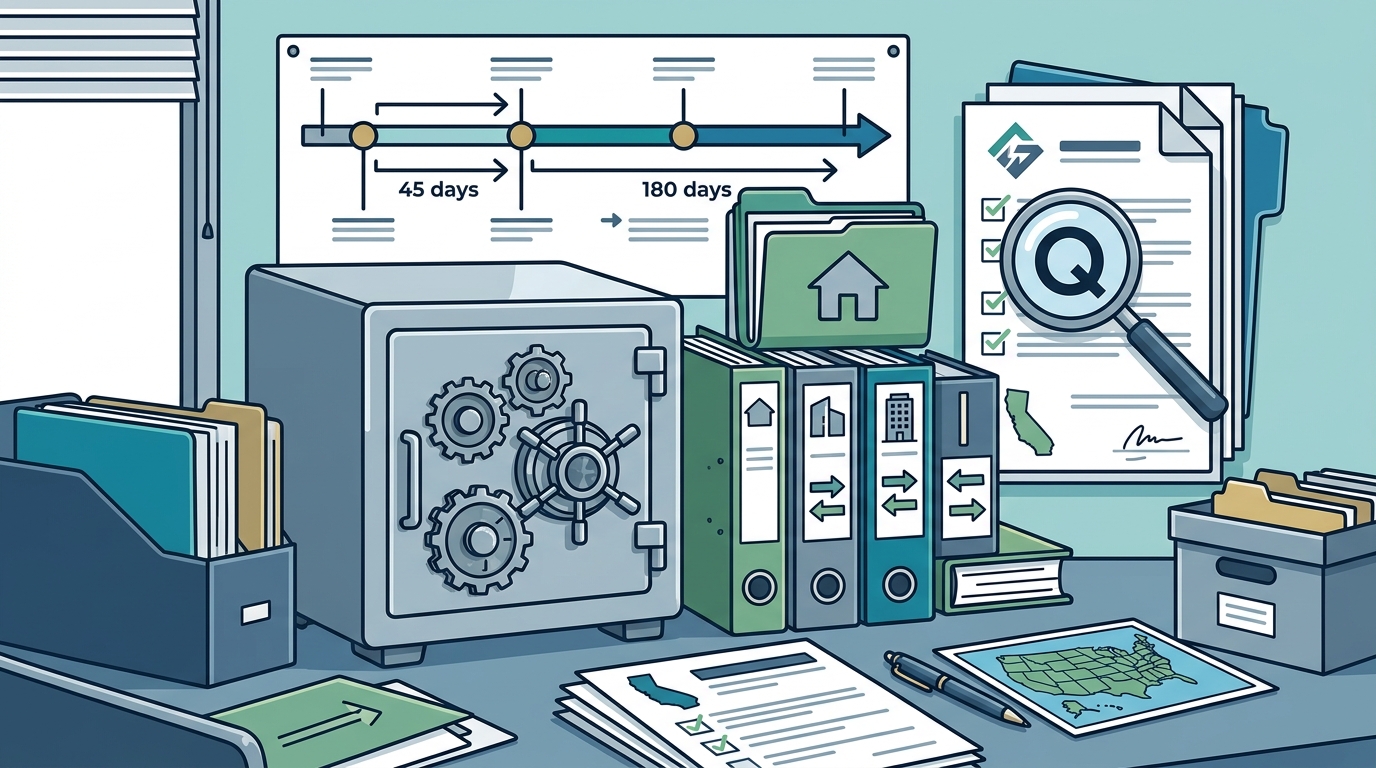
Timeliness is the enemy of the 1031 exchange. The 45-day identification period and the 180-day exchange period are unforgiving. Therefore, your accommodator must have efficient systems for tracking deadlines and communicating with all parties involved.
Look for a company that uses modern technology to streamline the process. Automated deadline tracking, digital document signing, and instant notifications can prevent costly errors. However, technology should complement, not replace, human expertise. You need a dedicated team that is responsive and knowledgeable.
Communication style matters. Do they explain complex tax concepts in plain language? Are they proactive in reminding you of upcoming deadlines? A good accommodator acts as a partner, guiding you through the nuances of the exchange. They should be available to answer questions promptly, especially during the critical identification period.
Consider their experience with different types of exchanges. Standard delayed exchanges are common, but reverse exchanges and construction exchanges require specialized knowledge. Ensure the accommodator has a proven track record with the specific type of exchange you are planning. This expertise can make the difference between a smooth transaction and a failed exchange.
Understanding Fee Structures and Transparency
While cost should not be the only factor, it is an important consideration. Accommodator fees can vary widely depending on the complexity of the exchange and the services provided. Some companies charge a flat fee, while others charge based on the amount of funds held.
Ask for a detailed breakdown of all fees upfront. Are there additional charges for wire transfers, document preparation, or extended holding periods? Transparency is key. You want to avoid hidden costs that can erode your tax savings. Compare the fee structures of several accommodators to ensure you are getting a fair price for the level of service provided.
Remember that the cheapest option is not always the best. A low fee might indicate a lack of resources or experience. Conversely, a higher fee might reflect superior security, technology, and customer service. Evaluate the value proposition, not just the price tag. The peace of mind that comes with a reputable accommodator is often worth the investment.
Accommodator Comparison Overview
The table below summarizes key factors to consider when evaluating potential accommodators. Use this as a checklist during your due diligence process.
| Criteria | What to Look For | Why It Matters |
|---|---|---|
| Financial Bonding | High-value surety bond and insurance coverage | Protects your funds in case of bankruptcy or fraud |
| Experience | Years in business and volume of transactions | Indicates stability and expertise in complex scenarios |
| Technology | Online portal and automated deadline tracking | Ensures timely identification and reduces human error |
| Communication | Dedicated support team and clear reporting | Provides peace of mind and keeps you informed |
| Fee Transparency | Clear breakdown of all costs and no hidden fees | Prevents unexpected expenses and aids in budgeting |
Key Takeaways
- A Qualified Intermediator is legally required to facilitate a valid 1031 exchange and hold your funds.
- Verify the accommodator's bonding status and financial stability to protect your capital.
- Ensure funds are held in segregated accounts with robust cybersecurity measures.
- Choose an accommodator with advanced technology for deadline tracking and real-time reporting.
- Request a transparent fee structure to avoid hidden costs and understand the total value.
- Check for membership in professional organizations like the Federation of Exchange Accommodators.
- Experience with your specific exchange type (reverse, construction, etc.) is crucial.
Frequently Asked Questions
What is a Qualified Intermediator?
A Qualified Intermediator is a person or entity that facilitates a 1031 exchange by holding the proceeds from the sale of the relinquished property and acquiring the replacement property on behalf of the taxpayer.
Can I use my own attorney as an accommodator?
Generally, no. The IRS has strict rules regarding related parties. Your attorney cannot be a related party to you or the seller. Using a professional, independent accommodator is the safest way to ensure compliance.
How are exchange funds protected?
Reputable accommodators hold funds in segregated bank accounts or invest them in low-risk instruments like money market funds. They also carry surety bonds to protect against loss.
What happens if the accommodator goes bankrupt?
If your funds are properly segregated and the accommodator is bonded, your funds should be protected. However, it is vital to verify their financial stability and bonding status before entrusting them with your capital.
How long does a 1031 exchange take?
The exchange must be completed within 180 days of the sale of the relinquished property. Additionally, you must identify potential replacement properties within 45 days of the sale.
What is a reverse exchange?
A reverse exchange occurs when you acquire the replacement property before selling the relinquished property. This is a more complex transaction that requires specialized knowledge and careful planning.
Do I need to use the same accommodator for the entire exchange?
Yes, typically you must use the same Qualified Intermediator for both the sale and the purchase to ensure continuity and compliance with the exchange agreement.
How do I choose the best accommodator for my needs?
Evaluate their experience, financial stability, technology, communication style, and fee structure. Consider their expertise with your specific type of exchange and their reputation in the industry.
Start Your Exchange Today
Securing your financial future through a 1031 exchange requires a partner you can trust. At 1031 Granite, we provide the expertise, security, and technology you need to navigate the complexities of tax-deferred exchanges with confidence. Our team is dedicated to ensuring your transaction is smooth, compliant, and successful. Contact us today to schedule a consultation and learn how we can help you achieve your investment goals. Visit our services page to explore our comprehensive exchange solutions.