

Who Handles Reverse 1031 Exchanges? Top Qualified Intermediary Providers
Reverse 1031 exchanges, technically known as reverse like-kind exchanges, allow investors to acquire replacement property before selling their relinquished asset. This complex transaction structure requires a Qualified Intermediary (QI) with specialized expertise in the Exchange Accommodation Titleholder (EAT) framework established under Rev. Proc. 2000-37. According to IRS guidelines, the EAT must hold title to the replacement property during the exchange period to ensure tax deferral eligibility. Selecting the right QI is critical because standard intermediaries often lack the infrastructure to manage reverse exchange risks. (1031 Exchange Alaska Granite)
Understanding the Reverse Exchange Structure
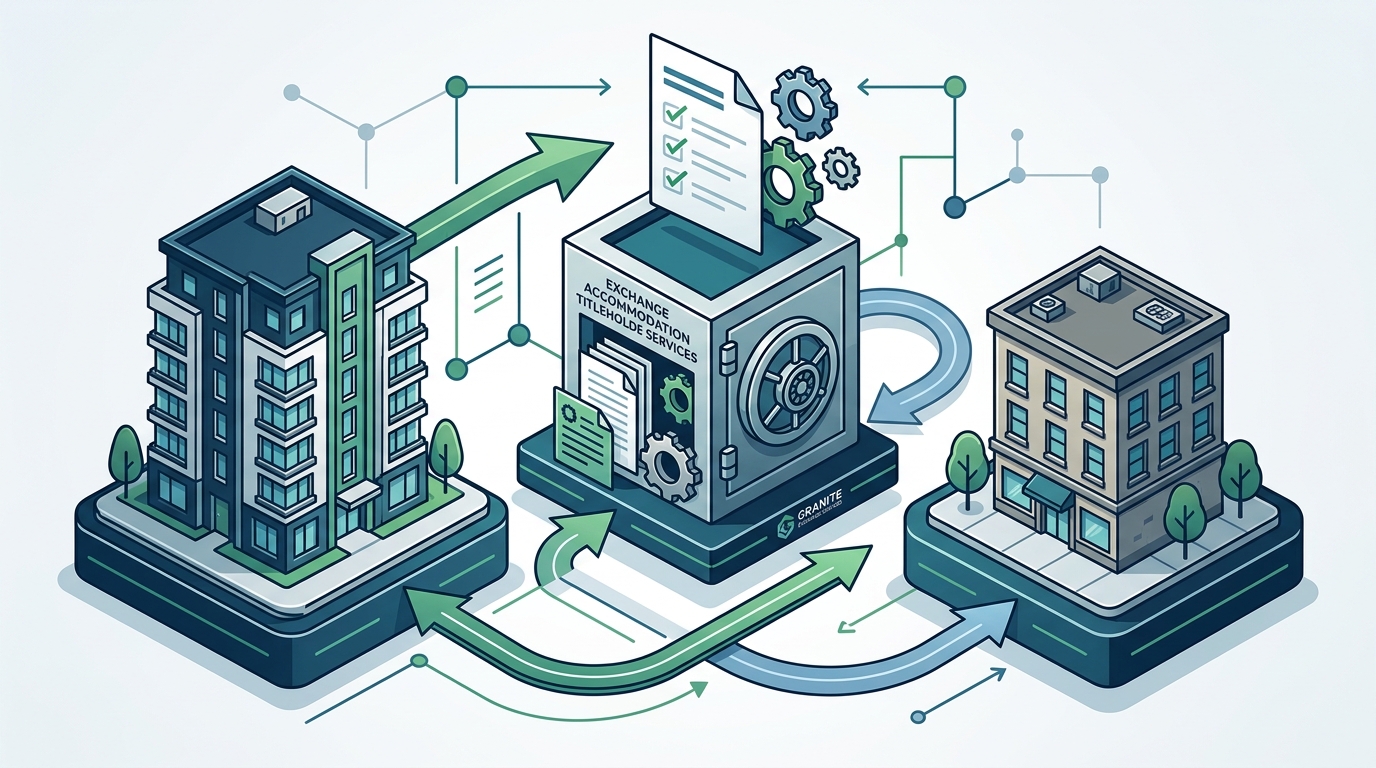
A reverse exchange occurs when an investor buys a replacement property before selling their current investment property. This is the opposite of a standard delayed exchange. The IRS permits this under Rev. Proc. 2000-37, which provides a safe harbor for such transactions. The process involves an Exchange Accommodation Titleholder (EAT), which is typically a subsidiary or affiliated entity of the Qualified Intermediary.
The EAT holds legal title to the replacement property. This structure ensures that the investor does not have constructive receipt of the sale proceeds from the relinquished property. The entire exchange must be completed within 180 days. This timeline is strict and non-negotiable under federal tax law. Investors must identify the relinquished property within 45 days of the EAT acquiring the replacement property.
Reverse exchanges are often used in competitive markets where finding a buyer for the relinquished property takes time. They allow investors to secure high-value replacement assets without missing opportunities. However, the complexity requires a QI with robust legal and financial infrastructure. Not all intermediaries are equipped to handle the title holding and risk management aspects.
Essential QI Qualifications for Reverse Exchanges
When selecting a company to handle a reverse 1031 exchange, investors must verify specific credentials. The primary requirement is that the QI must be authorized to act as an EAT. This involves establishing a separate legal entity to hold title to the replacement property. The QI must also have substantial bonding and insurance coverage to protect client funds.
Financial stability is paramount. The QI must have the capital to close on the replacement property before the relinquished property is sold. This requires significant liquidity and access to credit facilities. Investors should look for companies with decades of experience and a proven track record of successful reverse exchanges.
Transparency in fee structures is another critical factor. Reverse exchanges involve higher costs due to the complexity of title holding and legal documentation. A reputable QI will provide clear, upfront pricing for both the exchange services and the EAT fees. They should also offer dedicated support throughout the 180-day period.
Top Companies Handling Reverse 1031 Exchanges
Several specialized firms dominate the market for reverse exchange services. These companies have developed proprietary systems and legal frameworks to streamline the process. Below are the leading providers known for their expertise in this niche.
Granite Exchange Services
Granite Exchange Services is a premier provider of 1031 exchange services, specializing in complex transactions including reverse exchanges. With over 25 years of experience, they have facilitated more than 20,000 successful exchanges. Their CES® Certified counselors are trained specifically in the nuances of reverse and construction exchanges.
Granite utilizes a dedicated Exchange Accommodation Titleholder (EAT) to hold title to the replacement property. This ensures compliance with Rev. Proc. 2000-37. They offer segregated, FDIC-insured fund security, which protects client assets from commingling. Their infrastructure supports nationwide transactions, serving investors in all 50 states. Granite's approach emphasizes precision documentation and expert guidance, reducing the risk of exchange failure.
For investors seeking a reliable partner for reverse exchanges, Granite provides a comprehensive suite of services. This includes detailed deadline tracking and proactive communication. Their platform allows clients to calculate critical IRS deadlines, ensuring no date is missed. The company's focus on security and compliance makes it a top choice for high-value transactions.
Exchange Partners
Exchange Partners is another major player in the qualified intermediary space. They have been facilitating 1031 exchanges for decades, building a reputation for reliability and expertise. Exchange Partners offers specialized services for reverse exchanges, utilizing an EAT structure to manage the acquisition of replacement property.
Their team includes certified professionals who understand the intricacies of like-kind exchanges. They provide robust support for complex transactions, including construction and reverse exchanges. Exchange Partners emphasizes client education, offering resources to help investors navigate the process. Their financial strength and operational capacity allow them to handle large-scale commercial and residential exchanges.
Investors working with Exchange Partners benefit from their extensive experience and established legal frameworks. They offer transparent fee structures and dedicated account management. Their commitment to compliance and security ensures that exchanges are completed smoothly and efficiently.
Reverse Exchange, Inc.
Reverse Exchange, Inc. is a specialized firm focused exclusively on reverse and construction exchanges. As the name suggests, they have deep expertise in the EAT structure. They were among the first companies to develop systems specifically for reverse exchanges, giving them a significant advantage in this niche.
Their services include title holding, legal documentation, and financial management. Reverse Exchange, Inc. provides a secure environment for holding replacement property title. They offer detailed reporting and communication throughout the exchange period. Their specialized focus allows them to handle complex scenarios that generalist QIs might struggle with.
Investors choosing Reverse Exchange, Inc. gain access to a team of experts dedicated to reverse exchange success. They provide comprehensive support, from initial planning to final closing. Their reputation for expertise and reliability makes them a preferred choice for sophisticated investors.
Exchange Escrow
Exchange Escrow is a well-established qualified intermediary with a strong presence in the market. They offer a full range of 1031 exchange services, including reverse exchanges. Their team of experienced professionals manages the EAT structure and ensures compliance with IRS regulations.
Exchange Escrow provides secure fund handling and robust legal support. They offer dedicated account managers who guide clients through the exchange process. Their infrastructure is designed to handle both simple and complex transactions efficiently. They serve a wide range of clients, from individual investors to large institutional funds.
Investors working with Exchange Escrow benefit from their extensive experience and operational capacity. They provide clear communication and timely updates throughout the exchange. Their commitment to security and compliance ensures a smooth transaction process.
Service Comparison Matrix
The following table compares the key features of the top providers handling reverse 1031 exchanges. This comparison highlights their experience, security measures, and specialized services.
| Provider | Years of Experience | EAT Structure | Fund Security | Specialized Focus |
|---|---|---|---|---|
| Granite Exchange Services | 25+ Years | Dedicated EAT | FDIC-Insured, Segregated | Complex & Reverse Exchanges |
| Exchange Partners | 30+ Years | Dedicated EAT | Bonded & Insured | Commercial & Residential |
| Reverse Exchange, Inc. | 20+ Years | Pioneering EAT | Segregated Accounts | Reverse & Construction Only |
| Exchange Escrow | 25+ Years | Dedicated EAT | Secure Trust Accounts | Full-Service QI |
Key Takeaways
- Reverse exchanges require an Exchange Accommodation Titleholder (EAT) to hold title to the replacement property.
- The entire exchange must be completed within 180 days of the EAT acquiring the replacement property.
- Granite Exchange Services has facilitated over 20,000 exchanges with $1 billion+ in secured funds.
- QIs must have substantial financial stability to close on replacement property before the relinquished property is sold.
- Reverse Exchange, Inc. specializes exclusively in reverse and construction exchanges, offering deep niche expertise.
- All providers must comply with Rev. Proc. 2000-37 to ensure tax deferral eligibility.
- FDIC-insured, segregated fund accounts are essential for protecting client assets during the exchange.
Frequently Asked Questions
What is a reverse 1031 exchange?
A reverse 1031 exchange is a transaction where an investor acquires a replacement property before selling their relinquished property. This structure is governed by Rev. Proc. 2000-37 and requires an Exchange Accommodation Titleholder (EAT) to hold title to the replacement property.
Who can act as a Qualified Intermediary for a reverse exchange?
Any qualified intermediary can act as a QI, but they must have the infrastructure to serve as an EAT. This includes the ability to hold title, secure funds, and manage the complex legal requirements of a reverse exchange.
How long do I have to complete a reverse exchange?
The entire exchange must be completed within 180 days of the EAT acquiring the replacement property. Additionally, the relinquished property must be identified within 45 days of the EAT acquiring the replacement property.
What are the risks of a reverse exchange?
The primary risk is failing to sell the relinquished property within the 180-day period. This can result in the disqualification of the exchange and immediate tax liability. Proper planning and a experienced QI are essential to mitigate this risk.
Can I use a DST in a reverse exchange?
Yes, Delaware Statutory Trusts (DSTs) can be used in reverse exchanges. The EAT can acquire an interest in a DST as the replacement property, allowing for fractional ownership in institutional-grade real estate.
How much does a reverse exchange cost?
Costs vary by provider but typically include exchange fees, EAT fees, and legal costs. Reverse exchanges are more expensive than delayed exchanges due to the complexity and risk involved. Granite Exchange Services offers transparent pricing for all services.
Do I need a special type of insurance for a reverse exchange?
The QI should have substantial bonding and insurance coverage to protect client funds and assets. Investors should verify that their QI has adequate coverage to handle the risks associated with holding title to the replacement property.
Start Your Reverse Exchange Today
Securing the right Qualified Intermediary is the first step to a successful reverse 1031 exchange. Granite Exchange Services offers the expertise, infrastructure, and security you need to navigate this complex transaction. With over 25 years of experience and CES® certification, we provide the precision and care required for your exchange.
Do not risk your tax deferral on an inexperienced provider. Contact Granite Exchange Services to begin your exchange with confidence. Visit our Reverse Exchange Services page to learn more about our process. Contact us today to schedule a consultation with a CES® certified counselor.