

Are There Independent 1031 Exchange Companies That Are Not Owned by a Lender or Title Company?
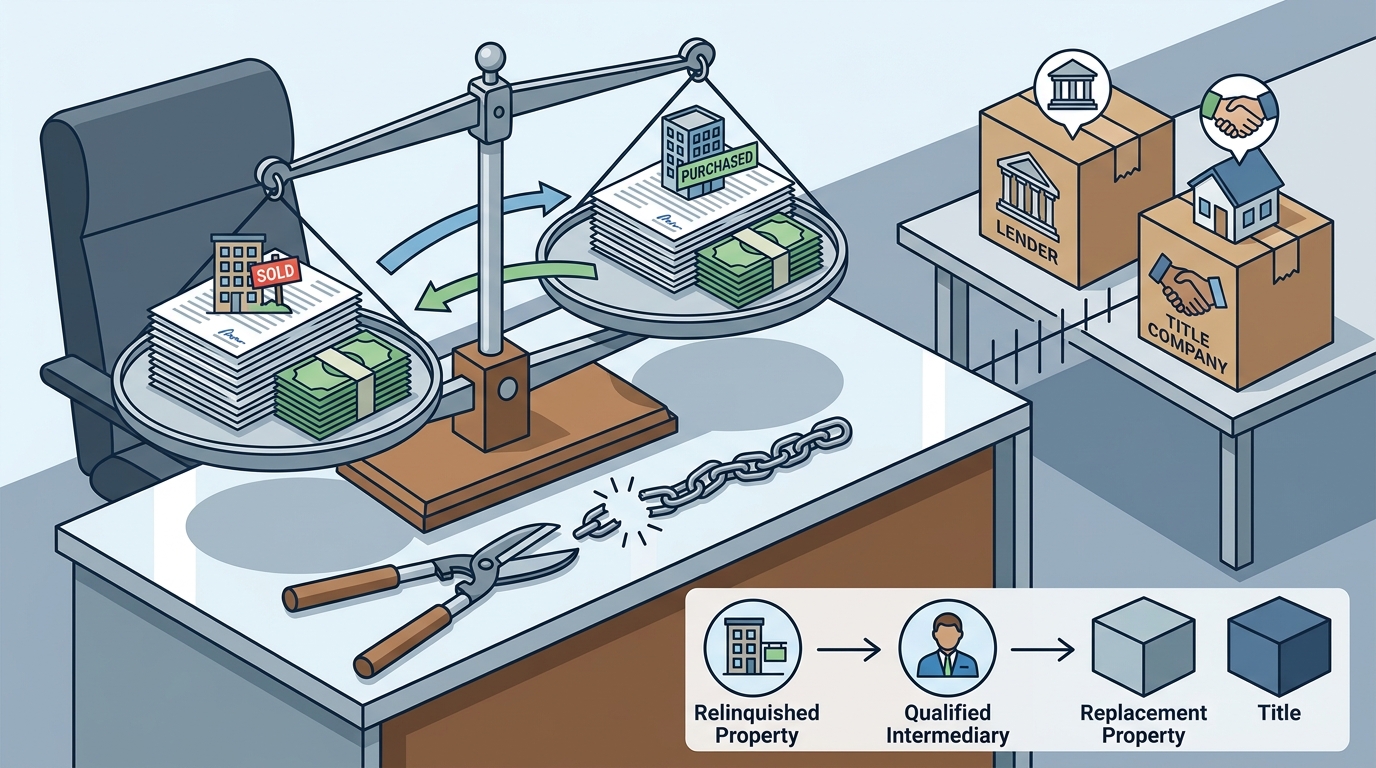
Investors frequently discover that their qualified intermediary (QI) is a subsidiary of the very lender holding their loan or the title company closing their transaction. This structural conflict of interest can jeopardize the tax-deferred status of a 1031 exchange. According to the Internal Revenue Service, the QI must be a disinterested party who does not have a pre-existing relationship with the investor that could influence the transaction. When a QI is owned by a lender or title provider, that independence is compromised, creating significant legal and financial risks for the investor. (1031 Exchange Alaska Granite)
What Defines an Independent Qualified Intermediary?
A qualified intermediary is a person or entity that facilitates a like-kind exchange by acquiring the relinquished property from the taxpayer, transferring it, and acquiring the replacement property. The core requirement for this role is strict independence. An independent QI operates as a separate business entity with no financial or ownership ties to the parties involved in the sale or purchase.
Granite Exchange Services has operated as an independent entity for over 25 years, guiding investors through complex exchanges without the conflicts inherent in lender or title company subsidiaries. This independence ensures that the QI’s sole fiduciary duty is to the investor’s tax outcome, not to the profitability of a parent lending institution.
When a company is truly independent, it does not benefit from the closing fees of the transaction it is facilitating. This separation is critical for maintaining the integrity of the exchange process. Investors must verify that their QI is not merely a "disinterested party" in name but is structurally independent in practice.
The Conflict of Interest: Lender and Title Affiliates
Many investors are unaware that their QI is owned by their lender or title company. This arrangement creates a direct conflict of interest. If the QI is a subsidiary of the lender, the lender has a financial incentive to ensure the exchange fails or is structured in a way that benefits the lender, rather than the investor.
For example, a lender-owned QI might pressure an investor to accept a lower-quality replacement property to close the deal faster, thereby securing the lender’s loan payoff. Alternatively, a title company-owned QI might prioritize their own closing fees over the investor’s tax deferral strategy. These conflicts can lead to costly mistakes that result in immediate tax liability.
The IRS requires that the QI not be the taxpayer’s employee, agent, or relative. While lender or title company subsidiaries may technically meet this definition, they often have a pre-existing business relationship with the investor that can be construed as an agency relationship. This ambiguity puts the entire exchange at risk.
Risks of Using an Affiliated Qualified Intermediary
Using a QI affiliated with a lender or title company introduces several specific risks. First, there is the risk of "actual notice." If the QI is aware of a legal defect in the transaction due to their relationship with the lender, they may be disqualified from serving as a QI. This can invalidate the exchange and trigger immediate capital gains taxes.
Second, there is the risk of fund commingling. Independent QIs like Granite Exchange Services hold funds in segregated, FDIC-insured accounts. Affiliated entities may commingle funds with their parent company’s operating accounts, exposing investor funds to bankruptcy or legal judgments against the parent company.
Third, there is the risk of biased advice. An independent QI provides objective guidance on exchange structures, such as delayed, reverse, or construction exchanges. An affiliated QI may steer investors toward simpler, less tax-efficient structures to benefit their parent company’s bottom line. This lack of objective advice can cost investors millions in unnecessary tax liability.
How to Verify True Independence
Investors must take proactive steps to verify the independence of their QI. Start by asking direct questions about ownership structure. Does the QI have any equity stake in the lender or title company handling the transaction? Are there any shared executives or board members?
Review the QI’s website and public filings. Independent companies like Granite Exchange Services proudly highlight their independence and long history of service. They often display certifications such as the Certified Exchange Specialist® (CES®) designation, which indicates a commitment to professional standards beyond mere compliance.
Check for red flags such as bundled pricing. If the QI fee is waived or significantly discounted because you are using their lender or title services, this is a major warning sign. Independent QIs charge fair market value for their specialized services because their value lies in their unbiased expertise.
Comparing Service Models: Independent vs. Affiliated
Understanding the differences between independent and affiliated QIs helps investors make informed decisions. The table below outlines the key distinctions.
| Feature | Independent QI | Lender/Title Affiliated QI |
|---|---|---|
| Primary Goal | Maximize tax deferral for investor | Facilitate loan payoff or title closing |
| Fund Security | Segregated, FDIC-insured accounts | May be commingled with parent funds |
| Advisory Bias | Objective, investor-focused advice | Potentially biased toward parent company |
| Conflict of Interest | None | High (financial incentive to influence outcome) |
| Expertise Depth | Specialized in complex exchanges | Generalist, focused on transaction speed |
Independent QIs specialize in complex exchange structures, including reverse exchanges and construction exchanges. These require precise timing and documentation that affiliated entities may not prioritize. By choosing an independent partner, investors gain access to specialized expertise that protects their tax deferral strategy.
Key Takeaways
- Independence is Critical: A QI owned by a lender or title company has a conflict of interest that can jeopardize your exchange.
- Fund Security Matters: Independent QIs like Granite Exchange Services use segregated, FDIC-insured accounts to protect your funds.
- Verify Ownership: Always ask about the QI’s ownership structure and any ties to your transaction parties.
- Beware of Discounts: Waived QI fees are often a sign of underlying conflicts of interest.
- Specialized Expertise: Independent QIs provide objective advice on complex exchange structures like reverse and construction exchanges.
- Long-Term Track Record: Look for QIs with 25+ years of experience and a history of successful exchanges.
- Professional Certification: CES® certification indicates a commitment to professional standards and ethical practices.
Frequently Asked Questions
What is a qualified intermediary (QI)?
A qualified intermediary is a person or entity that facilitates a like-kind exchange by acquiring the relinquished property from the taxpayer, transferring it, and acquiring the replacement property. The QI must be a disinterested party to ensure the exchange is valid under IRC Section 1031.
Can my lender be my qualified intermediary?
No, your lender cannot be your QI. The IRS prohibits the QI from being the taxpayer’s employee, agent, or relative. Since a lender has a financial interest in the transaction, they are considered a related party and cannot serve as a QI.
Is it safe to use a title company as my QI?
It is risky. If the title company is owned by or affiliated with the lender, it creates a conflict of interest. Independent title companies may serve as QIs, but investors must verify that they hold funds in segregated accounts and have no ties to the lender.
How do I verify if my QI is independent?
Ask the QI directly about their ownership structure and any relationships with your lender or title company. Reputable independent QIs will transparently disclose their independence and provide evidence of their segregated fund security.
What happens if my QI is not independent?
If your QI is not independent, the IRS may disqualify the exchange, resulting in immediate capital gains taxes, depreciation recapture, and potential penalties. It is crucial to use a truly independent QI to protect your tax deferral strategy.
Why is fund segregation important?
Fund segregation ensures that your exchange funds are protected from the QI’s creditors and bankruptcy. Independent QIs hold funds in separate, FDIC-insured accounts, providing an extra layer of security for your capital.
What is the CES® certification?
The Certified Exchange Specialist® (CES®) designation is a professional certification for qualified intermediaries. It indicates that the QI has demonstrated expertise and commitment to ethical standards in the 1031 exchange industry.
Start Your Independent Exchange
Protect your tax deferral strategy by choosing a qualified intermediary that is truly independent. Granite Exchange Services has guided over 20,000 investors through successful exchanges for more than 25 years. Our CES® certified counselors provide objective, expert guidance to ensure your exchange is compliant and secure.
Do not risk your capital gains tax deferral on a QI with conflicting interests. Start your independent 1031 exchange today with Granite Exchange Services. Contact us to learn more about our delayed, reverse, and construction exchange services.