

Investors who utilize Section 1031 exchanges defer an average of 20% to 30% in combined federal and state taxes on every property sale. This deferral allows capital to remain deployed in the market, compounding wealth without the drag of immediate tax liability. According to the Internal Revenue Code, this mechanism is strictly regulated, requiring precise adherence to timelines and identification rules to maintain tax-deferred status.
Understanding the Basics of Like-Kind Exchange
A 1031 exchange, formally known as a like-kind exchange, allows you to sell an investment property and reinvest the proceeds into a new property of similar nature while deferring capital gains taxes. The term "like-kind" refers to the nature of the asset, not its grade or quality. For real estate, this means almost any investment property can be exchanged for another investment property, regardless of whether one is a single-family rental and the other is a commercial building.
It is crucial to understand that a 1031 exchange is not a tax elimination strategy. It is a tax deferral strategy. You will eventually pay taxes when you sell the replacement property unless you hold it until death or utilize further exchanges. The primary benefit is the preservation of purchasing power. By deferring taxes, you keep more capital working for you in the market.
According to the IRS, the property must be held for productive use in a trade or business or for investment. Personal residences do not qualify, although there are specific exceptions for vacation homes that meet strict rental criteria. The discipline of a private bank is required to manage the funds during the transition, which is why the role of a Qualified Intermediary is non-negotiable.
Step 1: Engage a Qualified Intermediary
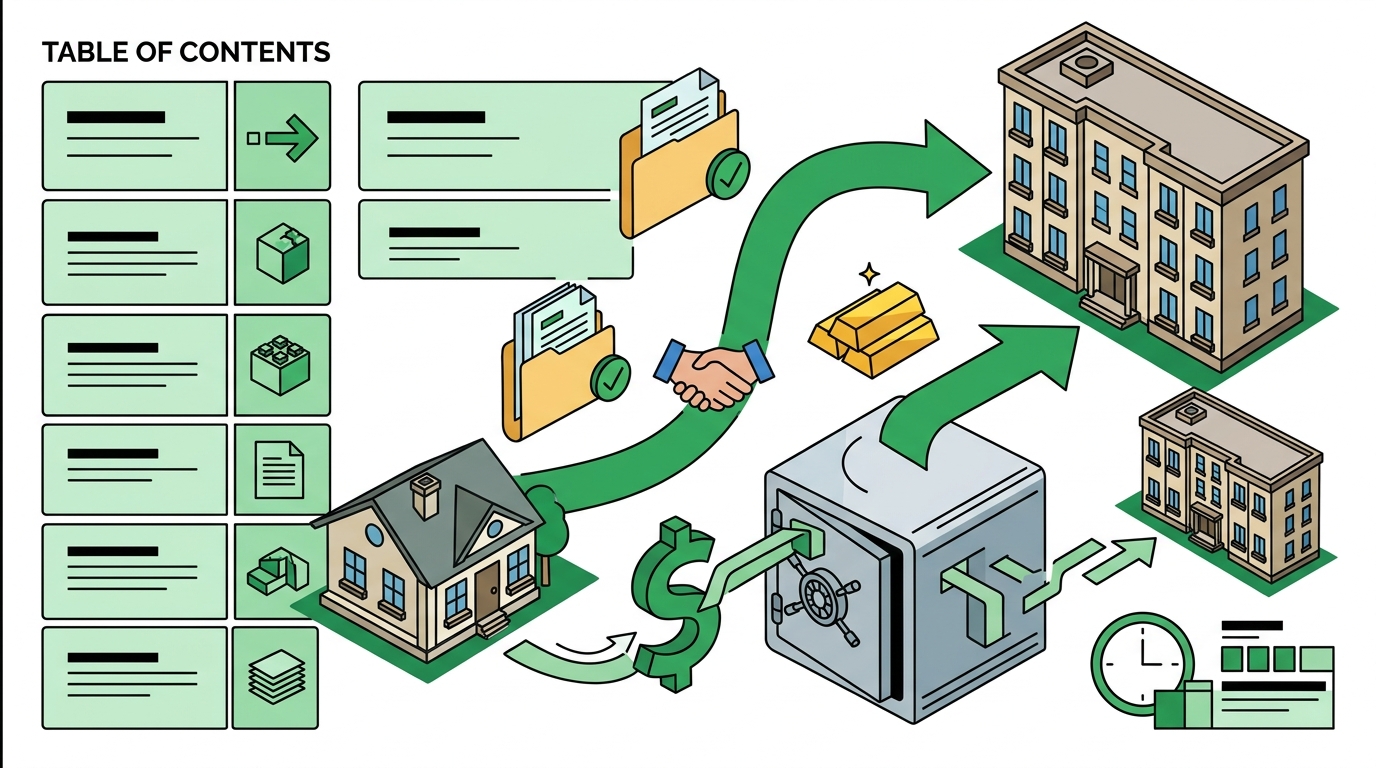
The first and most critical step is to hire a Qualified Intermediary (QI) before you close on the sale of your relinquished property. A QI is an independent third party that facilitates the exchange by holding your sale proceeds in a segregated account. You cannot touch the money; if you do, the exchange fails, and you become liable for immediate taxes.
Granite Exchange Services has served as a Qualified Intermediary for over 25 years, completing more than 20,000 exchanges. They are CES® Certified, ensuring that specialists handle your documentation with precision. Their fund security architecture uses segregated, FDIC-insured accounts to ensure your funds are never commingled with other clients' money.
When selecting a QI, verify their financial strength and insurance coverage. Look for a provider that offers 24/7 support and clear communication channels. The exchange process is time-sensitive, and having a specialist who answers when you call can prevent costly mistakes. You can start your delayed exchange by contacting a specialist to set up your escrow accounts.
Step 2: Identify Replacement Property
Once you sell your relinquished property, you enter the identification period. You have exactly 45 calendar days to identify potential replacement properties in writing to your QI. This is not a verbal agreement; it must be documented and signed. You can identify up to three properties regardless of their value. This is known as the "Three-Property Rule." Alternatively, you can identify more than three properties if their total fair market value does not exceed 200% of the value of the relinquished property. This is the "200% Rule." There is also a "95% Rule," which allows you to identify any number of properties as long as you acquire at least 95% of the total value identified.
Identifying properties requires strategic planning. You must analyze the market for replacement properties that meet your investment goals while staying within the identification constraints. Many investors struggle with this step because they wait too long to look for replacements. Start your search before you even list your current property. The 45-day rule is absolute, with no extensions granted by the IRS for weekends or holidays.
Step 3: Acquire the Replacement Property
After identifying your replacement property, you must close on it within 180 calendar days from the sale of your relinquished property, or by the tax filing deadline of your tax return for the year of the sale, whichever is earlier. The 180-day period is also strict. You must acquire the property using the funds held by your QI. The purchase price must be equal to or greater than the net sale price of the relinquished property to defer all taxes. If you receive cash or reduce debt, you will pay taxes on that amount, known as "boot." To learn more about how boot affects your taxes, review the guide on understanding boot.
Financing the replacement property can be complex. You can use debt to acquire the property, but you must ensure that the debt level is equal to or greater than the debt on the relinquished property to avoid boot. If you pay down debt, you may have to recognize gain. Granite Exchange Services provides detailed calculators to help you estimate your exchange savings and understand the financial implications of different scenarios.
Critical Deadlines and Rules
Timing is the most dangerous aspect of a 1031 exchange. Missing a deadline by even one day can disqualify the entire exchange. The 45-day identification period and the 180-day acquisition period run concurrently from the date you close on the sale of your relinquished property. It is vital to track these dates meticulously.
| Exchange Type | Timeline | Key Requirement |
|---|---|---|
| Delayed Exchange | 45 days to identify, 180 days to close | Sell first, then buy |
| Reverse Exchange | 180 days to close | Buy first, then sell |
| Construction Exchange | 180 days to complete improvements | Build or improve replacement |
| DST Exchange | 45 days to identify, 180 days to close | Passive fractional ownership |
For investors looking to simplify the process, a Delaware Statutory Trust (DST) exchange allows you to invest in institutional-grade real estate without the burden of management. This is ideal for those who want to diversify or downsize their responsibilities while still deferring taxes.
Common Pitfalls to Avoid
Many exchanges fail due to avoidable errors. One common mistake is using a related party, such as a family member or business partner, as the QI. This can disqualify the exchange. Another pitfall is failing to properly identify replacement properties in writing. Verbal intentions are not sufficient. You must adhere to the strict identification rules outlined by the IRS.
Another frequent error is underestimating the costs associated with the exchange. QI fees, assignment fees, and potential transaction costs can add up. It is important to budget for these expenses. Additionally, investors often forget that state taxes may also apply. While federal taxes are deferred, some states require separate reporting or do not conform to federal 1031 rules. For example, if you are selling in California, you must file an annual FTB Form 3840 to track your deferred gain until it is recognized.
Finally, do not assume that all properties qualify. The property must be held for investment or business use. Personal use properties, such as a primary residence or a vacation home used extensively by you, may not qualify. Ensure your properties meet the IRS criteria before initiating the exchange.
Key Takeaways
- A 1031 exchange defers capital gains taxes, allowing investors to preserve more capital for future investments.
- You must engage a Qualified Intermediary before closing on the sale of your relinquished property.
- You have 45 days to identify replacement properties and 180 days to close on them.
- Granite Exchange Services has safeguarded over $1 billion in client funds since 2000.
- Failure to meet deadlines or identification rules results in immediate tax liability.
- State tax implications vary; consult a tax advisor for your specific jurisdiction.
- Reverse and construction exchanges offer flexibility for complex transactions.
Frequently Asked Questions
What is a 1031 exchange?
A 1031 exchange is a provision in the Internal Revenue Code that allows investors to defer capital gains taxes by swapping one investment property for another of like-kind.
Who can perform a 1031 exchange?
Any individual or entity that holds investment property or property used in a trade or business can perform a 1031 exchange. The property must not be inventory or stock in trade.
Can I exchange a rental property for a commercial property?
Yes. As long as both properties are held for investment or business use, you can exchange a residential rental for a commercial property, and vice versa.
What happens if I miss the 45-day identification deadline?
If you miss the 45-day deadline, the exchange is disqualified. You will be liable for all capital gains taxes on the sale of your relinquished property, plus any penalties and interest.
How much does a 1031 exchange cost?
Costs vary by provider and transaction complexity. Typical fees include QI fees, assignment fees, and wire transfer fees. Granite Exchange Services offers transparent pricing for their services.
Can I use a 1031 exchange for a vacation home?
Generally, no. Vacation homes are often considered personal use property. However, if the property meets specific rental and usage criteria, it may qualify. Consult with a tax professional.
What is a reverse exchange?
A reverse exchange allows you to acquire the replacement property before selling the relinquished property. This is useful in competitive markets where finding a replacement quickly is challenging.
Start Your Exchange
Completing a 1031 exchange requires precision, expertise, and a trusted partner. Granite Exchange Services provides the security and support you need to navigate this complex process. With 25+ years of experience and a commitment to fund security, they ensure your exchange is handled with the highest level of professionalism. Start your exchange today by contacting a specialist to discuss your goals and secure your financial future.