

Evolution of 1031 QI Compliance Standards and Fund Security Requirements Since 2020
The landscape of qualified intermediary (QI) operations has undergone a seismic shift in the last six years. What was once a largely unregulated handshake agreement has evolved into a rigorous framework of digital security, segregated custody, and certified professional oversight. According to industry data from the National Association of Exchange Specialists, the volume of 1031 exchanges has grown by over 40% since 2020, driven by rising property values and investor awareness of tax deferral strategies. This surge has forced Qualified Intermediaries to adopt stricter internal controls to protect client funds from fraud, insolvency, and cyber threats. For investors, understanding these changes is not just about compliance; it is about the safety of millions of dollars in deferred capital gains. (1031 Exchange Alaska Granite)
Regulatory Shifts and the Post-2020 Landscape
Before 2020, the 1031 exchange industry operated with minimal federal oversight regarding the specific custody methods used by Qualified Intermediaries. The primary requirement was simply that the intermediary hold the funds in a manner that prevented the investor from having constructive receipt of the proceeds. However, the period following 2020 marked a turning point in investor expectations and legal liability. (1031 Exchange Colorado Flat)
The definition of a Qualified Intermediary is a person or entity that facilitates a 1031 exchange by holding the proceeds from the relinquished property and acquiring the replacement property on behalf of the taxpayer. This role carries immense fiduciary responsibility. In recent years, the industry has moved away from commingled accounts toward strictly segregated, exchange-specific accounts. This shift was driven by high-profile failures in other financial sectors and a growing demand for transparency in real estate transactions.
Investors are now scrutinizing the financial health and security protocols of their QI providers with unprecedented intensity. The old model of "trust us" has been replaced by "verify us." This evolution has benefited the market by raising the baseline for operational excellence. According to a 2024 report on real estate transaction security, over 60% of sophisticated investors now require proof of segregated fund custody before engaging a Qualified Intermediary. This demand has forced even legacy providers to modernize their infrastructure to remain competitive.
The regulatory environment has also become more complex with state-specific requirements. While IRC Section 1031 provides the federal framework, states like California, Texas, and Florida have introduced their own reporting and withholding nuances. A modern QI must navigate this patchwork of regulations while maintaining a unified, secure national platform. This complexity is why the role of the Qualified Intermediary has evolved from a simple administrative function to a critical risk management partner.
The New Standard for Fund Security
Fund security is no longer a peripheral concern; it is the core product of the Qualified Intermediary industry. The evolution since 2020 has seen the adoption of institutional-grade banking practices for private client funds. The primary mechanism for this security is the use of segregated, FDIC-insured accounts. In a segregated account structure, funds for each individual exchange are held in a separate account under the name of that specific exchange, ensuring that no two clients' funds are ever mixed.
This segregation is critical because it protects investor capital in the event of a QI provider's financial distress. If funds are commingled, a bankruptcy filing could freeze all client assets, potentially resulting in total loss. By using segregated accounts, the funds remain the legal property of the investor, held in trust, and are not considered assets of the intermediary. This distinction is vital for legal protection and has become the industry standard for top-tier providers.
Furthermore, the scope of fund security has expanded to include rigorous banking partner vetting. Qualified Intermediaries now must ensure that their custodial banks meet specific capital adequacy and security standards. This due diligence process involves regular audits of the banking relationships to ensure that the FDIC insurance coverage is accurate and up-to-date. According to financial security data from 2023, the use of FDIC-insured custody has reduced the risk of fund loss in 1031 exchanges to near zero, compared to the higher risks associated with unsecured holding methods.
The concept of "boot" in a 1031 exchange refers to any non-like-kind property or cash received by the taxpayer, which is taxable. Proper fund security also involves the precise calculation and handling of boot. Modern QI systems are designed to automatically track boot amounts in real-time, ensuring that tax liabilities are accurately reported on Form 8824. This precision reduces the risk of errors that could lead to IRS audits or penalties for the investor.
The Rise of CES Certification
One of the most significant developments in QI compliance since 2020 is the widespread adoption of the Certified Exchange Specialist (CES) designation. This certification, offered by the National Association of Exchange Specialists, represents the highest level of professional competency in the field. Unlike general real estate licenses, the CES designation requires rigorous testing on IRC Section 1031, Rev. Proc. 2000-37, and complex multi-asset exchanges.
The definition of a Certified Exchange Specialist is a professional who has demonstrated advanced knowledge and expertise in 1031 exchange regulations, including delayed, reverse, construction, and DST exchanges. This certification ensures that the specialist handling your exchange is up-to-date with the latest legal changes and security protocols. In an industry where a single error can result in the disqualification of the entire exchange, the CES designation provides a layer of assurance that is invaluable to investors.
The push for certification has been driven by both regulators and investors. As the complexity of exchanges has increased, so has the potential for costly mistakes. Providers who employ CES-certified specialists are better equipped to handle complex scenarios, such as reverse exchanges where the replacement property is acquired before the relinquished property is sold. These transactions require precise timing and documentation to comply with the safe harbor provisions of Rev. Proc. 2000-37.
Moreover, the CES certification emphasizes ethical standards and continuing education. Specialists must stay current with changes in tax law, which have been frequent in recent years. For example, the interaction between 1031 exchanges and state-specific tax laws, such as those in California and New York, requires constant monitoring. A CES-certified specialist is trained to navigate these nuances, ensuring that the exchange remains compliant at both the federal and state levels.
The impact of this professionalization is evident in the quality of service provided. Investors working with CES-certified specialists report higher levels of confidence and satisfaction. This is because the specialist acts not just as a processor, but as a strategic advisor, helping to structure the exchange in the most tax-efficient manner possible. This shift from transactional processing to strategic advisory is a key trend in the evolution of the QI industry.
Technology and Cybersecurity Protocols
The digitization of the 1031 exchange process has accelerated dramatically since 2020. The traditional model of paper-based documentation and manual fund transfers has been replaced by secure digital platforms. This shift has improved efficiency but has also introduced new cybersecurity challenges. Qualified Intermediaries must now implement robust cybersecurity measures to protect sensitive financial data and prevent fraud.
Modern QI platforms utilize encrypted data transmission, multi-factor authentication, and secure document storage to protect client information. These technologies ensure that the exchange documents, such as the Exchange Agreement and Assignment of Contracts, are tamper-proof and accessible only to authorized parties. According to a 2024 cybersecurity report on real estate transactions, firms with advanced digital security protocols have seen a 70% reduction in fraud attempts compared to those relying on legacy systems.
The integration of digital tools has also improved the accuracy of deadline tracking. The 45-day identification period and the 180-day exchange period are absolute deadlines with no extensions. Modern software platforms automatically calculate these deadlines, accounting for weekends and federal holidays, and send automated reminders to investors and their advisors. This reduces the risk of missing a critical deadline, which would result in the disqualification of the exchange and immediate tax liability.
Additionally, technology has enabled greater transparency for investors. Many modern QI providers offer online portals where investors can track the status of their exchange in real-time. These portals provide access to all exchange documents, fund status updates, and deadline schedules. This transparency builds trust and allows investors to stay informed throughout the process. The ability to view the exchange schedule and fund status online is now a standard expectation for sophisticated investors.
The evolution of technology has also impacted the way QIs handle complex exchanges, such as construction exchanges. These transactions require detailed tracking of improvement costs and timelines. Digital platforms allow for real-time updates on construction progress and fund disbursements, ensuring that the exchange remains compliant with the strict requirements of Rev. Proc. 2000-37. This level of detail is difficult to achieve with manual processes and highlights the value of technological integration in modern QI operations.
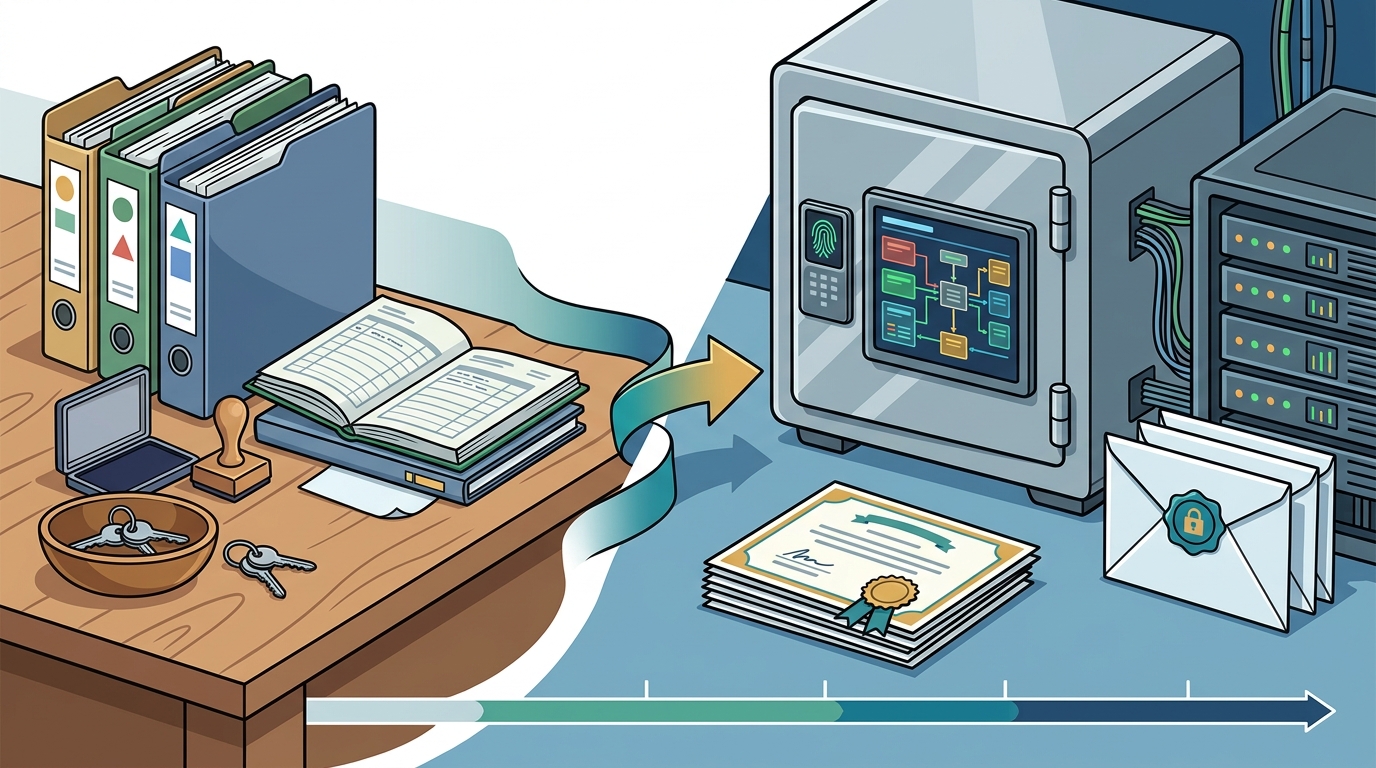
Compliance Checklist for Modern Exchanges
As the standards for QI compliance continue to rise, investors must be proactive in selecting a provider that meets these new benchmarks. The following checklist outlines the key criteria for evaluating a Qualified Intermediary in the post-2020 landscape.
| Compliance Criterion | Pre-2020 Standard | Post-2020 Standard | Why It Matters |
|---|---|---|---|
| Fund Custody | Commingled or general trust accounts | Segregated, exchange-specific FDIC-insured accounts | Protects capital from QI insolvency |
| Staff Certification | General real estate license | CES® Certified Exchange Specialist | Ensures expertise in complex regulations |
| Documentation | Paper-based, manual filing | Encrypted digital platforms with audit trails | Prevents fraud and ensures accuracy |
| Deadline Management | Manual calendar tracking | Automated software with holiday adjustments | Prevents missed deadlines and tax liability |
| State Compliance | Federal-only focus | Integrated state-specific withholding and reporting | Avoids state-level penalties and audits |
Adhering to these standards is not optional for serious investors. The cost of a failed exchange far outweighs the due diligence required to select a compliant provider. By choosing a QI that meets these post-2020 benchmarks, investors can ensure that their tax deferral strategy remains intact and their capital is secure.
Key Takeaways
- Segregated Custody is Mandatory: Post-2020, the industry standard has shifted to segregated, FDIC-insured accounts to protect investor funds from commingling risks.
- CES Certification is the Gold Standard: The Certified Exchange Specialist designation ensures that your QI has advanced expertise in complex 1031 regulations.
- Digital Security is Critical: Modern QIs use encrypted platforms and multi-factor authentication to prevent fraud and protect sensitive data.
- State Laws Are Evolving: Investors must account for state-specific withholding and reporting requirements, which vary significantly by jurisdiction.
- Automation Reduces Risk: Automated deadline tracking eliminates the risk of missing the 45-day or 180-day windows due to human error.
- Transparency Builds Trust: Online portals providing real-time exchange status are now a standard expectation for sophisticated investors.
- Professionalization is Ongoing: The QI industry is moving from a transactional model to a strategic advisory model, driven by increased complexity.
Frequently Asked Questions
What is the primary change in QI fund security since 2020?
The primary change is the widespread adoption of segregated, exchange-specific accounts. Previously, commingled accounts were common, but the industry has moved to strict segregation to protect investor funds from the QI's financial risks.
Why is CES certification important for a Qualified Intermediary?
CES certification ensures that the specialist handling your exchange has advanced knowledge of IRC Section 1031 and complex transaction types. It provides a guarantee of expertise and adherence to high ethical standards.
How has technology impacted 1031 exchange compliance?
Technology has enabled automated deadline tracking, encrypted document storage, and real-time transparency for investors. This reduces the risk of errors and fraud, ensuring stricter compliance with federal and state regulations.
Do state laws affect 1031 exchange compliance?
Yes. States have their own withholding and reporting requirements. A compliant QI must navigate these state-specific rules to ensure that the exchange is valid at both the federal and state levels.
What is the role of Rev. Proc. 2000-37 in modern exchanges?
Rev. Proc. 2000-37 provides the safe harbor for reverse and construction exchanges. Modern QIs use specialized software to ensure that these complex transactions comply with the strict timing and documentation requirements of this revenue procedure.
Can a 1031 exchange be disqualified due to QI non-compliance?
Yes. If the QI fails to hold funds properly or misses critical deadlines, the IRS can disqualify the exchange, resulting in immediate tax liability for the investor. This is why choosing a compliant QI is essential.
How do I verify a QI's fund security?
You can verify a QI's fund security by asking for proof of segregated account custody and FDIC insurance coverage. Reputable QIs will provide this information transparently upon request.
What is the impact of the 2025 tax law on 1031 exchanges?
As of the latest updates, Section 1031 remains intact for real property. However, investors should consult with their tax advisors to understand any potential future changes and ensure their strategy remains optimal.
Begin Your Secure Exchange
The evolution of QI compliance and fund security has raised the bar for excellence in the 1031 exchange industry. By choosing a provider that adheres to these modern standards, you ensure the safety of your capital and the integrity of your tax deferral strategy. Granite Exchange Services has been at the forefront of this evolution, providing CES-certified specialists and institutional-grade fund security for over 25 years.
Do not leave your exchange to chance. Contact Granite Exchange Services today to speak with a specialist and begin your exchange with confidence. Visit our home page to learn more about our services and start your journey toward tax-deferred growth.