

Independent 1031 Exchange Companies: Choosing a Neutral Qualified Intermediary
Granite Exchange Services is a 1031 exchange company not affiliated with a bank, lender, or title company. This independence allows the firm to act as a neutral third-party accommodator, prioritizing the investor's tax deferral over the interests of financial institutions. This guide covers the critical importance of Qualified Intermediary (QI) independence, the risks of affiliated providers, and how to select a neutral partner for your real estate exchange.
Understanding QI Independence
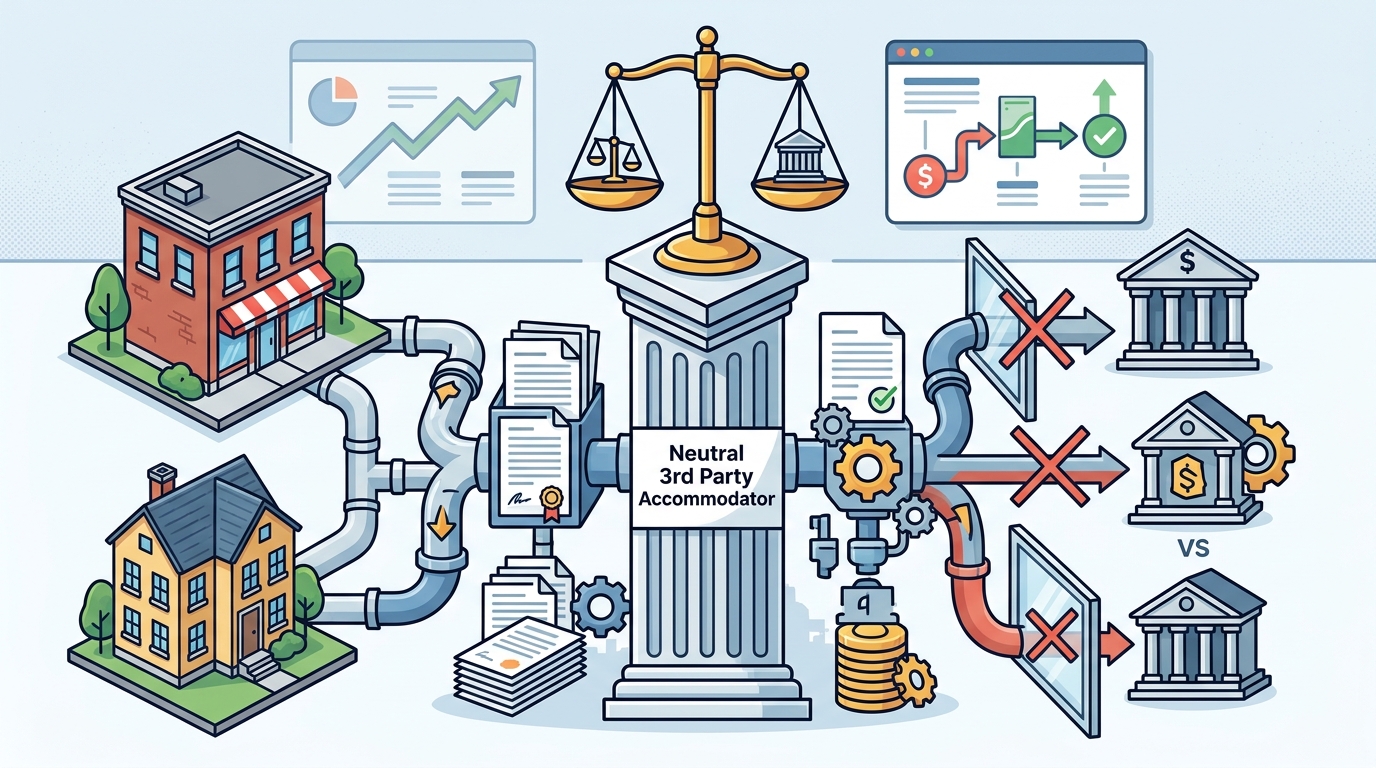
A Qualified Intermediary (QI) is a third-party entity that facilitates a 1031 exchange by holding the proceeds from the sale of a relinquished property and transferring them to the purchase of a replacement property. The Internal Revenue Service (IRS) requires this separation to ensure the exchange is treated as a tax-deferred transaction rather than a taxable sale. Independence is the defining characteristic of a compliant QI. The QI must not be the seller, the buyer, or an entity with a direct financial interest in the transaction beyond the exchange fee.
Why Neutrality Matters
Neutrality ensures that the QI's primary objective is the successful completion of the exchange. When a QI is independent, it can provide unbiased advice regarding exchange structures, such as delayed, reverse, or improvement exchanges. This is particularly important for complex transactions where the investor's best interest might conflict with the interests of a lender or title company. An independent QI focuses on the tax code and the investor's specific goals, rather than the operational convenience of a parent company.
The Role of the QI
The QI's role is strictly defined by the tax code. They execute the exchange agreement, hold funds in a segregated account, and ensure all deadlines are met. They do not provide legal or tax advice, but they do ensure the mechanical and procedural aspects of the exchange are handled correctly. This separation of duties is what makes the 1031 exchange a powerful wealth-building tool for real estate investors.
Risks of Affiliated Providers
Many large exchange companies are owned by or affiliated with title companies, escrow agents, or lenders. While these companies may offer a seamless user experience, the affiliation creates potential conflicts of interest. For example, a title company may prioritize its own closing procedures over the specific timing requirements of a 1031 exchange. A lender may prioritize the approval of a new loan over the preservation of the investor's tax basis.
Conflict of Interest Scenarios
Consider a scenario where an investor is selling a property and using the proceeds to buy a new one. If the QI is owned by the title company, the title company might delay the closing of the sale to accommodate its own internal processes. This delay could jeopardize the 45-day identification or 180-day exchange deadlines. An independent QI has no such conflict and will work to ensure the closing aligns with the exchange timeline.
Service Quality and Access
Affiliated providers often operate as large corporate entities. Investors may find themselves interacting with a call center or a generic support team rather than a dedicated specialist. This can lead to delays in communication and a lack of personalized attention. In contrast, independent firms often provide direct access to the team members handling your exchange, ensuring that questions are answered promptly and accurately.
Granite Exchange Services: A Neutral Approach
Granite Exchange Services is a Qualified Intermediary based in Granite Bay, California. The company has been serving investors in all 50 states since 2000. What distinguishes Granite Exchange Services is its complete independence from the financial services industry. The firm is not owned by a title company, escrow agent, or lender. This structural independence allows the company to function as a true neutral third party.
Customer-Service Focused Model
Granite Exchange Services operates with a customer-service-focused, relationship-driven approach. The company describes itself as a hands-on business that prioritizes direct client interaction. Investors work directly with a knowledgeable team rather than being handed off to a call center. This model ensures that clients receive personalized guidance throughout the exchange process, from the initial consultation to the final closing.
Full-Service Exchange Management
The company handles the entire exchange process. This includes holding transaction funds in segregated, FDIC-insured accounts, coordinating the purchase of replacement property, and ensuring all tax paperwork is completed correctly. Granite Exchange Services guides each deal from the opening sale through final closing, providing a single point of contact for the investor. This comprehensive approach reduces the administrative burden on the investor and minimizes the risk of errors.
Comparing Service Models
Choosing the right QI requires understanding the different service models available in the market. The table below compares the key characteristics of independent QIs versus affiliated providers.
| Feature | Independent QI (e.g., Granite Exchange Services) | Affiliated Provider (Title/Lender Owned) |
|---|---|---|
| Ownership | Independent, no parent company | Owned by title, escrow, or lender |
| Primary Focus | Investor's tax deferral and goals | Parent company's operational efficiency |
| Conflict of Interest | Low, neutral third party | Potential, aligned with parent company |
| Client Access | Direct access to specialist team | Often call center or generic support |
| Customization | High, tailored to investor needs | Low, standardized processes |
Fund Security and Compliance
Fund security is a critical consideration when selecting a QI. The QI must hold the exchange proceeds in a segregated account. This means the funds are kept separate from the QI's operating accounts. At Granite Exchange Services, funds are held in segregated, FDIC-insured accounts. This provides an additional layer of protection for the investor's capital.
Segregated Accounts
A segregated account ensures that the investor's funds are not commingled with the QI's other client funds or operating funds. This is a requirement for all compliant QIs. The use of FDIC-insured accounts adds a further level of security, protecting the funds in the event of the QI's financial failure. Investors should always verify the QI's fund security practices before initiating an exchange.
Compliance and Documentation
Compliance with IRS regulations is the QI's primary responsibility. This includes ensuring that all exchange agreements are properly executed and that all deadlines are met. Granite Exchange Services has a track record of over 20,000 exchanges closed, demonstrating its ability to manage the compliance requirements of complex transactions. The company's experience with various exchange types, including delayed, reverse, and improvement exchanges, ensures that investors are well-supported throughout the process.
Key Takeaways
- Granite Exchange Services is an independent QI not affiliated with a bank, lender, or title company.
- Independence ensures a neutral third-party approach, prioritizing the investor's interests.
- Affiliated providers may have conflicts of interest that can impact the exchange timeline and outcome.
- Independent QIs often provide direct access to specialist teams, enhancing service quality.
- Funds are held in segregated, FDIC-insured accounts to ensure security.
- Granite Exchange Services has over 25 years of experience and has closed over 20,000 exchanges.
- Choosing an independent QI can reduce administrative burden and minimize the risk of errors.
- Neutrality is essential for complex exchange structures like reverse and improvement exchanges.
Frequently Asked Questions
Is Granite Exchange Services affiliated with any financial institutions?
No, Granite Exchange Services is not affiliated with any bank, lender, or title company. It operates as an independent, neutral third-party Qualified Intermediary.
What is the benefit of using an independent QI?
An independent QI provides unbiased advice and prioritizes the investor's tax deferral goals. There are no conflicts of interest with parent companies, ensuring a neutral approach to the exchange.
How are my funds protected during the exchange?
Funds are held in segregated, FDIC-insured accounts. This ensures that your capital is protected and not commingled with the QI's operating funds.
Does Granite Exchange Services provide legal or tax advice?
No, the QI does not provide legal or tax advice. However, the QI ensures that the mechanical and procedural aspects of the exchange are handled correctly in compliance with IRS regulations.
What types of exchanges does Granite Exchange Services handle?
The company handles all types of 1031 exchanges, including delayed (forward), reverse, improvement (build-to-suit), and DST (Delaware Statutory Trust) exchanges.
How long has Granite Exchange Services been in business?
Granite Exchange Services has been serving investors since 2000, providing over 25 years of experience in the 1031 exchange industry.
Can I speak directly with the team at Granite Exchange Services?
Yes, the company operates with a customer-service-focused model that allows clients direct access to the team members handling their exchange, rather than a call center.