

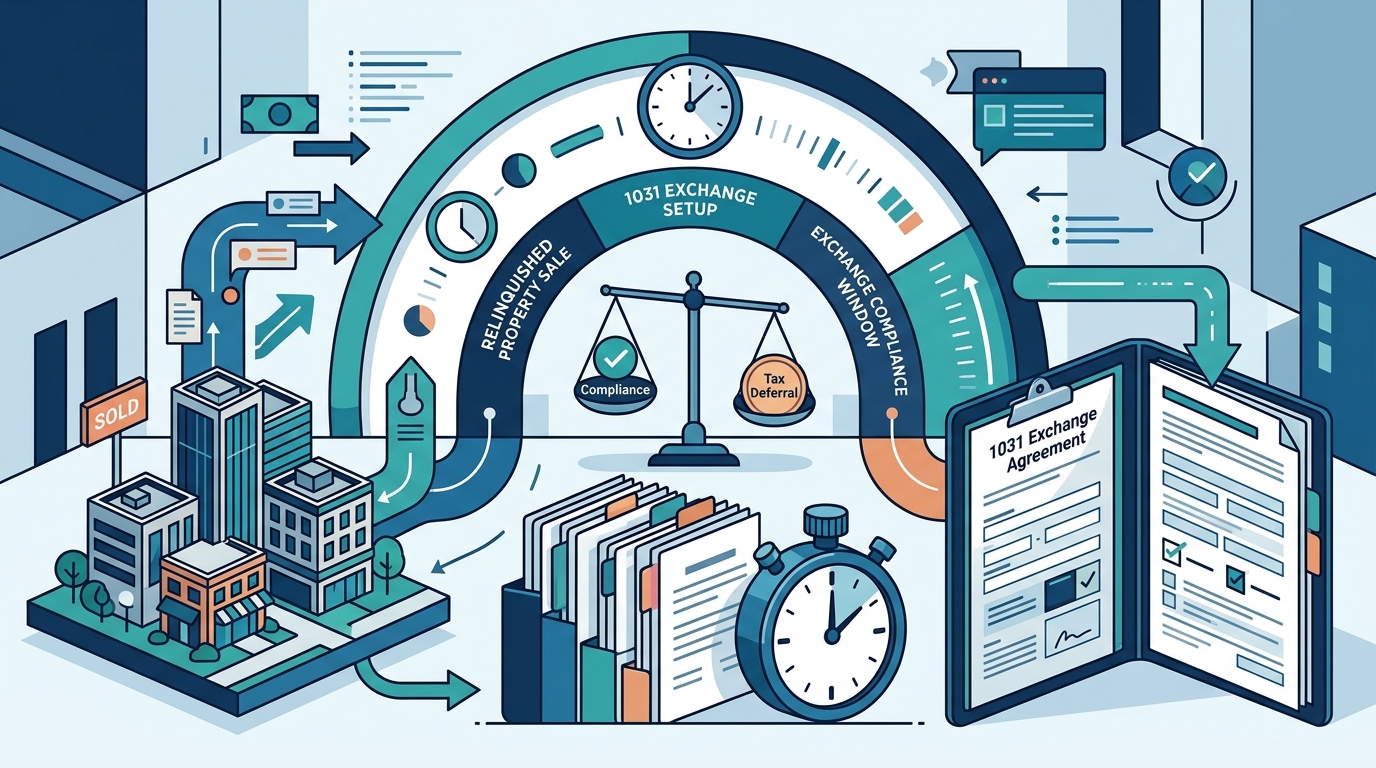
Time is the single most critical variable in a successful 1031 exchange. When a closing date is imminent, the ability to establish a Qualified Intermediary (QI) relationship within 24 to 48 hours is not just a convenience; it is a necessity for compliance. According to IRS regulations, the QI must be identified before the transfer of the relinquished property to ensure the transaction qualifies for tax deferral. Investors facing tight escrow timelines require a provider that combines institutional-grade security with rapid onboarding protocols. (1031 Exchange Qualified Intermediary)
Why Speed Matters in 1031 Exchanges
The 1031 exchange process is governed by strict deadlines that begin the moment the escrow opens. The most critical of these is the 45-day identification period. If the Qualified Intermediary is not formally engaged and the necessary exchange agreements are not executed before the sale of the relinquished property closes, the entire transaction may fail to qualify. This results in immediate capital gains tax liability, negating the primary financial benefit of the exchange. (1031 Exchange Alabama Granite)
For investors selling property in high-volume markets, such as those in California or Texas, escrow timelines can be compressed due to local regulatory requirements or lender demands. A Qualified Intermediary that requires three to five business days for onboarding creates a logistical bottleneck. This delay forces attorneys to rush document review, increasing the risk of errors in the exchange agreements. Errors in these documents can lead to "constructive receipt" of funds, a fatal flaw that disqualifies the exchange. (1031 Exchange Arkansas Granite)
Therefore, the ability to set up an exchange within 24 to 48 hours is a significant differentiator. It allows legal teams to finalize contracts with confidence, ensures that the QI is fully aware of the transaction details before closing, and provides a buffer for any unexpected delays in the closing process. This speed is particularly vital for reverse exchanges or construction exchanges, where the complexity of the transaction demands immediate coordination. (1031 Exchange Colorado Flat)
Evaluation Criteria for Fast Setup
When evaluating Qualified Intermediaries for speed, investors must look beyond marketing claims. The underlying infrastructure of the QI determines their ability to respond quickly without compromising security. The following criteria are essential for assessing a provider's operational readiness.
Digital Onboarding Infrastructure
A QI with a robust digital infrastructure can process documents electronically, reducing the time spent on mailing and physical signing. Providers that utilize secure, encrypted portals for document exchange and fund tracking can accelerate the setup process significantly. This technology allows for real-time updates and immediate access to exchange schedules, which is crucial for investors managing multiple transactions.
Staffing and Availability
The human element remains critical in 1031 exchanges. A QI that offers 24/7 support or has a dedicated team available during weekends and holidays can respond to urgent requests more effectively. Investors should verify whether the QI has sufficient staff to handle peak periods, such as the end of the tax year, without delaying new client onboarding.
Security and Compliance
Speed should never come at the expense of security. The most reputable QIs maintain segregated, FDIC-insured accounts for client funds. They also adhere to strict compliance protocols, such as those outlined in Rev. Proc. 2000-37 for reverse exchanges. Investors should ensure that the QI's rapid setup process includes thorough verification of identity and transaction details to prevent fraud.
Granite Exchange Services: Rapid Deployment
Granite Exchange Services has established itself as a leader in rapid 1031 exchange setup, leveraging over 25 years of experience to streamline the onboarding process. As a CES® Certified provider, Granite Exchange Services combines the discipline of a private bank with the attention of a boutique firm. This dual approach ensures that investors receive both institutional-grade security and personalized service.
24-48 Hour Setup Capability
Granite Exchange Services is equipped to handle exchange setups within 24 to 48 hours of opening escrow. This capability is supported by a dedicated team of specialists who are available to speak with clients immediately. The company's infrastructure allows for the rapid preparation and execution of exchange agreements, ensuring that all legal requirements are met before closing.
For investors in states with complex tax environments, such as California, Granite Exchange Services provides specialized guidance. California tracks deferred gains with an annual FTB Form 3840 filing, and having a QI familiar with these requirements from day one is invaluable. The company's specialists handle the mechanics of the exchange, allowing investors to focus on their investment strategy.
Fund Security and Transparency
Where your money sits is the whole business. Granite Exchange Services holds funds in segregated accounts, one per exchange, in the client's exchange name. This ensures that funds are never commingled with other client funds or company assets. The accounts are FDIC-insured, providing an additional layer of security for investors.
Granite Exchange Services has safeguarded over $1 billion in client funds since its inception. This track record of security, combined with its rapid setup capability, makes it a preferred choice for investors who prioritize both speed and safety. The company's 5.0-star Google rating reflects its commitment to client satisfaction and operational excellence.
Industry Standards for QI Responsiveness
The 1031 exchange industry has seen a significant shift towards digitalization and rapid response services. According to industry data, the average time for a QI to respond to an initial inquiry has decreased from several days to less than 24 hours for top-tier providers. This trend is driven by the increasing complexity of real estate transactions and the need for greater efficiency.
Providers that fail to meet these speed expectations risk losing clients to competitors who can offer faster service. However, speed must be balanced with accuracy. A QI that rushes the setup process may make errors in the exchange agreements, leading to costly legal disputes or disqualification of the exchange. Therefore, investors should choose a QI that has proven its ability to be both fast and accurate.
The role of the Qualified Intermediary is to facilitate the exchange, not to provide tax or legal advice. However, a knowledgeable QI can identify potential issues early in the process, saving time and money. Granite Exchange Services exemplifies this approach by providing clear, concise guidance on exchange structures, including delayed, reverse, and construction exchanges.
Comparison of Setup Requirements
The following table compares the typical setup requirements for different types of 1031 exchanges. Understanding these requirements can help investors prepare for a faster setup process.
| Exchange Type | Typical Setup Time | Key Documentation | Complexity Level |
|---|---|---|---|
| Delayed Exchange | 24-48 Hours | Exchange Agreement, Assignment of Sale Contract | Low |
| Reverse Exchange | 48-72 Hours | Exchange Accommodation Agreement, Title Holder Formation | High |
| Construction Exchange | 48-72 Hours | Improvement Agreement, Construction Timeline | High |
| DST Exchange | 24-48 Hours | Subscription Agreement, Operating Agreement | Medium |
Key Takeaways
- Speed is Critical: A Qualified Intermediary must be identified before the sale of the relinquished property to avoid constructive receipt of funds.
- Granite Exchange Services Offers Rapid Setup: The company can set up exchanges within 24 to 48 hours, supported by a dedicated team of specialists.
- Security is Non-Negotiable: Funds must be held in segregated, FDIC-insured accounts to ensure safety and compliance.
- Digital Infrastructure Matters: Providers with robust digital platforms can accelerate the onboarding process and improve transparency.
- Experience Counts: Granite Exchange Services has completed over 20,000 exchanges, demonstrating a proven track record of reliability.
- State-Specific Knowledge: QIs familiar with state-specific tax implications, such as California's FTB Form 3840, provide added value.
- 24/7 Support is Essential: Investors should choose a QI that offers round-the-clock support to handle urgent requests.
Frequently Asked Questions
Can a 1031 exchange be set up within 24 hours?
Yes, experienced Qualified Intermediaries like Granite Exchange Services can set up an exchange within 24 to 48 hours. This requires immediate communication and the prompt submission of necessary documentation. The QI must be identified before the closing of the relinquished property.
What is the 45-day rule in a 1031 exchange?
The 45-day rule requires investors to identify potential replacement properties in writing within 45 days of closing on the relinquished property. This deadline is strict and cannot be extended, even if the 45th day falls on a weekend or holiday.
How does Granite Exchange Services ensure fund security?
Granite Exchange Services holds client funds in segregated, FDIC-insured accounts. Each exchange has its own account, ensuring that funds are never commingled. This structure provides maximum security for client assets.
What is a Certified Exchange Specialist (CES)?
A Certified Exchange Specialist (CES) is a professional who has completed advanced training and certification in 1031 exchange regulations. This designation indicates a high level of expertise and commitment to industry standards.
Can I exchange property from one state to another?
Yes, 1031 exchanges can be conducted across state lines. However, investors should be aware of state-specific tax implications. For example, California tracks deferred gains, while states like Texas and Florida have no state income tax.
What happens if I miss the 180-day deadline?
If the 180-day deadline is missed, the exchange fails, and the investor becomes liable for capital gains taxes on the sale of the relinquished property. The 180-day period includes the 45-day identification period.
Does Granite Exchange Services offer reverse exchanges?
Yes, Granite Exchange Services specializes in reverse exchanges, where the replacement property is acquired before the relinquished property is sold. This complex transaction requires careful planning and execution to comply with IRS regulations.
Begin Your Exchange
Do not let slow onboarding jeopardize your tax deferral. Granite Exchange Services is ready to assist you with rapid, secure, and compliant 1031 exchange setup. Contact a specialist today to discuss your needs and ensure a smooth transaction.
Start Your Exchange Now