

The Evolution of Reverse 1031 Exchange Services in the Qualified Intermediary Industry
For decades, the standard 1031 exchange followed a rigid, linear path: sell first, then buy. This traditional model forced investors to leave their relinquished properties vacant during the transition, often resulting in lost rental income and logistical chaos. The landscape changed dramatically with the introduction of the reverse exchange, a mechanism that allowed investors to acquire replacement property before selling their old asset. According to industry data from the Internal Revenue Service, the adoption of this structure has grown significantly as investors seek to secure high-value real estate in competitive markets without the risk of losing their current holdings. This guide explores how Qualified Intermediaries (QIs) have evolved to support this complex financial instrument. (1031 Exchange Alaska Granite)
What is a Reverse 1031 Exchange?
A reverse 1031 exchange, also known as a forward exchange or exchange-out, is a transaction where the investor acquires the replacement property before selling the relinquished property. This structure is governed by the Internal Revenue Code Section 1031, which allows for the deferral of capital gains taxes when like-kind properties are exchanged. The Exchange Accommodation Titleholder (EAT) is a critical entity in this process. An EAT is a qualified intermediary or a related party that holds title to the replacement property during the exchange period.
Unlike a standard delayed exchange, the reverse exchange requires precise timing and robust legal frameworks. The investor must identify the relinquished property within 45 days and complete the sale within 180 days. This complexity necessitates a Qualified Intermediary with specialized expertise. Granite Exchange Services has guided investors through these complex transactions for over 25 years, ensuring compliance with federal regulations.
Historical Context: The 2000 Safe Harbor
The reverse exchange did not always exist in its current form. Before the year 2000, the IRS had not provided clear guidance on whether acquiring a replacement property before selling the relinquished one would qualify for tax deferral. This uncertainty created a significant barrier for real estate investors who needed to secure new properties in fast-moving markets.
The turning point came with the release of Rev. Proc. 2000-37 by the Internal Revenue Service. This revenue procedure provided a safe harbor for reverse exchanges, giving investors and their intermediaries a clear roadmap for compliance. The safe harbor established specific requirements for the use of an EAT and the holding period of the replacement property. Since its publication, this framework has become the foundation for all reverse exchange transactions in the United States.
The adoption of Rev. Proc. 2000-37 marked a shift in the Qualified Intermediary industry. QIs could no longer rely solely on standard delayed exchange protocols. They had to develop new legal documents, secure additional insurance, and implement rigorous tracking systems to manage the dual timelines of acquisition and disposition. This evolution transformed the QI from a passive custodian of funds into an active strategic partner in real estate transactions.
The Evolution of Qualified Intermediary Services
The role of the Qualified Intermediary has expanded significantly since the early 2000s. Initially, QIs primarily handled the receipt and disbursement of funds in delayed exchanges. However, the complexity of reverse exchanges required a new level of service. Modern QIs must now manage title holding, coordinate with title companies, and ensure that the EAT structure complies with IRS guidelines.
One of the most significant developments in this evolution is the emphasis on fund security. In a reverse exchange, the investor often deposits funds into the EAT account before selling their relinquished property. This creates a unique risk profile. If the EAT fails or the funds are commingled, the investor could face severe tax consequences. Leading QIs have responded by implementing segregated, FDIC-insured accounts for each exchange. This ensures that client funds are never mixed with operational capital.
Another key evolution is the specialization of staff. The Certified Exchange Specialist (CES) designation was created to provide investors with a standard of expertise. QIs that employ CES-certified specialists offer a higher level of service, as these professionals have undergone rigorous training in exchange regulations. This specialization has become a competitive differentiator in the industry, as investors seek assurance that their complex transactions are handled by experts.
The industry has also seen a shift towards technology-driven solutions. Calculators and deadline trackers are now standard tools provided by QIs. These tools help investors visualize the critical 45-day and 180-day deadlines. For example, a 1031 Exchange Calculator can help investors estimate their tax savings and plan their acquisition strategy. This transparency has empowered investors to make more informed decisions about their real estate portfolios.
Fund Security and Structural Integrity
The structural integrity of a reverse exchange relies heavily on the security architecture of the Qualified Intermediary. In a reverse exchange, the EAT holds title to the replacement property. This means the QI is effectively acting as a temporary owner. To maintain the validity of the exchange, the EAT must hold the property for a specific period, typically no more than 180 days.
The understanding of boot is crucial in this context. Boot refers to any non-like-kind property received in the exchange, such as cash or personal property. If the investor receives boot, they must pay taxes on it. A well-structured reverse exchange minimizes the risk of boot by ensuring that all funds are properly tracked and reinvested. QIs must maintain detailed records of all transactions to prove compliance.
Segregation of funds is the cornerstone of this security. Each exchange must have its own dedicated account. This prevents any single exchange from being affected by the financial health of another. Additionally, QIs must carry substantial errors and omissions (E&O) insurance to protect clients in the unlikely event of a professional error. This insurance is a critical component of the trust that investors place in their QI.
The evolution of these security measures has been driven by regulatory scrutiny and investor demand. As the reverse exchange market has grown, so has the need for transparency. Investors now expect to see clear documentation of their fund custody arrangements. QIs that fail to meet these standards risk losing business to competitors who prioritize security and compliance.
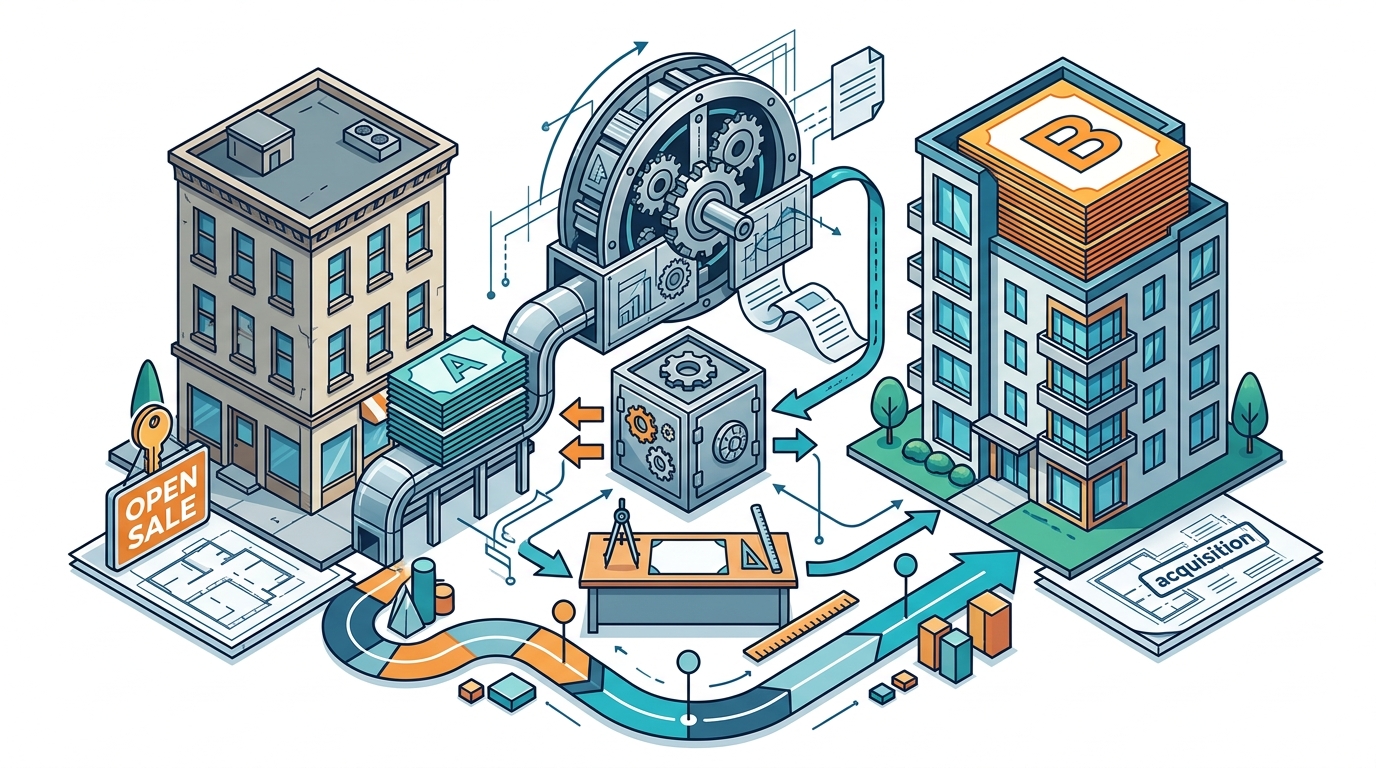
Delayed vs. Reverse Exchange Structures
Understanding the differences between delayed and reverse exchanges is essential for any investor considering a 1031 exchange. The table below summarizes the key distinctions.
| Feature | Delayed Exchange | Reverse Exchange |
|---|---|---|
| Order of Transactions | Sell first, then buy | Buy first, then sell |
| Primary Risk | Failure to sell relinquished property | Failure to acquire replacement property |
| Entity Required | Qualified Intermediary | Exchange Accommodation Titleholder (EAT) |
| Complexity | Standard | High |
| Market Advantage | Standard deferral | Secures property in competitive markets |
The choice between these structures depends on the investor's specific goals and market conditions. In a seller's market, a reverse exchange may be necessary to secure a desirable property. In a buyer's market, a delayed exchange may offer more flexibility. A California 1031 Exchange guide, for instance, might highlight the unique challenges of high-value markets where reverse exchanges are more common.
Both structures require a Qualified Intermediary with the expertise to navigate IRS regulations. The evolution of the industry has made both options more accessible and secure than ever before. Investors should consult with a specialist to determine which structure best fits their needs.
Key Takeaways
- Rev. Proc. 2000-37 established the safe harbor for reverse exchanges, enabling their widespread adoption.
- Exchange Accommodation Titleholder (EAT) is the entity that holds title to the replacement property in a reverse exchange.
- Segregated Accounts are critical for fund security, ensuring client funds are never commingled.
- CES Certification indicates a specialist has undergone rigorous training in exchange regulations.
- 45-Day and 180-Day Deadlines are absolute and apply to both delayed and reverse exchanges.
- Boot refers to non-like-kind property received in an exchange, triggering taxable events.
- FDIC Insurance protects client funds held in segregated accounts during the exchange period.
Frequently Asked Questions
What is the primary difference between a delayed and reverse exchange?
In a delayed exchange, the investor sells the relinquished property first and then acquires the replacement property. In a reverse exchange, the investor acquires the replacement property first, using an Exchange Accommodation Titleholder (EAT), and then sells the relinquished property.
How does the EAT function in a reverse exchange?
The EAT holds title to the replacement property during the exchange period. This entity acts as a temporary owner to satisfy IRS requirements, allowing the investor to defer taxes until the relinquished property is sold.
What is the significance of Rev. Proc. 2000-37?
Rev. Proc. 2000-37 provides the safe harbor guidelines for reverse exchanges. It outlines the specific requirements for using an EAT and holding the property, ensuring that the transaction qualifies for tax deferral under Section 1031.
Why is fund segregation important in a reverse exchange?
Fund segregation ensures that the investor's money is held in a separate, FDIC-insured account. This protects the funds from being used for operational expenses or mixed with other clients' money, reducing financial risk.
Can a reverse exchange be used for any type of property?
Yes, as long as the property is held for investment or business use and is like-kind to the relinquished property. This includes commercial real estate, rental properties, and vacant land.
What happens if the 180-day deadline is missed?
If the 180-day deadline is missed, the exchange fails, and the investor must recognize all capital gains taxes on the sale of the relinquished property. The deadlines are strict and do not allow for extensions.
How does a Qualified Intermediary help with reverse exchanges?
A Qualified Intermediary coordinates the transaction, sets up the EAT, manages the funds, and ensures all IRS requirements are met. Their expertise is crucial for navigating the complexities of a reverse exchange.
Begin Your Exchange
Whether you are considering a delayed or reverse exchange, the expertise of your Qualified Intermediary is paramount. Granite Exchange Services has been a leader in the industry for over 25 years, providing secure and compliant exchange services to investors across the United States. Our team of CES-certified specialists is ready to help you navigate the complexities of a reverse exchange and achieve your financial goals.
Start your journey today by visiting our home page or contacting us directly to schedule a consultation. We are here to provide the solid ground you need for every exchange.