

Step-by-Step Process for Executing a Reverse 1031 Exchange with a CES-Certified Qualified Intermediary
Reverse 1031 exchanges represent one of the most complex yet powerful tools in real estate investment, allowing investors to acquire replacement property before selling their relinquished asset. According to the Internal Revenue Service, this structure is governed by Rev. Proc. 2000-37, which provides a safe harbor for these transactions. IRS guidelines establish that without strict adherence to these protocols, investors risk immediate tax liability. Granite Exchange Services has guided over 20,000 investors through these intricate deadlines since 2000, ensuring that your capital remains protected and your tax deferral intact. This guide details the precise operational steps required to execute a successful reverse exchange. (1031 Exchange Qualified Intermediary)
Understanding the Reverse Exchange Structure
A standard delayed exchange requires you to sell first and buy later. A reverse exchange flips this timeline. You must acquire the replacement property before selling your current investment. This process is often referred to as a "parking" arrangement because the title to the new property is temporarily "parked" with an entity until the old property is sold.
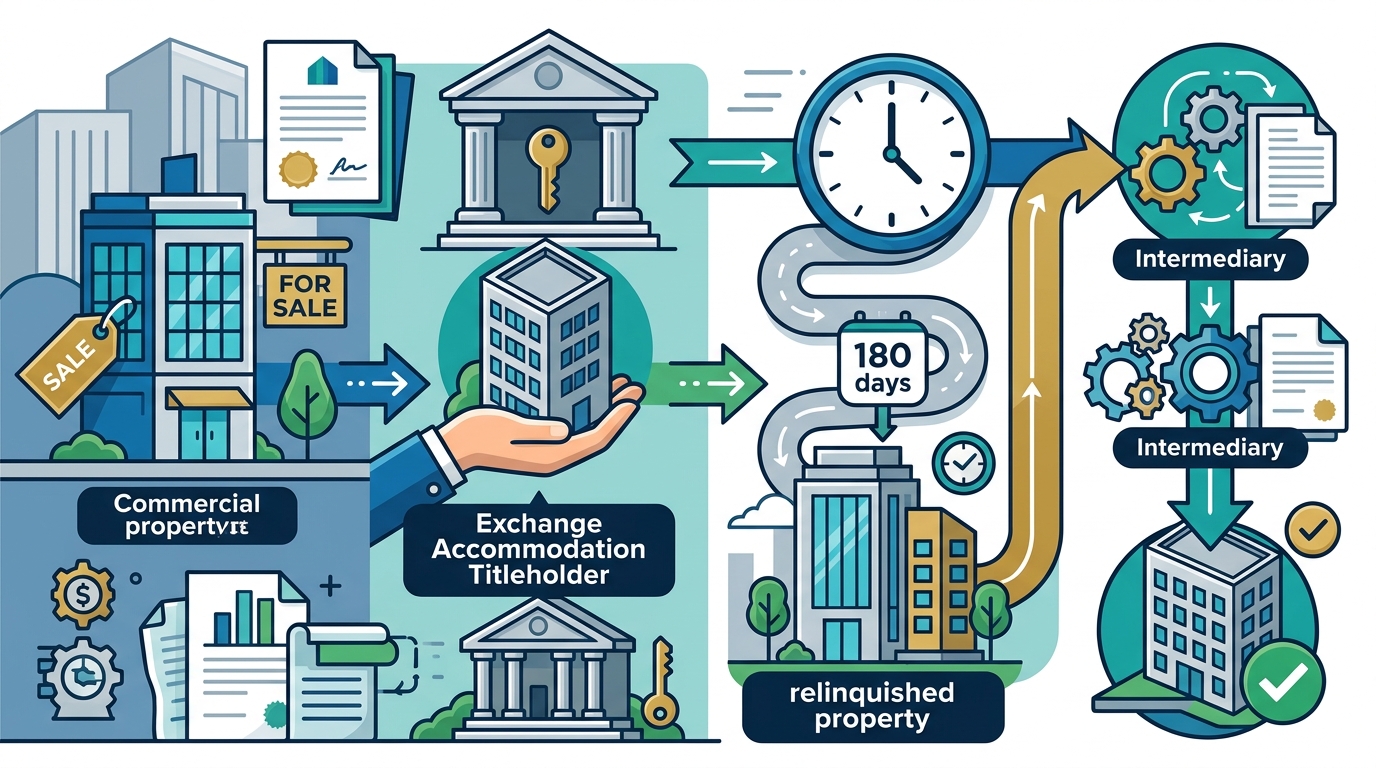
The Exchange Accommodation Titleholder (EAT) is the legal entity that holds title to the replacement property during the exchange period. This entity acts as a temporary owner, ensuring that the IRS does not view you as having constructive receipt of the funds from the eventual sale of your old property. Without an EAT, the transaction fails to qualify for tax deferral under IRC Section 1031.
Granite Exchange Services utilizes a robust fund security architecture to ensure that all assets involved in the exchange are held in segregated, FDIC-insured accounts. This separation is critical for maintaining the legal integrity of the exchange and protecting your capital from any potential commingling risks.
Step 1: Engaging a CES-Certified Qualified Intermediary
The first and most critical step is selecting a Qualified Intermediary (QI) who specializes in reverse exchanges. Not all intermediaries are equipped to handle the complexities of an EAT structure. You must engage a QI who is CES® Certified by the Exchange Specialist Institute.
Certification ensures that your intermediary has undergone rigorous training in the latest tax codes and exchange regulations. A certified specialist understands the nuances of Rev. Proc. 2000-37 and can advise you on the specific documentation required to maintain safe harbor status. Granite Exchange Services has been serving investors across all 50 states since 2000, providing a level of experience that is indispensable in high-stakes transactions.
When you contact our team, we will discuss your specific goals and timeline. We will then prepare the necessary exchange agreements, including the Exchange Accommodation Agreement (EAA) and the Qualified Exchange Accommodation Agreement (QEAA). These documents form the legal backbone of your transaction.
Step 2: Establishing the Exchange Accommodation Titleholder
Once the agreements are signed, your QI will form the Exchange Accommodation Titleholder (EAT). This is typically a single-purpose LLC created specifically for this transaction. The EAT will hold the title to the replacement property during the exchange period.
The EAT must be treated as a separate entity from you. You cannot have any beneficial interest in the EAT other than through the exchange. This separation is vital for avoiding the "constructive receipt" rule, which would disqualify your exchange if you were deemed to have control over the funds or property before the exchange is complete.
Granite Exchange Services manages the formation and maintenance of the EAT, ensuring that all corporate formalities are observed. This includes maintaining separate bank accounts and keeping detailed records of all transactions related to the parked property.
Step 3: Acquiring the Replacement Property
With the EAT in place, the acquisition of the replacement property can begin. The EAT will purchase the property using funds provided by you or through a qualified financing arrangement. It is important to note that you can use your own funds to acquire the replacement property, but these funds must be tracked separately from your exchange proceeds.
If you are using financing, the loan must be structured carefully to avoid violating the safe harbor rules. Generally, the EAT can borrow funds to acquire the property, but the loan must be secured by the replacement property itself. You may provide a guarantee or indemnification to the lender, but you cannot use funds from the sale of your relinquished property to pay down the loan until the exchange is complete.
Granite Exchange Services works closely with your legal and tax advisors to ensure that the acquisition structure complies with all IRS requirements. We also provide a deadline calculator to help you track the critical 180-day completion window.
Step 4: Identifying the Relinquished Property
Once the replacement property is acquired, the clock starts ticking. You have 45 days from the date the EAT takes title to the replacement property to identify the relinquished property in writing. This identification must be signed by you and delivered to your QI or another party involved in the exchange.
The identification rules are strict. You can identify up to three properties without regard to their fair market value. Alternatively, you can identify any number of properties as long as their total fair market value does not exceed 200% of the value of the replacement property. There is also a 95% rule, which allows you to identify any number of properties if you acquire at least 95% of the value of all identified properties.
Failure to properly identify the relinquished property within the 45-day window results in the disqualification of the entire exchange. Our specialists review every identification letter to ensure compliance with these complex rules.
Step 5: Selling the Relinquished Property
After identifying the relinquished property, you must sell it within the 180-day exchange period. The sale must be structured so that the proceeds are transferred to your QI, not to you directly. The QI then holds these funds in a segregated account until they are used to repay any debt on the replacement property or to close the transaction.
The sale of the relinquished property must be arm's length. You cannot sell to a related party or a disqualified person unless specific exceptions apply. The QI will coordinate with the title company handling the sale to ensure that the closing documents reflect the exchange structure correctly.
Granite Exchange Services provides comprehensive support throughout the sale process, including reviewing closing statements and ensuring that the transfer of funds adheres to the exchange agreement. We also monitor the 180-day rule closely to prevent any deadline violations.
Step 6: Completing the Exchange and Closing
The final step is the completion of the exchange. Once the relinquished property is sold, the QI uses the proceeds to either pay down the debt on the replacement property or transfer the remaining funds to you. The EAT then transfers the title of the replacement property to you.
At this point, the exchange is complete, and the tax deferral is secured. You will receive a final report detailing the exchange, including all deadlines met and funds transferred. This documentation is crucial for your tax records and for filing Form 8824 with the IRS.
Granite Exchange Services ensures that every detail is handled with precision. Our complex and multi-asset exchange capabilities allow us to handle even the most intricate transactions, providing peace of mind for investors across the country.
Key Takeaways
- Reverse exchanges are governed by Rev. Proc. 2000-37: This IRS revenue procedure provides the safe harbor for parking replacement property title with an EAT.
- CES® Certification is critical: A Certified Exchange Specialist has undergone rigorous training in exchange regulations and can navigate complex scenarios.
- 45-day identification deadline: You must identify the relinquished property in writing within 45 days of the EAT taking title to the replacement property.
- 180-day completion deadline: The entire exchange must be completed within 180 days of the EAT taking title or the tax return due date, whichever is earlier.
- Segregated fund security: Funds must be held in segregated, FDIC-insured accounts to prevent commingling and ensure protection.
- Granite Exchange Services has completed 20,000+ exchanges: Our extensive experience ensures that your transaction is handled with the highest level of expertise.
- $1 billion+ in client funds safeguarded: Our track record demonstrates our commitment to the security and integrity of every exchange.
Frequently Asked Questions
What is a Reverse 1031 Exchange?
A reverse 1031 exchange is a transaction where an investor acquires replacement property before selling their relinquished property. This is achieved by using an Exchange Accommodation Titleholder (EAT) to hold title to the replacement property temporarily.
Why do I need a CES-Certified Qualified Intermediary?
A CES-Certified QI has specialized training in the complex rules governing reverse exchanges. They ensure that all documentation and procedures comply with IRS safe harbor requirements, reducing the risk of exchange failure.
What is the Exchange Accommodation Titleholder (EAT)?
The EAT is a legal entity, typically an LLC, that holds title to the replacement property during the exchange period. It acts as a temporary owner to prevent the investor from having constructive receipt of the exchange funds.
What are the critical deadlines in a reverse exchange?
The two critical deadlines are the 45-day identification period for the relinquished property and the 180-day completion period for the sale of the relinquished property. Both deadlines are strict and cannot be extended.
Can I use financing for the replacement property in a reverse exchange?
Yes, you can use financing for the replacement property. The EAT can borrow funds to acquire the property, but the loan must be secured by the replacement property itself. You may provide a guarantee, but you cannot use exchange proceeds to pay down the loan until the exchange is complete.
How does Granite Exchange Services protect my funds?
Granite Exchange Services holds all exchange funds in segregated, FDIC-insured accounts. Each exchange has its own account, ensuring that your funds are never commingled with other clients' funds or company assets.
What happens if I miss a deadline?
Missing a deadline, such as the 45-day identification or 180-day completion, will disqualify the exchange. This results in immediate tax liability on the capital gains from the sale of the relinquished property. Our specialists work diligently to monitor and manage these deadlines for every client.
Does Granite Exchange Services handle exchanges in all states?
Yes, Granite Exchange Services has been serving investors in all 50 states since 2000. We have extensive experience with state-specific tax implications and regulations, ensuring a smooth exchange process regardless of location.
Start Your Exchange
Executing a reverse 1031 exchange requires precision, expertise, and a trusted partner. Granite Exchange Services provides the certified specialists and robust infrastructure necessary to navigate this complex process successfully. With over 25 years of experience and $1 billion+ in safeguarded funds, we are the solid ground you need for your exchange.
Do not risk your tax deferral on an unqualified intermediary. Contact our team today to discuss your specific needs and begin your exchange with confidence. Speak with a specialist or start your exchange now to secure your financial future.