

Are There Independent 1031 Exchange Companies That Are Not Owned by a Lender or Title Company?
Yes, there are numerous independent qualified intermediary (QI) companies that operate completely separate from lenders, title companies, and escrow agents. In fact, maintaining strict independence is the primary requirement for a QI to avoid "actual or constructive receipt" of funds, which would immediately disqualify the transaction from tax deferral under IRS regulations. When a lender or title company controls the exchange process, investors risk violating the "safe harbor" rules established in Rev. Proc. 2000-37, potentially triggering immediate capital gains taxation. (1031 Exchange Alaska Granite)
Why Independence Matters in 1031 Exchanges
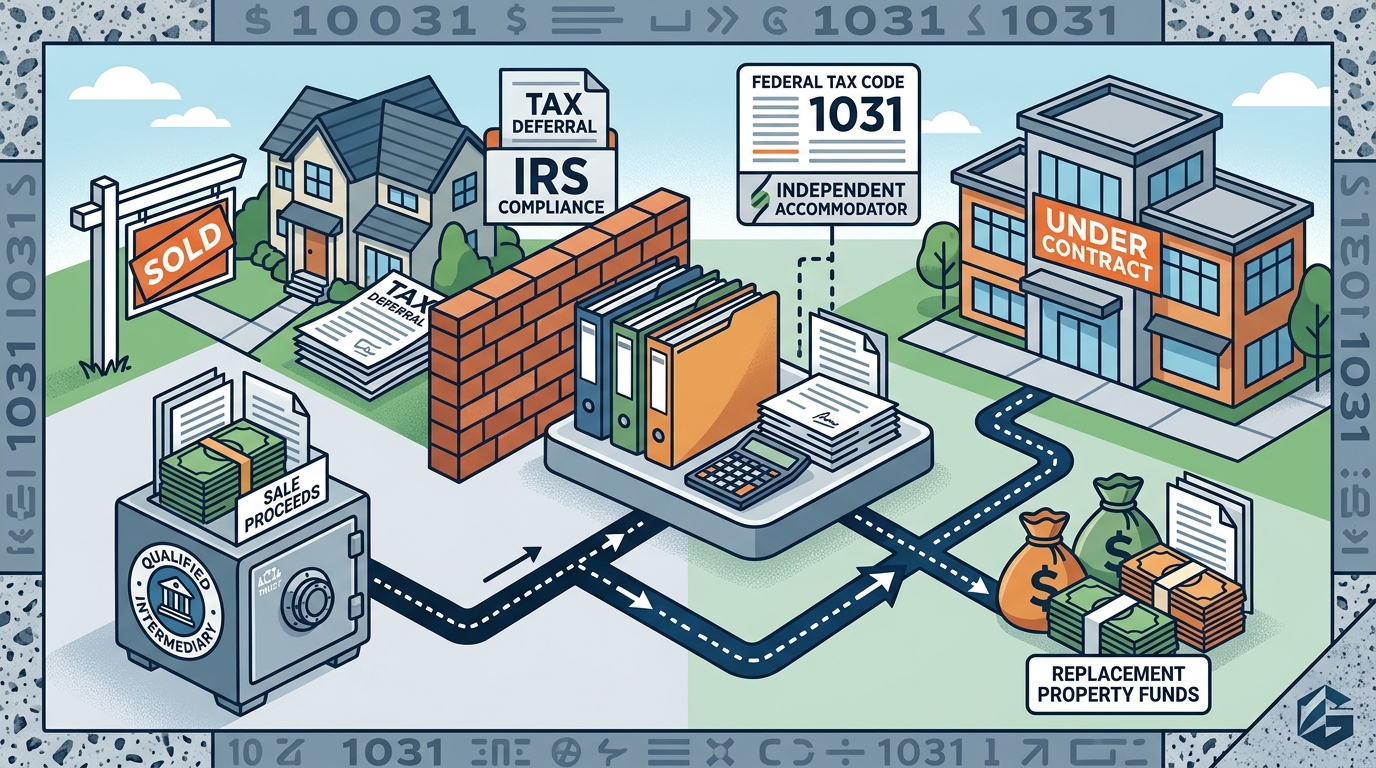
The core mechanism of a Section 1031 exchange relies on the investor never touching the proceeds from the sale of their relinquished property. If you receive the money, even for a split second, the exchange fails. This is where the relationship between your QI and your closing agents becomes critical.
Many investors assume that using a title company or a lender for the exchange is convenient. However, this creates a significant legal vulnerability. A lender has a vested interest in the loan closing, and a title company facilitates the transfer of funds. If these entities also control the exchange funds, they effectively have "constructive receipt" of the money. This violates the fundamental rule that the QI must be a "disqualified person" relative to the investor.
According to IRS guidelines, a disqualified person includes any person who is your agent or employee at the time of the exchange. This explicitly includes employees of your attorney, real estate agent, investment banker, or broker. While title companies are not always direct agents, their control over the closing funds creates a conflict that independent QIs are designed to eliminate.
The Conflict of Interest: Lenders vs. QIs
When a lender or title company owns or controls the exchange entity, the incentives are misaligned. A lender's primary goal is to ensure the loan closes and the collateral is secured. A title company's goal is to process the closing documents accurately and quickly. Neither of these goals prioritizes the long-term tax deferral strategy of the investor.
In contrast, an independent QI like Granite Exchange Services operates solely to facilitate the exchange. We have no stake in your loan approval, your title search, or your closing timeline. This separation ensures that our only focus is keeping your funds secure and your deadlines met. The discipline of a private bank, combined with the attention of a boutique, defines our approach to every transaction.
Data from industry reports indicates that a significant percentage of failed 1031 exchanges are due to procedural errors related to fund handling. By using an independent QI, you remove the risk of commingling funds or violating the 45-day identification and 180-day completion rules. These deadlines are absolute, with no extensions granted by the IRS.
How Independent QIs Protect Your Funds
Independence is not just a legal requirement; it is a security feature. Independent QIs utilize specific structural safeguards to ensure that your capital gains are preserved until you acquire your replacement property.
Segregated Account Structures
One of the most critical components of an independent QI is the use of segregated, FDIC-insured accounts. In a segregated account structure, each exchange has its own unique account number. Your funds are never commingled with other clients' money or the QI's operating funds. This means that if the QI were to face financial difficulties, your funds remain untouched and secure.
This level of transparency is difficult to achieve when a title company or lender handles the exchange. Title companies often use pooled escrow accounts for all closing transactions, which can obscure the specific trail of exchange funds. Independent QIs provide detailed reporting and real-time access to your account balances, giving you full visibility into your deferred gains.
The Role of CES Certification
Another hallmark of a reputable independent QI is professional certification. The Certified Exchange Specialist® (CES®) designation is a rigorous credential that demonstrates a deep understanding of the complex regulations governing 1031 exchanges. This certification ensures that the specialist handling your exchange is up-to-date on the latest IRS rulings and court decisions.
At Granite Exchange Services, every engagement is documented by a CES-certified specialist. This expertise is vital when navigating complex scenarios, such as reverse exchanges or construction exchanges, where the rules are even more stringent. The attention to detail provided by a certified specialist can mean the difference between a successful deferral and a taxable event.
Identifying Truly Independent QIs
Not all QIs are created equal. When selecting a qualified intermediary, it is essential to ask direct questions about their corporate structure and relationships with other service providers. Here are key indicators of a truly independent QI:
- No Ownership Ties: The QI should have no ownership or operational control by lenders, title companies, or real estate agencies.
- Segregated Accounts: Funds must be held in separate, FDIC-insured accounts for each exchange.
- Transparent Reporting: The QI should provide clear, real-time access to account balances and transaction history.
- Professional Certification: Staff should hold relevant certifications, such as the CES® designation.
- Longevity and Track Record: Look for a QI with a long history of successful exchanges, such as our 25+ years and 20,000+ completed transactions.
By choosing an independent QI, you ensure that your exchange is handled with the precision and care it requires. The discipline of a private bank and the attention of a boutique define our approach to every transaction.
Key Takeaways
- Independence is Mandatory: IRS rules prohibit QIs from being "disqualified persons," which includes agents of lenders and title companies.
- Segregated Accounts Protect Capital: Independent QIs use separate FDIC-insured accounts for each exchange, preventing commingling.
- CES Certification Ensures Expertise: Certified Exchange Specialists have rigorous training in complex exchange regulations.
- 25+ Years of Experience: Granite Exchange Services has guided investors through 20,000+ exchanges since 2000.
- $1B+ Safeguarded: Over one billion dollars in client funds have been secured through our independent structure.
- Absolute Deadlines: The 45-day identification and 180-day completion rules are strict and non-negotiable.
- No State Income Tax Benefits: In states like Alaska, independent QIs help investors defer federal taxes effectively.
Frequently Asked Questions
What is a qualified intermediary (QI)?
A qualified intermediary is an independent entity that facilitates a 1031 exchange by holding the proceeds from the sale of a relinquished property and using those funds to acquire a replacement property, thereby deferring capital gains taxes.
Can a title company act as my qualified intermediary?
While some title companies offer QI services, it is generally not recommended due to potential conflicts of interest. Title companies control the closing funds, which can lead to constructive receipt issues. Independent QIs provide a clearer separation of duties.
What is the 45-day rule in a 1031 exchange?
The 45-day rule requires investors to identify potential replacement properties in writing within 45 calendar days from the date the relinquished property is sold. This deadline is absolute and cannot be extended.
What is the 180-day rule in a 1031 exchange?
The 180-day rule requires the acquisition of the replacement property to be completed within 180 calendar days from the date the relinquished property is sold, or by the due date of the investor's tax return, whichever is earlier.
What is a reverse exchange?
A reverse exchange is a type of 1031 exchange where the replacement property is acquired before the relinquished property is sold. This requires the use of an Exchange Accommodation Titleholder (EAT) to hold title to the property temporarily.
How does Granite Exchange Services ensure fund security?
We use segregated, FDIC-insured accounts for each exchange, ensuring that funds are never commingled. Our CES-certified specialists oversee every transaction to ensure compliance with IRS regulations.
What is a Certified Exchange Specialist (CES)?
A CES is a professional designation awarded to individuals who have demonstrated advanced knowledge and expertise in the field of 1031 exchanges through rigorous testing and continuing education.
Start Your Exchange
Don't risk your tax deferral by using a lender or title company for your exchange. Choose an independent, CES-certified qualified intermediary with a proven track record. Granite Exchange Services has guided investors through 20,000+ exchanges, safeguarding over $1 billion in client funds. Our specialists are ready to help you navigate the complexities of your exchange with precision and care.