

Common 1031 Exchange Mistakes for California Investors and How to Avoid Them
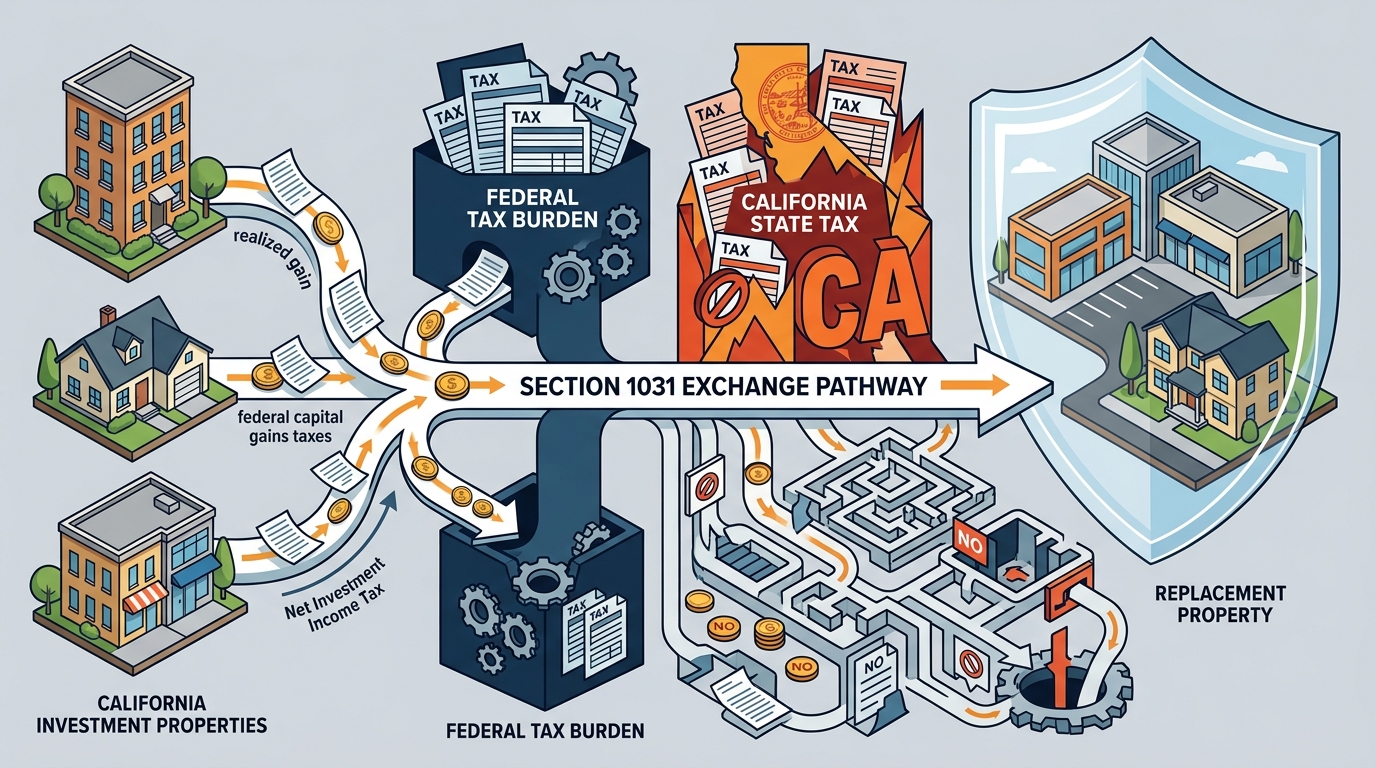
California investors face a unique and aggressive tax landscape when selling investment property. According to recent financial analyses, the combined burden of federal capital gains taxes, the Net Investment Income Tax, and California's top marginal income tax rate can exceed 50% of the realized gain. This staggering figure makes the Section 1031 exchange not just a tax strategy, but a critical wealth preservation mechanism. However, the path to deferral is fraught with procedural traps. A single misstep in timing, identification, or documentation can trigger immediate tax liability, eroding the very wealth you sought to protect. This guide details the most frequent errors California investors make and provides the precise operational frameworks to avoid them. (1031 Exchange Alaska Granite)
Understanding Boot and Its Impact on Deferral
One of the most common and costly mistakes investors make is failing to understand "boot." Boot refers to any non-like-kind property received in the exchange, such as cash, debt relief, or personal property. When boot is received, it is immediately taxable. For a California investor, this means the boot is subject to both federal capital gains rates and California's high state income tax rates. (1031 Exchange Colorado Flat)
Investors often mistakenly believe that receiving a small amount of cash back from the exchange is negligible. However, even a few thousand dollars in boot can trigger a significant tax bill. To avoid this, investors must ensure that the replacement property is of equal or greater value and that all debt is replaced or exceeded. This requires precise financial planning before the relinquished property is even sold.
Another form of boot is "mortgage boot." If the debt on the replacement property is less than the debt on the relinquished property, the difference is treated as cash received. For example, if you sell a property with a $500,000 mortgage and buy a replacement property with a $400,000 mortgage, the $100,000 difference is taxable boot. Avoiding this requires careful debt analysis and potentially bringing additional cash into the transaction to match the debt levels.
California-Specific Regulatory Traps
California does not fully conform to federal 1031 exchange rules in the way most other states do. This is a critical distinction that catches many out-of-state intermediaries and unprepared investors off guard. California tracks deferred gains on an annual basis. This means that even if you successfully defer federal taxes, you must file an annual report with the California Franchise Tax Board (FTB) to track the deferred gain until it is recognized.
The specific form required is the FTB Form 3840. Failure to file this form can result in penalties and interest, compounding the financial damage of the exchange error. Investors must ensure their Qualified Intermediary (QI) is aware of this requirement and can provide the necessary documentation to facilitate accurate reporting. Ignoring this state-level compliance is a mistake that can lead to unexpected audits and penalties years after the exchange is complete.
Additionally, California's high income tax rates make the cost of a failed exchange particularly painful. With top marginal rates reaching 13.3% or higher for high earners, the effective tax rate on a failed exchange can be devastating. This underscores the importance of meticulous planning and execution. Every detail must be scrutinized to ensure that the deferral is legitimate and fully compliant with both federal and state regulations.
The 45-Day Identification Rule Errors
The 45-day identification rule is strict and unforgiving. Investors have exactly 45 calendar days from the closing of the relinquished property to identify potential replacement properties in writing. Common mistakes here include verbal identifications, which are invalid, and failing to sign the identification document. The identification must be unambiguous and clearly describe the property.
Another frequent error is misunderstanding the identification limits. There are three main rules for identification:
- The Three-Property Rule: You can identify up to three properties regardless of their value.
- The 200% Rule: You can identify any number of properties as long as their total fair market value does not exceed 200% of the value of the relinquished property.
- The 95% Rule: You can identify any number of properties as long as you acquire at least 95% of the value of the identified properties.
Investors often fail to keep track of these deadlines, especially when weekends or federal holidays fall within the 45-day window. The clock starts ticking on the day of closing, not the next business day. Using a professional Qualified Intermediary who tracks these deadlines with precision is essential to avoid missing this critical window.
Choosing the Wrong Qualified Intermediary
The Qualified Intermediary (QI) is the backbone of a successful 1031 exchange. They hold the exchange funds in segregated, FDIC-insured accounts and ensure that all documentation is properly executed. Choosing a QI based solely on price is a major mistake. The security of your funds and the expertise of your specialist are paramount.
Granite Exchange Services has served investors for over 25 years, completing more than 20,000 exchanges. Our specialists are CES® Certified, ensuring they have the highest level of professional designation in the industry. We maintain a rigorous fund security architecture where one account is created per exchange, ensuring your funds are never commingled with other clients' funds. This level of security and expertise is worth the investment.
When selecting a QI, verify their financial stability, insurance coverage, and experience with complex exchanges such as reverse or construction exchanges. Ask about their track record with California-specific compliance, including the FTB Form 3840. A QI who is well-versed in state-specific nuances can save you from costly errors and provide peace of mind throughout the process.
Like-Kind Property Misconceptions
The term "like-kind" is often misunderstood. It does not mean "like price" or "like use." It refers to the nature or character of the property. For real estate, this means that any real property held for productive use in a trade or business or for investment can be exchanged for any other real property held for the same purpose. This allows for significant flexibility, such as exchanging a single-family rental for a commercial building.
However, there are strict exclusions. Personal residences, vacation homes used primarily for personal use, and property held primarily for sale (inventory) do not qualify. Investors often mistakenly try to exchange a personal vacation home for an investment property, which can lead to partial disqualification of the exchange. It is crucial to ensure that both the relinquished and replacement properties meet the "held for investment or business use" criteria.
Another misconception is that personal property can be exchanged for real property. While the Tax Cuts and Jobs Act of 2017 restricted like-kind exchanges to real property only, there are still nuances regarding incidental personal property. If personal property is transferred as part of the exchange, it may be treated as boot. Careful structuring is required to ensure that only like-kind real property is exchanged.
Risks in Reverse and Construction Exchanges
Reverse exchanges, where the replacement property is acquired before the relinquished property is sold, are complex and carry significant risk. The most common mistake is failing to use the proper Exchange Accommodation Titleholder (EAT) structure as outlined in Rev. Proc. 2000-37. Without this safe harbor, the exchange can be disqualified.
Construction exchanges, also known as improvement exchanges, allow investors to make improvements on the replacement property within the 180-day exchange period. A common error is attempting to use the exchange funds to pay for improvements directly, which can be construed as constructive receipt of funds. The funds must remain with the QI, and the QI must disburse them to the contractors.
Both reverse and construction exchanges require precise timing and documentation. The deadlines for identification and completion remain the same as a delayed exchange. Investors must work with a QI who has specific experience in these complex structures to avoid pitfalls that could jeopardize the entire exchange.
Key Takeaways
- California Compliance: California tracks deferred gains annually via FTB Form 3840, requiring specific reporting even if federal taxes are deferred.
- Boot Avoidance: Ensure the replacement property's value and debt equal or exceed the relinquished property to avoid taxable boot.
- 45-Day Rule: Identification must be in writing, signed, and delivered within 45 calendar days of closing, including weekends and holidays.
- QI Selection: Choose a CES® Certified QI with segregated, FDIC-insured accounts and experience in California-specific regulations.
- Like-Kind Definition: Only real property held for investment or business use qualifies; personal residences and inventory are excluded.
- Reverse Exchange Structure: Use the Exchange Accommodation Titleholder (EAT) structure per Rev. Proc. 2000-37 to ensure safe harbor protection.
- Professional Guidance: Consult with a tax advisor and a specialized QI to navigate the complexities of California's tax landscape.
Frequently Asked Questions
Does California conform to federal 1031 exchange rules?
California generally conforms to federal 1031 rules but requires annual reporting of deferred gains via FTB Form 3840. This tracking continues until the gain is recognized.
What is the 45-day identification rule?
Investors must identify potential replacement properties in writing within 45 calendar days from the closing of the relinquished property. This deadline is strict and includes weekends and federal holidays.
Can I exchange a personal vacation home for an investment property?
No. To qualify for a 1031 exchange, both the relinquished and replacement properties must be held for productive use in a trade or business or for investment. Personal residences do not qualify.
What is boot in a 1031 exchange?
Boot is any non-like-kind property received in the exchange, such as cash or debt relief. It is immediately taxable and subject to both federal and state taxes.
How do I avoid mortgage boot?
To avoid mortgage boot, the debt on the replacement property must equal or exceed the debt on the relinquished property. If it does not, the difference is treated as taxable cash received.
What is a Qualified Intermediary?
A Qualified Intermediary (QI) is a third party who facilitates the 1031 exchange by holding the exchange funds and ensuring compliance with IRS regulations. They are essential for a tax-deferred exchange.
Can I use a reverse exchange in California?
Yes, reverse exchanges are permitted in California, but they require strict adherence to Rev. Proc. 2000-37 and the use of an Exchange Accommodation Titleholder (EAT) to ensure safe harbor protection.
What happens if I miss the 180-day deadline?
If the 180-day deadline is missed, the exchange fails, and the entire gain from the sale of the relinquished property becomes immediately taxable. There are no extensions for this deadline.
Start Your Secure Exchange
Do not let common mistakes jeopardize your wealth. Granite Exchange Services provides the expertise, security, and California-specific compliance knowledge you need to execute a flawless 1031 exchange. With over 25 years of experience and $1 billion+ in safeguarded funds, we are your trusted partner in tax deferral.
Begin Your Exchange Today and secure your financial future with precision and confidence.