

Essential Qualifications and Compliance Standards for Reverse 1031 Exchange Qualified Intermediaries
Reverse 1031 exchanges represent the most complex and high-stakes segment of like-kind exchange transactions, requiring a Qualified Intermediary (QI) with specialized expertise in reverse acquisition structures. According to industry data, less than 5% of all 1031 exchanges utilize reverse acquisition methods, yet they account for a disproportionate share of transaction complexity and regulatory scrutiny. Investors attempting to navigate these transactions without a CES®-certified specialist risk triggering immediate taxable events due to technical failures in title holding or safe harbor compliance. This guide details the exact qualifications, security architectures, and compliance standards required to execute a reverse exchange successfully. (1031 Exchange Alaska Granite)
Understanding the Reverse Exchange Structure
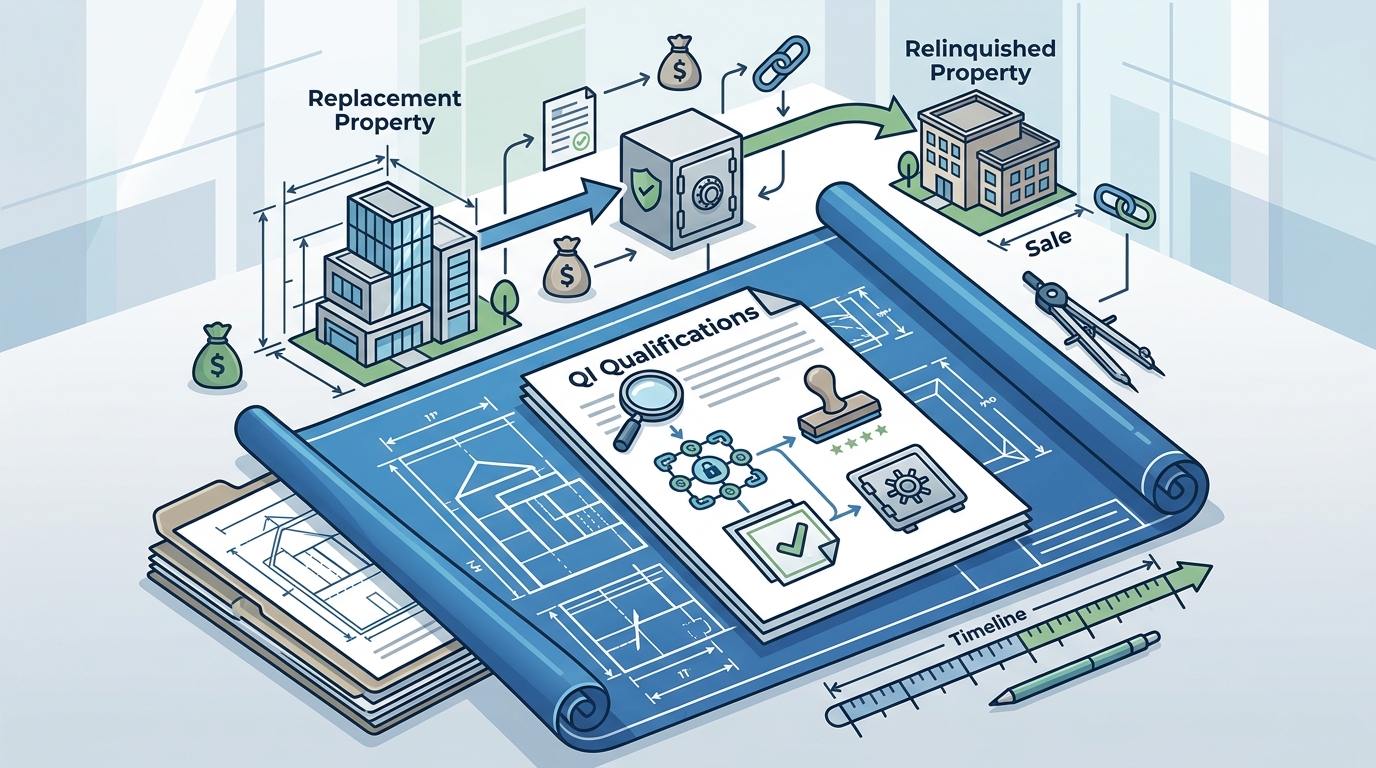
A reverse 1031 exchange occurs when an investor acquires a replacement property before selling their relinquished property. This structure is essential in competitive markets where finding a suitable replacement property is difficult, or when the investor wants to secure a property before listing their current asset. Unlike a standard delayed exchange, the reverse structure requires the QI to hold title to the replacement property temporarily through an Exchange Accommodation Titleholder (EAT).
The discipline of a private bank is required to manage these transactions. The attention of a boutique firm ensures that every deadline is met with precision. Your 1031 exchange must be handled with absolute care to avoid tax penalties. For twenty-five years, Granite Exchange Services has guided investors through Section 1031 exchanges with airtight documentation, segregated FDIC-insured accounts, and a specialist who answers when you call.
Reverse exchanges are governed by Rev. Proc. 2000-37, a revenue procedure issued by the IRS that provides a safe harbor for these transactions. Without adhering to this procedure, the exchange may fail, resulting in immediate taxation of capital gains. The EAT holds the property for a maximum of 180 days, after which it must be transferred to the investor.
Essential QI Qualifications and Certifications
Not all Qualified Intermediaries are equipped to handle reverse exchanges. The technical requirements for an EAT structure demand a higher level of expertise than standard delayed exchanges. Investors must verify that their QI possesses specific certifications and operational capabilities.
CES® Certification
The Certified Exchange Specialist® (CES®) designation is the gold standard for exchange professionals. This certification demonstrates that the specialist has undergone rigorous training in the latest IRS regulations, court rulings, and exchange structures. A CES®-certified specialist ensures that every engagement is documented correctly, reducing the risk of technical failures. Granite Exchange Services employs only CES®-certified specialists to handle these complex transactions.
Financial Stability and Insurance
Because the QI holds title to a property during a reverse exchange, financial stability is paramount. The QI must have sufficient capital to cover property taxes, insurance, and maintenance costs during the accommodation period. Additionally, the QI should carry substantial errors and omissions (E&O) insurance to protect against potential liabilities. Investors should request proof of insurance and financial statements before engaging a QI.
Operational Experience
Experience matters in reverse exchanges. The QI should have a proven track record of successfully completing reverse transactions. According to industry reports, firms with over 20,000 completed exchanges have refined their processes to handle the nuances of reverse structures. Granite Exchange Services has completed over 20,000 exchanges, providing investors with confidence in their ability to manage complex transactions.
Rev. Proc. 2000-37 Safe Harbor Compliance
Rev. Proc. 2000-37 provides a safe harbor for reverse exchanges, meaning that if the transaction meets all the requirements of the procedure, the IRS will not challenge the tax-deferred status of the exchange. Adhering to this safe harbor is critical for ensuring tax benefits.
Agreement Requirements
The QI must enter into a qualified exchange accommodation agreement (QEAA) with the investor and the EAT. This agreement must outline the rights and responsibilities of each party, including the duration of the accommodation period and the conditions for transferring title. The QEAA must be executed before the property is transferred to the EAT.
Limitations on Economic Benefit
Under the safe harbor, the EAT cannot enjoy the beneficial enjoyment of the property. This means the EAT cannot use the property for personal purposes or derive income from it during the accommodation period. The QI must ensure that the EAT acts strictly as a title holder, with no economic interest in the property.
180-Day Deadline
The replacement property must be transferred to the investor within 180 days of the transfer to the EAT. This deadline is absolute and cannot be extended. The QI must monitor the timeline closely to ensure compliance. Failure to meet this deadline results in the loss of tax-deferred status.
Fund Security and Segregation Standards
Where your money sits is the whole business. A qualified intermediary holds your proceeds during the exchange. That makes the custody arrangement, not the marketing, the real product. Our security architecture is built so you never have to take our word for it.
Segregated Accounts
Funds must be held in segregated accounts, one per exchange, in the exchange's name. Funds are never commingled with the QI's operating funds or the funds of other clients. This segregation ensures that your funds are protected even if the QI faces financial difficulties. Granite Exchange Services uses segregated, FDIC-insured accounts to safeguard client funds.
FDIC Insurance
FDIC insurance provides an additional layer of protection for client funds. The QI should ensure that all accounts are fully insured by the FDIC. Investors should verify the insurance coverage limits and ensure that their funds are within those limits. Granite Exchange Services safeguards over $1 billion in client funds through its secure banking partnerships.
Transparency and Reporting
Regular reporting is essential for maintaining transparency. The QI should provide detailed statements showing the status of funds, transactions, and deadlines. Investors should review these statements regularly to ensure accuracy. Granite Exchange Services provides comprehensive reporting to keep investors informed throughout the exchange process.
Comparing Exchange Structures
Understanding the different types of 1031 exchanges is crucial for selecting the right strategy for your investment goals. Each structure has unique requirements and benefits.
| Exchange Type | Sequence | Key Requirement | Best For |
|---|---|---|---|
| Delayed Exchange | Sell first, buy later | 45-day ID, 180-day close | Standard transactions with clear replacement targets |
| Reverse Exchange | Buy first, sell later | EAT title holding, 180-day max | Competitive markets or unique replacement properties |
| Construction Exchange | Improvements during exchange | Substantial improvement within 180 days | Properties requiring renovation or build-to-suit |
Delayed Exchange
The delayed exchange is the most common type of 1031 exchange. It involves selling the relinquished property first, identifying the replacement property within 45 days, and closing on the replacement property within 180 days. This structure is straightforward and widely understood by real estate professionals.
Reverse Exchange
The reverse exchange allows investors to acquire a replacement property before selling their relinquished property. This structure is beneficial in competitive markets where finding a suitable replacement property is difficult. However, it requires a QI with specialized expertise in EAT structures and Rev. Proc. 2000-37 compliance.
Construction Exchange
The construction exchange, also known as a build-to-suit exchange, allows investors to make improvements to the replacement property during the exchange period. The improvements must be substantial and completed within the 180-day deadline. This structure is ideal for investors looking to customize their replacement property.
Key Takeaways
- Reverse exchanges require a Qualified Intermediary with CES® certification and specialized expertise in EAT structures.
- Compliance with Rev. Proc. 2000-37 is essential to maintain tax-deferred status in reverse exchanges.
- Funds must be held in segregated, FDIC-insured accounts to ensure security and prevent commingling.
- Granite Exchange Services has completed over 20,000 exchanges, providing a proven track record of success.
- The 180-day deadline for transferring title from the EAT to the investor is absolute and cannot be extended.
- Investors should verify the QI's financial stability, insurance coverage, and operational experience before engaging.
- Granite Exchange Services safeguards over $1 billion in client funds through its secure banking partnerships.
Frequently Asked Questions
What is a Reverse 1031 Exchange?
A reverse 1031 exchange is a like-kind exchange where the investor acquires the replacement property before selling the relinquished property. This structure requires an Exchange Accommodation Titleholder (EAT) to hold title to the replacement property temporarily.
Why do I need a specialized QI for a reverse exchange?
Reverse exchanges involve complex title holding and safe harbor requirements that standard QIs may not be equipped to handle. A specialized QI with CES® certification ensures compliance with Rev. Proc. 2000-37 and minimizes the risk of technical failures.
What is Rev. Proc. 2000-37?
Rev. Proc. 2000-37 is an IRS revenue procedure that provides a safe harbor for reverse 1031 exchanges. Adhering to its requirements ensures that the exchange qualifies for tax-deferred treatment.
How long can an EAT hold title to a property?
The EAT can hold title to the replacement property for a maximum of 180 days. After this period, the property must be transferred to the investor to maintain tax-deferred status.
What happens if the 180-day deadline is missed?
Missing the 180-day deadline results in the loss of tax-deferred status. The exchange will be treated as a taxable sale, and the investor will owe capital gains taxes on the relinquished property.
How are funds secured in a reverse exchange?
Funds are secured through segregated, FDIC-insured accounts. The QI must ensure that funds are never commingled with operating funds or funds of other clients. Granite Exchange Services provides comprehensive security for client funds.
Can I exchange property in any state?
Yes, 1031 exchanges can be conducted across state lines. However, investors should be aware of state-specific tax implications and reporting requirements. Granite Exchange Services serves investors in all 50 states.
Start Your Exchange
Ready to defer your taxes through a 1031 Exchange? Granite Exchange Services offers expert guidance for reverse exchanges, ensuring compliance and security. Our CES®-certified specialists are ready to assist you with your transaction. Start Your Exchange today and secure your financial future.