

Investors selling investment property face a significant financial hurdle if they do not utilize a 1031 exchange. According to recent IRS data, the average capital gains tax burden for real estate investors can exceed 30% when combining federal rates, depreciation recapture, and state taxes. A properly structured 1031 exchange allows you to defer all of these taxes, preserving your capital for future wealth building. Granite Exchange Services has guided over 20,000 investors through this process since 2000, ensuring that your funds remain secure and your deadlines are met with precision. (1031 Exchange Alaska Granite)
What is a 1031 Exchange?
A 1031 exchange, named after Section 1031 of the Internal Revenue Code, is a powerful tax strategy that allows real estate investors to defer paying capital gains taxes on the sale of investment property. The core requirement is that you must reinvest the proceeds into a "like-kind" property of equal or greater value. This mechanism is not a tax loophole but a legitimate provision designed to encourage continued investment in the real estate market. (1031 Exchange Alabama Granite)
The term "like-kind" refers to the nature of the asset rather than its quality or location. For real estate, this means that almost any investment property held for productive use in a trade or business can be exchanged for another. For example, a commercial office building can be exchanged for a multifamily apartment complex, or a vacant land parcel can be swapped for a retail strip mall. The key is that both properties must be real property located within the United States. (1031 Exchange Arkansas Granite)
Understanding the mechanics is vital for success. The exchange must be facilitated by a Qualified Intermediary (QI). You cannot touch the proceeds from the sale of your relinquished property. If you receive the funds directly, the exchange fails, and the taxes become due immediately. Granite Exchange Services acts as your QI, holding your funds in segregated, FDIC-insured accounts to ensure complete security and compliance. (1031 Exchange Colorado Flat)
Exchange Structures Explained
Not all exchanges are created equal. Depending on your market conditions and financial goals, you may need a specific exchange structure. Granite Exchange Services specializes in four primary structures, each engineered to meet unique investor needs.
Delayed (Forward) Exchange
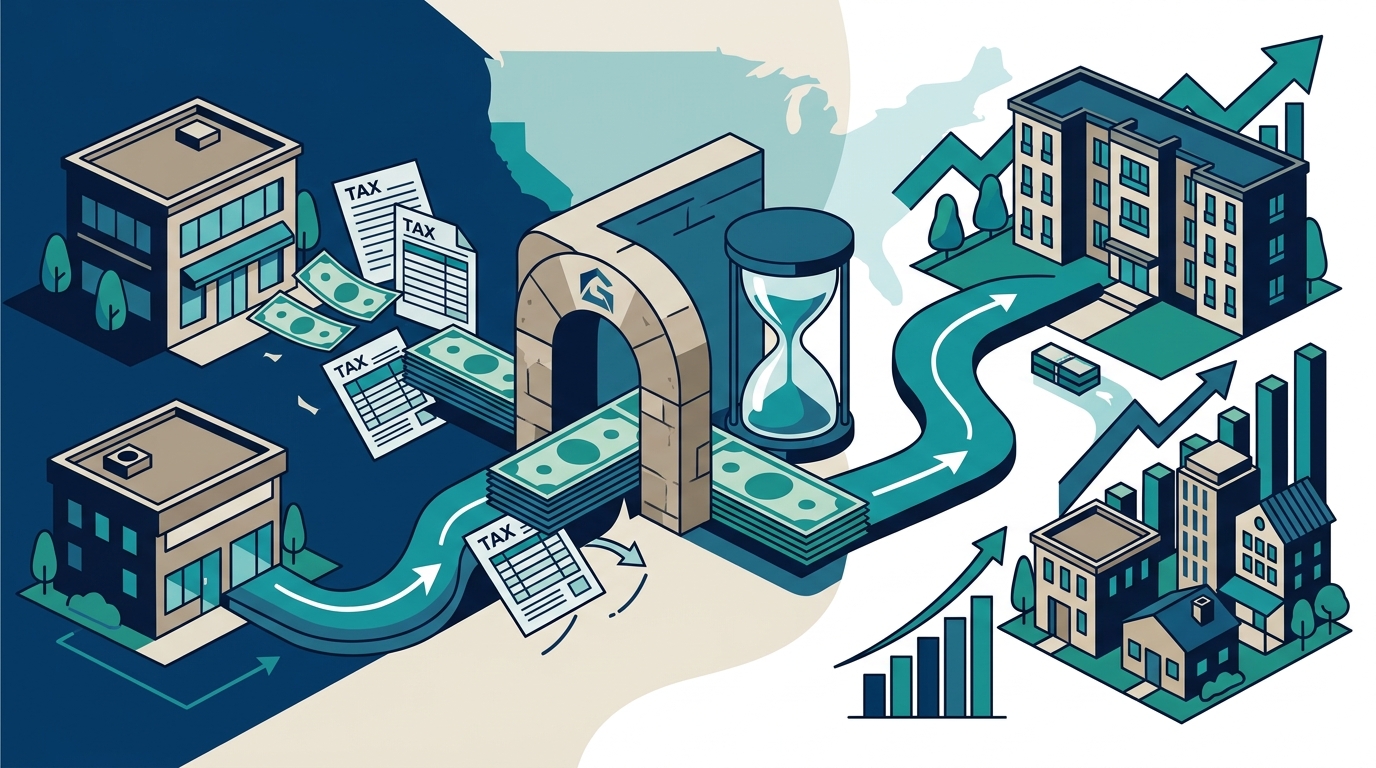
The delayed exchange is the most common structure, accounting for the majority of our twenty thousand engagements. In this scenario, you sell your relinquished property first. You then have 45 days to identify potential replacement properties and 180 days to close on one or more of them. This structure is ideal for investors who have already found a buyer for their current asset and need time to locate a suitable replacement.
Reverse Exchange
A reverse exchange allows you to acquire the replacement property before selling your relinquished property. This is often necessary in competitive markets where finding a replacement quickly is critical. To facilitate this, we form an Exchange Accommodation Titleholder (EAT) to hold the title of the replacement property. This structure is governed by Rev. Proc. 2000-37 and requires precise timing to ensure compliance with IRS safe harbor provisions.
Construction or Improvement Exchange
Also known as a build-to-suit exchange, this structure allows you to use exchange funds to make improvements on the replacement property. The improvements must be completed within the 180-day exchange period. This is particularly useful for investors looking to add value to a property immediately after acquisition. The title is parked with the EAT until the improvements are substantially complete.
Delaware Statutory Trust (DST)
For investors seeking a passive role, a DST exchange offers fractional ownership in institutional-grade real estate. This is ideal for those who want to diversify without the headaches of property management. DSTs are often used for 1031 exchanges involving smaller properties or when the investor wants to move into a larger, professionally managed asset class.
Critical Deadlines and Rules
Time is the most unforgiving aspect of a 1031 exchange. Missing a deadline by even one day can result in the disqualification of the entire exchange, leading to immediate tax liability. The two most critical deadlines are the 45-day identification period and the 180-day exchange period.
The 45-day clock starts ticking the moment the closing of your relinquished property occurs. You must identify your replacement property or properties in writing and deliver it to the Qualified Intermediary. There are three identification rules you must follow:
- The Three-Property Rule: You can identify up to three properties regardless of their value.
- The 200% Rule: You can identify any number of properties as long as their total fair market value does not exceed 200% of the value of the relinquished property.
- The 95% Rule: You can identify any number of properties as long as you acquire at least 95% of the identified value.
The 180-day period is the deadline to close on the replacement property. This period also ends on the due date of your tax return for the year of the sale, including extensions. However, the 180-day limit is almost always the binding constraint. It is crucial to note that these deadlines are absolute. There are no IRS extensions for 1031 exchanges, regardless of weekends or federal holidays.
Fund Security and Custody
The discipline of a private bank. The attention of a boutique. Your 1031 exchange, handled with precision. The most critical aspect of a 1031 exchange is not the marketing or the property search, but the custody of your funds. A qualified intermediary holds your proceeds during the exchange. That makes the custody arrangement the real product.
Granite Exchange Services prioritizes fund security above all else. We use segregated accounts, meaning one account per exchange, in your exchange's name. Funds are never commingled with other client funds or company operating accounts. This ensures that your money is yours alone and is protected from any potential business liabilities.
Furthermore, our accounts are FDIC-insured, providing an additional layer of security for your capital. With over $1 billion in client funds safeguarded, we have built a reputation for reliability and trust. When you choose a Qualified Intermediary, you are choosing a partner who understands that your peace of mind is just as important as your tax deferral.
State-Specific Tax Considerations
While Section 1031 is a federal tax provision, state tax laws vary significantly. Some states conform fully to federal rules, while others have their own requirements or do not recognize 1031 exchanges at all. Understanding your state's specific rules is essential for accurate tax planning.
For example, California tracks deferred gains with an annual FTB Form 3840 filing. Investors selling California property must be aware of this requirement, even if they exchange into a no-income-tax state. Conversely, states like Alaska and Nevada have no state income tax, which simplifies the tax landscape for investors moving assets between these jurisdictions.
Alabama, for instance, taxes capital gains as ordinary income at rates up to 5%. Combined with federal taxes, the burden can be substantial. Granite Exchange Services provides detailed guides for many states, including Texas, Florida, New York, and Illinois, to help investors navigate these complexities. Always consult with your tax advisor to understand how state laws impact your specific exchange.
Key Takeaways
- Deferral Power: A 1031 exchange defers all federal capital gains taxes, depreciation recapture, and net investment income tax.
- Strict Deadlines: You have exactly 45 days to identify and 180 days to close on replacement property.
- Qualified Intermediary: You must use a QI; you cannot touch the sale proceeds directly.
- Fund Security: Granite Exchange Services uses segregated, FDIC-insured accounts for maximum safety.
- Experience: We have completed over 20,000 exchanges with a 5.0-star Google rating.
- Certification: Our specialists are CES® Certified, ensuring high-level expertise.
- State Variance: State tax laws differ; always verify local requirements before exchanging.
Frequently Asked Questions
What is a 1031 Exchange?
A 1031 exchange is a tax-deferred transaction that allows investors to sell an investment property and reinvest the proceeds in a new like-kind property without paying capital gains taxes at the time of the sale.
What is the 45-Day Rule?
The 45-Day Rule requires investors to identify potential replacement properties in writing within 45 calendar days from the date of closing on the relinquished property.
What is the 180-Day Rule?
The 180-Day Rule mandates that the purchase of the replacement property must be completed within 180 calendar days from the date of closing on the relinquished property.
What is Boot in a 1031 Exchange?
Boot refers to any non-like-kind property received in the exchange, such as cash or personal property. Receiving boot triggers immediate taxation on the amount of the boot received.
Can I Exchange a Personal Residence?
No. Section 1031 exchanges apply only to property held for productive use in a trade or business or for investment. Personal residences do not qualify.
How Does Granite Exchange Services Protect My Funds?
We hold your funds in segregated, FDIC-insured accounts. Each exchange has its own account, ensuring your funds are never commingled with other clients or company assets.
What is a Qualified Intermediary?
A Qualified Intermediary (QI) is an independent entity that facilitates a 1031 exchange by holding the proceeds from the sale of the relinquished property and ensuring compliance with IRS regulations.
Do I Need a Real Estate Agent for a 1031 Exchange?
While a QI handles the tax and legal mechanics, you will likely need a real estate agent to help find and negotiate the purchase of your replacement property.
Start Your Exchange
Do not let taxes erode your investment returns. With over 25 years of experience and $1 billion in safeguarded funds, Granite Exchange Services is your trusted partner in navigating the complexities of 1031 exchanges. Whether you are selling in Alabama, Alaska, or any other state, our CES®-certified specialists are ready to guide you through the process.
Start your exchange today by visiting our home page or contacting our team directly. Secure your financial future with the precision and care you deserve.