

Typical 1031 exchange fees in Granite Bay, California, range from $750 to $2,000 depending on the complexity of the transaction. This guide breaks down the exact cost drivers, verification steps, and local tax implications for investors in the Granite Bay, Roseville, and Folsom areas. We explain how to evaluate Qualified Intermediaries, avoid hidden costs, and structure your exchange to maximize tax deferral under current IRS rules.
How to Choose a Qualified Intermediary
Selecting the right Qualified Intermediary (QI) is the most critical step in protecting your tax deferral. A QI is a third-party entity that holds the sale proceeds and facilitates the exchange to ensure compliance with Internal Revenue Code Section 1031. You should prioritize independence and direct access to knowledgeable staff. Many large exchange companies are owned by title, escrow, or lender firms, which can create conflicts of interest. An independent QI, such as Granite Exchange Services, operates as a neutral accommodator without these corporate ties. This independence ensures that the QI's sole focus is on your transaction's success and compliance, not on selling you a title policy or loan product.
Independence and Neutrality
Neutrality is a key differentiator in the 1031 exchange industry. When a QI is owned by a larger financial institution, they may have incentives to steer you toward specific replacement properties or service providers. An independent firm has no such conflicts. They are paid a flat fee for their services and have no stake in the outcome of your real estate purchase beyond the successful completion of the exchange. This structure aligns their interests with yours: they only succeed if your exchange is compliant and you are satisfied with the process.
Direct Access to the Team
What to Ask Before Committing
Before signing an exchange agreement, you must ask specific questions to understand the total cost and service level. Do not rely on a single quote without understanding what is included. The following questions will help you evaluate any QI, including local providers in the Granite Bay area.
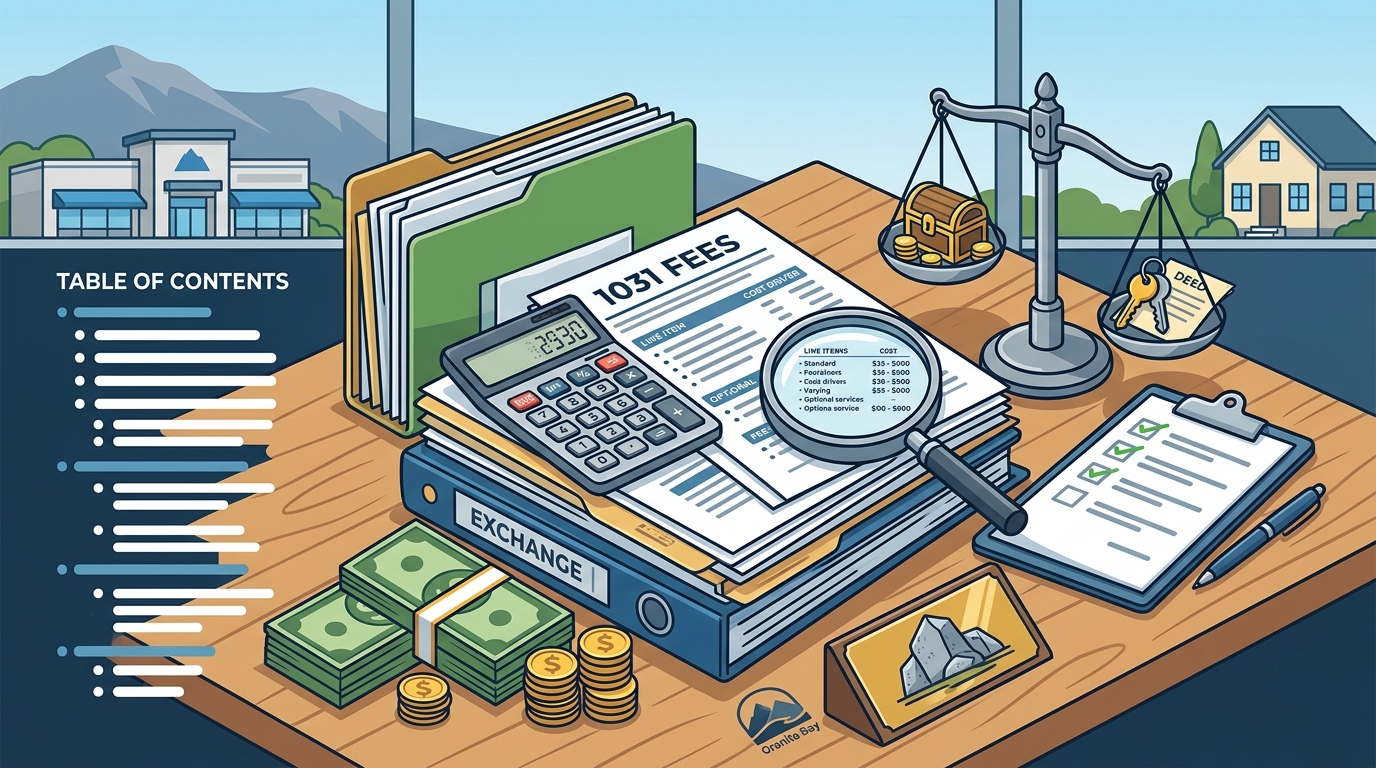
Fee Structure and Inclusions
Ask for a detailed breakdown of all fees. Standard fees typically cover the QI's role in holding funds and preparing IRS documentation. However, some providers charge extra for specific services like wire transfers, document preparation, or expedited processing. Clarify whether the quoted fee is all-inclusive. For example, Granite Exchange Services provides a transparent fee schedule that outlines exactly what is included in their standard service package. This transparency helps you avoid surprise charges at closing.
Service Scope and Support
Inquire about the level of support provided during the 45-day identification period and the 180-day closing period. Ask who will be your primary point of contact and how quickly they respond to inquiries. Also, ask about their experience with complex exchanges, such as reverse exchanges or multi-property deals. If you are planning a complex transaction, you need a QI with proven expertise in those specific structures. A QI that only handles simple forward exchanges may not have the resources to manage a more intricate deal.
How to Verify Credentials and Claims
The 1031 exchange industry is not heavily regulated, so it is essential to verify the credentials of any QI you consider. You should check for professional certifications and a track record of successful exchanges. The Certified Exchange Specialist (CES) credential is a recognized standard in the industry, indicating that the individual has passed a rigorous exam and adheres to a code of ethics. Verifying these credentials ensures that you are working with a qualified professional who understands the nuances of IRS regulations.
Checking Professional Certifications
Look for QIs whose principals hold the CES certification. This credential is awarded by a professional body and requires ongoing education to maintain. It is a strong indicator of competence and commitment to the field. You can verify a professional's certification through the issuing body's directory. Working with a CES-certified QI reduces the risk of errors that could disqualify your exchange. For instance, Granite Exchange Services employs CES-certified principals, ensuring that your exchange is managed by industry-recognized experts.
Reviewing Track Record and Reviews
Research the QI's history and client feedback. Look for a long-standing presence in the industry, as experience is a key factor in handling complex situations. Read client reviews on independent platforms to gauge satisfaction levels. Pay attention to comments about responsiveness, communication, and problem-solving. A QI with a strong track record and positive reviews is more likely to provide a smooth experience. Avoid firms with a history of complaints or regulatory actions.
How the Exchange Process Works
Understanding the sequence of events helps you anticipate costs and deadlines. A standard delayed 1031 exchange involves three main phases: the sale of the relinquished property, the identification of replacement properties, and the closing of the replacement property. The QI is involved in all three phases, holding the funds and preparing the necessary documentation. The entire process typically takes between 30 and 180 days, depending on the market and the complexity of the deal.
Phase 1: Sale and Fund Transfer
Phase 2: Identification Period
You have 45 days from the closing of the sale to identify potential replacement properties. You can identify up to three properties of any value, or up to five properties if their total value does not exceed 200% of the relinquished property's value. The QI helps you document this identification correctly. Missing this deadline disqualifies the exchange, so it is critical to act promptly. The QI will send you a formal identification form to complete and return within the timeframe.
Phase 3: Closing and Documentation
You have 180 days from the sale closing to close on the replacement property. The QI coordinates the closing, ensuring that the funds are released to the seller of the replacement property. They also prepare the final exchange documentation, including Form 8824, which you must file with your tax return. The QI provides you with a closing statement and all necessary records for your tax preparer. This final phase ensures that the exchange is properly documented for IRS review.
What Drives the Cost
The total cost of a 1031 exchange is influenced by several factors, including the complexity of the transaction and the specific services required. While the base fee is often fixed, additional costs can arise from specific circumstances. Understanding these drivers helps you budget accurately and avoid unexpected expenses. The following table summarizes the typical cost components and their ranges.
| Cost Component | Typical Range | Description |
|---|
Complexity and Structure
The structure of your exchange is the primary driver of cost. A simple forward exchange, where you sell first and buy later, is the least expensive. More complex structures, such as reverse exchanges (where you buy first and sell later) or improvement exchanges (where you use the funds to renovate the property), require more work and carry higher fees. These structures involve additional legal and logistical steps, which increase the QI's workload. If you are planning a complex deal, expect to pay a premium for the specialized expertise required.
Market and Transaction Size
The size of the transaction and the local market can also affect costs. Larger transactions may involve higher wire transfer fees and more complex documentation. Additionally, markets with high transaction volumes may have more competition among QIs, potentially leading to more competitive pricing. However, the base fee is often standardized across the industry, so the size of the deal has a limited impact on the QI's fee itself. Focus on the complexity of the structure when estimating your total cost.
Common Mistakes and How to Avoid Them
Many investors lose their tax deferral due to avoidable errors. Understanding these common mistakes helps you protect your investment. The most frequent errors involve missing deadlines, improper documentation, and selecting the wrong QI. By being aware of these pitfalls, you can take steps to prevent them and ensure a successful exchange.
Missing the 45-Day Identification Deadline
The 45-day identification period is strict and non-negotiable. If you fail to identify replacement properties within this window, the exchange is disqualified, and you owe capital gains taxes on the sale. To avoid this, start your search for replacement properties before you close on the sale. Work with your QI to prepare the identification form in advance. Set reminders for the deadline and ensure that the form is submitted and received by the QI before the 45 days are up.
Improper Documentation
IRS rules require specific documentation to validate a 1031 exchange. Errors in the exchange agreement, identification form, or closing documents can lead to disqualification. Work with a QI who has a strong track record of accurate documentation. Review all documents carefully before signing. If you are unsure about any clause, ask your QI or tax advisor for clarification. Proper documentation is the foundation of a compliant exchange.
1031 Exchanges Versus Alternatives
While the 1031 exchange is the most common method for deferring capital gains taxes, there are other options to consider. Each alternative has its own advantages and disadvantages. Understanding these options helps you choose the best strategy for your specific situation. The following comparison highlights the key differences between a 1031 exchange and other tax deferral methods.
| Strategy | Tax Treatment | Complexity | Best For |
|---|---|---|---|
| 1031 Exchange | Defers capital gains and depreciation recapture. | Medium | Investors reinvesting in like-kind property. |
| Installment Sale | Spreads tax liability over the payment period. | Medium | Sellers who cannot reinvest all proceeds immediately. |
Section 121 Exclusion
The Section 121 exclusion allows you to exclude a portion of the gain from the sale of a primary residence. This is not a deferral but an exclusion, meaning the tax is permanently avoided. However, it only applies to primary residences, not investment properties. If you are selling an investment property, the 1031 exchange is the only option for deferring taxes. The Section 121 exclusion is a useful tool for homeowners but not for real estate investors.
Installment Sales
An installment sale allows you to spread the tax liability over the period you receive payments from the buyer. This can be useful if you cannot reinvest all the proceeds immediately. However, it does not defer the tax entirely; it only spreads it out. The 1031 exchange is generally more advantageous for investors who plan to reinvest in new property, as it defers the tax indefinitely until the replacement property is sold.
Costs for Specific Investor Situations
The cost of a 1031 exchange can vary depending on your specific situation as an investor. Different types of investors face different challenges and requirements. Understanding how your situation affects the cost helps you budget more accurately. The following sections outline the cost implications for common investor profiles.
Small Individual Landlords
Commercial Investors and Hedge Funds
Commercial investors and hedge funds often engage in more complex exchanges, such as multi-property deals or reverse exchanges. These transactions require specialized expertise and carry higher fees. The complexity surcharge is a significant component of the total cost for these investors. However, the potential tax savings from deferring large capital gains often far outweigh the additional fees. Working with a QI experienced in complex deals is essential for these investors.
Rules and Investor Protections
The 1031 exchange is governed by strict IRS rules designed to prevent tax abuse. Understanding these rules helps you ensure compliance and protect your investment. The key rules include the like-kind requirement, the 45-day identification period, and the 180-day closing period. Violating any of these rules disqualifies the exchange. Additionally, the QI is required to hold the funds in a segregated account, protecting them from the QI's creditors. This protection ensures that your funds are safe throughout the exchange process.
Like-Kind Requirement
The replacement property must be of the same nature or character as the relinquished property. For real estate, this means that any investment real property can be exchanged for any other investment real property. You do not need to buy the same type of property (e.g., a condo for a condo). However, both properties must be held for investment or productive use in a trade or business. Personal use property does not qualify for a 1031 exchange.
Fund Segregation
The QI is required to hold the exchange funds in a segregated account. This means that the funds are kept separate from the QI's own operating accounts. This protection ensures that your funds are safe from the QI's creditors in the event of bankruptcy or other financial issues. It is a critical protection for investors, as it ensures that your proceeds are available for the purchase of the replacement property.
Local Specifics for Granite Bay and the East Bay
While 1031 exchange rules are federal, local market conditions and state tax laws can impact your strategy. Granite Bay, located in the Sacramento area, is part of a broader real estate market that includes the East Bay and other California regions. Understanding these local specifics helps you make informed decisions about your exchange. California has a high state income tax rate, which makes the 1031 exchange particularly valuable for deferring both federal and state taxes.
California State Tax Implications
California conforms to the federal 1031 exchange rules, meaning that a compliant exchange defers both federal and state capital gains taxes. California's top state income tax rate is 13.3%, which is significantly higher than the federal long-term capital gains rate of 20%. Deferring this state tax can result in substantial savings. Investors in Granite Bay and other California locations should consider the state tax implications when planning their exchange. Working with a local QI who understands California's specific rules can be beneficial.
Local Market Conditions
The local real estate market in Granite Bay and the surrounding areas can affect the timing and cost of your exchange. Market conditions, such as inventory levels and interest rates, can impact the availability of replacement properties and the time it takes to close. A local QI can provide insights into these conditions and help you navigate the market. They can also connect you with local real estate professionals who are familiar with the area. This local expertise can be a valuable asset in ensuring a successful exchange.
Timing and Deadline Management
Timing is critical in a 1031 exchange. Missing any of the IRS deadlines disqualifies the exchange and triggers immediate tax liability. The two key deadlines are the 45-day identification period and the 180-day closing period. Managing these deadlines effectively is essential for a successful exchange. The QI plays a crucial role in helping you meet these deadlines by providing reminders and coordinating the process.
45-Day Identification Period
The 45-day period begins on the day you close on the sale of your relinquished property. You must identify replacement properties within this window. To manage this deadline, start your search before the sale closes. Work with your QI to prepare the identification form in advance. Set reminders for the deadline and ensure that the form is submitted and received by the QI before the 45 days are up. Missing this deadline is the most common reason for exchange disqualification.
180-Day Closing Period
The 180-day period also begins on the day you close on the sale. You must close on the replacement property within this window. This period gives you time to find and negotiate a suitable replacement property. However, it is not unlimited. You must act promptly to ensure that you have enough time to complete the closing. Work with your QI and real estate agent to coordinate the closing process. Ensure that all necessary documents are prepared and signed in a timely manner.
Long-Term Financial Results
The primary benefit of a 1031 exchange is the deferral of capital gains taxes, which allows you to reinvest the full amount of your sale proceeds. This compounding effect can lead to significant long-term financial growth. By deferring taxes, you can purchase a larger or more valuable replacement property, which can generate higher income or appreciate more over time. The longer you hold the property, the greater the potential tax savings. When you eventually sell the property without exchanging, you will owe taxes on the original gain plus any appreciation since the exchange. However, the time value of money and the potential for growth often make the exchange a favorable strategy.
Compounding Growth
Estate Planning Considerations
The 1031 exchange can also be used as part of an estate planning strategy. When you pass away, the basis of your property is stepped up to its fair market value, which can eliminate the deferred capital gains tax. This is known as the step-up in basis. By using a 1031 exchange to defer taxes during your lifetime and then passing the property to your heirs, you can potentially eliminate the tax liability entirely. This strategy can be a valuable part of a comprehensive estate plan. Consult with a tax advisor or estate planning attorney to discuss how a 1031 exchange can fit into your overall plan.
Key Takeaways
- Typical 1031 exchange fees range from $750 to $2,000, depending on complexity.
- Choose an independent QI with direct access to knowledgeable staff.
- Verify the QI's credentials, such as the CES certification.
- Ask for a detailed breakdown of all fees and services included.
- Understand the three phases of the exchange: sale, identification, and closing.
- Complex structures like reverse exchanges carry higher fees.
- Missing the 45-day identification deadline disqualifies the exchange.
- California's high state tax rate makes the 1031 exchange particularly valuable.
Frequently Asked Questions
What is the average cost of a 1031 exchange in California?
The average cost of a 1031 exchange in California typically ranges from $750 to $2,000. This range covers the base QI fee and any additional costs for complex structures. The exact cost depends on the complexity of your transaction and the specific services required.
Does Granite Exchange Services charge extra for complex exchanges?
Yes, complex exchanges such as reverse or improvement exchanges may carry a higher fee due to the additional work and expertise required. Granite Exchange Services provides a transparent fee schedule that outlines the costs for different exchange types.
How long does a 1031 exchange take?
A standard 1031 exchange typically takes between 30 and 180 days. The 45-day identification period and the 180-day closing period are the key deadlines. The actual time depends on the market and the complexity of the deal.
Can I exchange a property in Granite Bay for a property in another state?
Yes, you can exchange a property in Granite Bay for a property in another state. The 1031 exchange rules are federal, so you can exchange across state lines. However, you must consider the state tax implications of both the relinquished and replacement properties.
What happens if I miss the 45-day identification deadline?
If you miss the 45-day identification deadline, the exchange is disqualified, and you owe capital gains taxes on the sale. There is no extension for this deadline. It is critical to act promptly and work with your QI to ensure compliance.
Are 1031 exchange fees tax deductible?
1031 exchange fees are generally not tax deductible. They are considered capital expenses related to the acquisition of the replacement property. However, they may be added to the basis of the replacement property, which can reduce your taxable gain when you eventually sell.
Do I need a CPA to do a 1031 exchange?
While you do not need a CPA to complete a 1031 exchange, it is highly recommended to work with one. A CPA can help you understand the tax implications and ensure that you file the correct forms, such as Form 8824. They can also provide advice on the overall tax strategy for your investment.
Conclusion
Understanding the fees and process of a 1031 exchange is essential for protecting your investment and maximizing tax deferral. By choosing an independent QI, verifying credentials, and managing deadlines effectively, you can ensure a successful exchange. Granite Exchange Services offers transparent pricing and expert guidance for investors in Granite Bay and across California. Contact them today to discuss your exchange strategy and secure your tax deferral.