

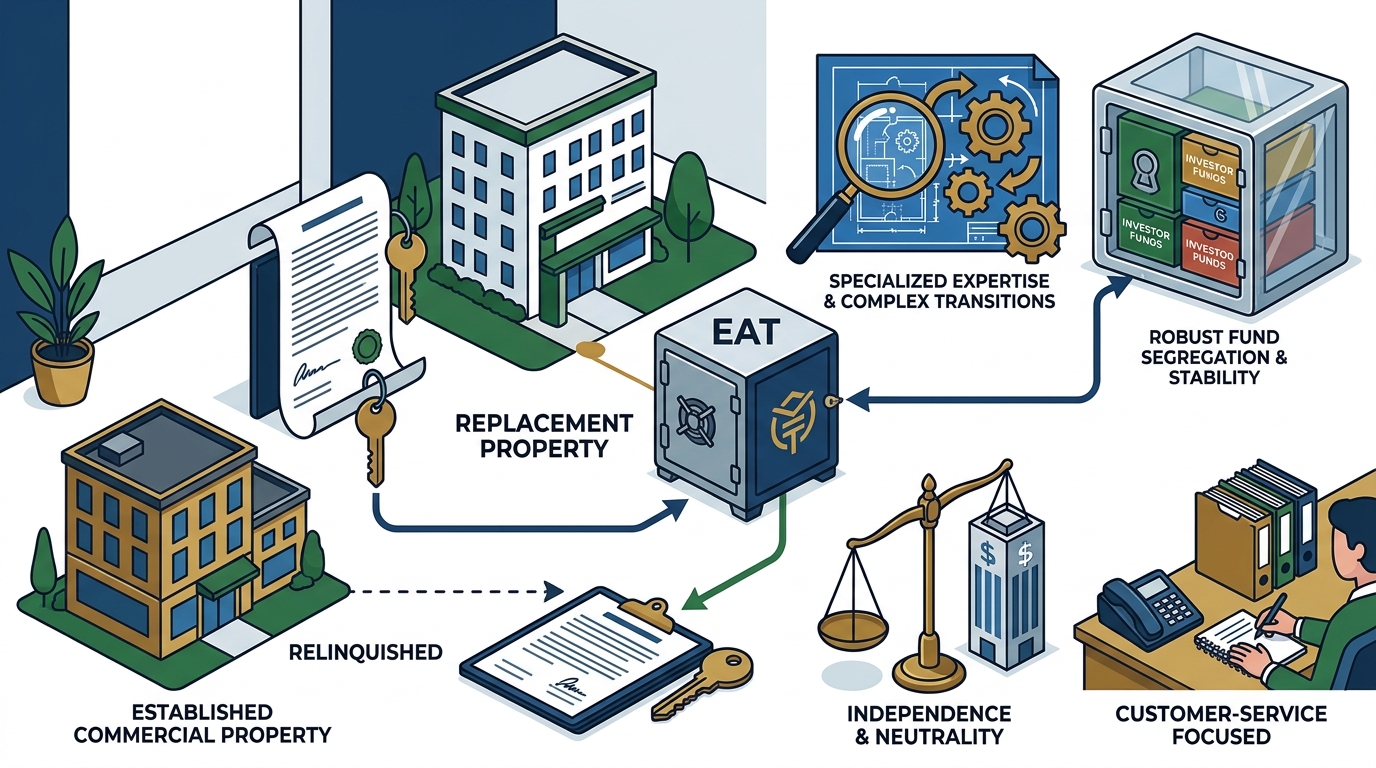
When executing a reverse 1031 exchange, you must select a Qualified Intermediary (QI) that offers specialized expertise in complex transaction structures, robust fund segregation, and direct, responsive communication. Unlike standard forward exchanges, reverse deals require the QI to acquire the replacement property before the relinquished property is sold, creating unique legal and financial risks. Granite Exchange Services emphasizes that choosing the right partner is critical because the QI acts as the legal owner of the replacement property during the interim period, making their operational stability and independence paramount for your tax deferral success.
Understanding Structural Complexity
A reverse 1031 exchange is a transaction where the investor acquires the replacement property before selling the relinquished property. This structure is significantly more complex than a standard forward exchange because the QI must take title to the replacement property. The QI holds this title until the relinquished property is sold and the proceeds are used to pay off the QI's acquisition. This creates a period where the QI is the legal owner of the asset, exposing them to liability and requiring strict adherence to IRS regulations. Investors must verify that their QI has specific experience with this structure, as generalist firms may lack the legal frameworks to manage the interim ownership period safely. For additional details, review the 1031granite com.
Legal Ownership Risks
The primary risk in a reverse exchange is the QI's legal ownership of the replacement property. If the QI fails to properly document the exchange or if the sale of the relinquished property fails, the QI may be left holding the asset. This requires a QI with strong legal counsel and a track record of managing these specific liabilities. The QI must be able to demonstrate that their internal controls prevent the commingling of funds and ensure that the title transfer back to the investor occurs seamlessly upon the completion of the sale. For additional details, review the .
Independence and Neutrality
Independence is a critical factor when selecting a QI for a reverse exchange. A Qualified Intermediary is an entity that facilitates the exchange by holding proceeds and acquiring property on behalf of the investor. If the QI is owned by a title company, escrow agent, or mortgage lender, conflicts of interest may arise. These parent companies may have incentives to steer you toward specific service providers or properties that benefit their own business lines. An independent QI, such as Granite Exchange Services, operates as a neutral third party with no ties to the real estate transaction ecosystem. This neutrality ensures that the QI's sole focus is on the successful and compliant completion of your exchange, not on generating ancillary revenue for a parent company.
Conflict of Interest Checks
Investors should ask direct questions about corporate ownership. Does the QI have equity ties to any title, escrow, or lending entities? If the answer is yes, you must weigh the potential conflicts. Independent firms are paid a flat fee for their services and have no stake in the outcome of your real estate purchase beyond the successful completion of the exchange. This structure aligns their interests with yours, ensuring that they prioritize your compliance and satisfaction over corporate cross-selling objectives.
Fund Security and Segregation
Fund security is non-negotiable in any 1031 exchange, but it is especially critical in reverse deals where large sums are involved. The QI must hold the exchange funds in a segregated account, separate from their operating accounts. This segregation protects your funds from the QI's creditors in the event of bankruptcy or legal disputes. You should verify that the QI uses a reputable, regulated financial institution for fund custody. The QI must also provide clear documentation of where your funds are held and how they are protected. Transparency in fund handling is a key indicator of a professional and trustworthy QI.
Bankruptcy Protection
While no QI can guarantee immunity from all risks, proper fund segregation provides a layer of protection. If the QI were to go bankrupt, your segregated funds should remain intact and available for your exchange. This is a fundamental requirement for any QI you consider. You should request proof of segregation and understand the legal framework that protects your assets. This due diligence step is essential for protecting your investment and ensuring the continuity of your exchange process.
Communication and Direct Access
Communication quality is a major differentiator between QIs. In a reverse exchange, the timeline is tight and the stakes are high. You need a QI that provides direct access to knowledgeable staff, not a call center or a handoff-heavy process. Granite Exchange Services is known for its customer-service-focused approach, offering clients direct access to a team that understands the nuances of complex exchanges. This direct line of communication ensures that you receive timely answers to your questions and that any issues are addressed promptly. A QI that buries you in paperwork or forces you to navigate a corporate bureaucracy is not the right fit for a reverse exchange.
Responsiveness Metrics
Ask about the QI's response times and escalation protocols. How quickly will you receive a callback if you have a question? Who is your primary point of contact, and do you have a backup? These details matter when you are under pressure to meet IRS deadlines. A responsive QI will keep you informed at every stage of the process, from the initial acquisition of the replacement property to the final closing of the relinquished property. This level of service is indicative of a firm that values its clients and understands the importance of clear communication in high-stakes transactions.
Experience and Track Record
Experience is a proxy for competence. You should look for a QI that has completed a significant number of reverse exchanges. The QI should be able to provide references or case studies that demonstrate their ability to handle complex transactions. Granite Exchange Services has been serving investors since 2000, handling over 20,000 exchanges. This long track record provides confidence that the firm has the expertise to navigate the complexities of a reverse exchange. You should also ask about the QI's specific experience with your type of property and your geographic location. A QI that has handled similar transactions in your area will be better equipped to address any local nuances or challenges.
Specialization in Reverse Deals
Not all QIs specialize in reverse exchanges. Some firms may handle them occasionally, while others make them a core part of their service offering. You should seek a QI that has a dedicated team or process for reverse deals. This specialization ensures that the QI is familiar with the specific legal and financial requirements of this structure. It also means that the QI has the resources and expertise to manage the transaction efficiently, reducing the risk of errors or delays. Specialization is a key indicator of a QI's commitment to excellence in this complex area of 1031 exchanges.
Key Takeaways
- Verify the QI's independence to avoid conflicts of interest with title, escrow, or lender companies.
- Ensure that exchange funds are held in a segregated account to protect against bankruptcy risks.
- Choose a QI with specific experience in reverse 1031 exchanges, not just general forward deals.
- Prioritize direct access to knowledgeable staff over call centers or handoff-heavy processes.
- Check the QI's track record and request references from past clients who have completed reverse exchanges.
- Confirm that the QI has the legal and financial resources to manage the interim ownership of the replacement property.
Frequently Asked Questions
What is a reverse 1031 exchange?
A reverse 1031 exchange is a transaction where the investor acquires the replacement property before selling the relinquished property. This structure is more complex than a forward exchange because the QI must take title to the replacement property until the sale of the relinquished property is complete.
Why is independence important for a QI?
Independence ensures that the QI has no conflicts of interest with title, escrow, or lender companies. This neutrality allows the QI to focus solely on the successful and compliant completion of your exchange, without being influenced by corporate cross-selling objectives.
How are my funds protected in a reverse exchange?
Your funds are protected through segregation. The QI must hold your exchange funds in a segregated account, separate from their operating accounts. This protects your funds from the QI's creditors in the event of bankruptcy or legal disputes.
What experience should I look for in a QI?
You should look for a QI with specific experience in reverse 1031 exchanges. The QI should have a track record of completing complex transactions and be able to provide references or case studies that demonstrate their competence in this area.
How important is communication in a reverse exchange?
Communication is critical in a reverse exchange because the timeline is tight and the stakes are high. You need a QI that provides direct access to knowledgeable staff and responds promptly to your questions. This ensures that you are kept informed at every stage of the process.
Can any QI handle a reverse exchange?
Not all QIs specialize in reverse exchanges. Some firms may handle them occasionally, while others make them a core part of their service offering. You should seek a QI that has a dedicated team or process for reverse deals to ensure they have the necessary expertise and resources.
Conclusion
Selecting the right Qualified Intermediary for a reverse 1031 exchange is a critical decision that can impact your tax deferral and overall investment success. By focusing on independence, fund security, experience, and communication, you can identify a QI that is well-equipped to handle the complexities of this transaction. Granite Exchange Services offers the expertise and independence you need to navigate your reverse exchange with confidence. Contact them today to discuss your specific needs and ensure that your exchange is structured for success.