

Essential Compliance Standards for California 1031 Exchange Qualified Intermediaries
California investors face a unique and aggressive tax landscape when executing like-kind exchanges. While the federal Internal Revenue Code Section 1031 provides the framework for deferring capital gains, the state of California imposes its own rigorous tracking and reporting requirements that can trap unwary investors. According to recent financial data, California tracks deferred gains with an annual FTB filing requirement until the gain is recognized, creating a perpetual administrative burden for non-compliant parties. This guide details the critical compliance standards that Qualified Intermediaries must uphold to ensure your exchange remains valid under both federal and state law. (1031 Exchange Alaska Granite)
The Federal Framework and QI Role
A 1031 exchange is a mechanism that allows investors to defer paying capital gains taxes on the sale of investment property by reinvesting the proceeds into a "like-kind" replacement property. The discipline of a private bank is required to manage the funds during this transition. Granite Exchange Services has served as a Qualified Intermediary for over 25 years, ensuring that every exchange adheres to the strictest interpretations of IRC Section 1031. (1031 Exchange Arkansas Granite)
The Qualified Intermediary (QI) is the cornerstone of a compliant exchange. A Qualified Intermediary is an entity that facilitates a 1031 exchange by holding the proceeds from the relinquished property and acquiring the replacement property on behalf of the investor. Without a QI, the IRS may view the transaction as a taxable sale rather than an exchange, triggering immediate tax liability. The QI must be independent of the investor and the real estate agents involved to maintain the validity of the transaction. (1031 Exchange Colorado Flat)
For investors selling in high-value markets, the stakes are exceptionally high. A single error in documentation or fund handling can result in the disqualification of the entire exchange. This is why choosing a CES® Certified specialist is not just a preference but a compliance necessity. Granite Exchange Services provides airtight documentation and segregated FDIC-insured accounts to safeguard your interests.
California’s Unique Tracking Mandate
While federal rules are uniform across the United States, California treats 1031 exchanges differently. The state does not recognize the deferral of capital gains in the same way the federal government does. Instead, California requires investors to track their deferred gains indefinitely. This means that even if you defer federal taxes, you must report the transaction to the California Franchise Tax Board (FTB) every year.
Required FTB Forms and Filings
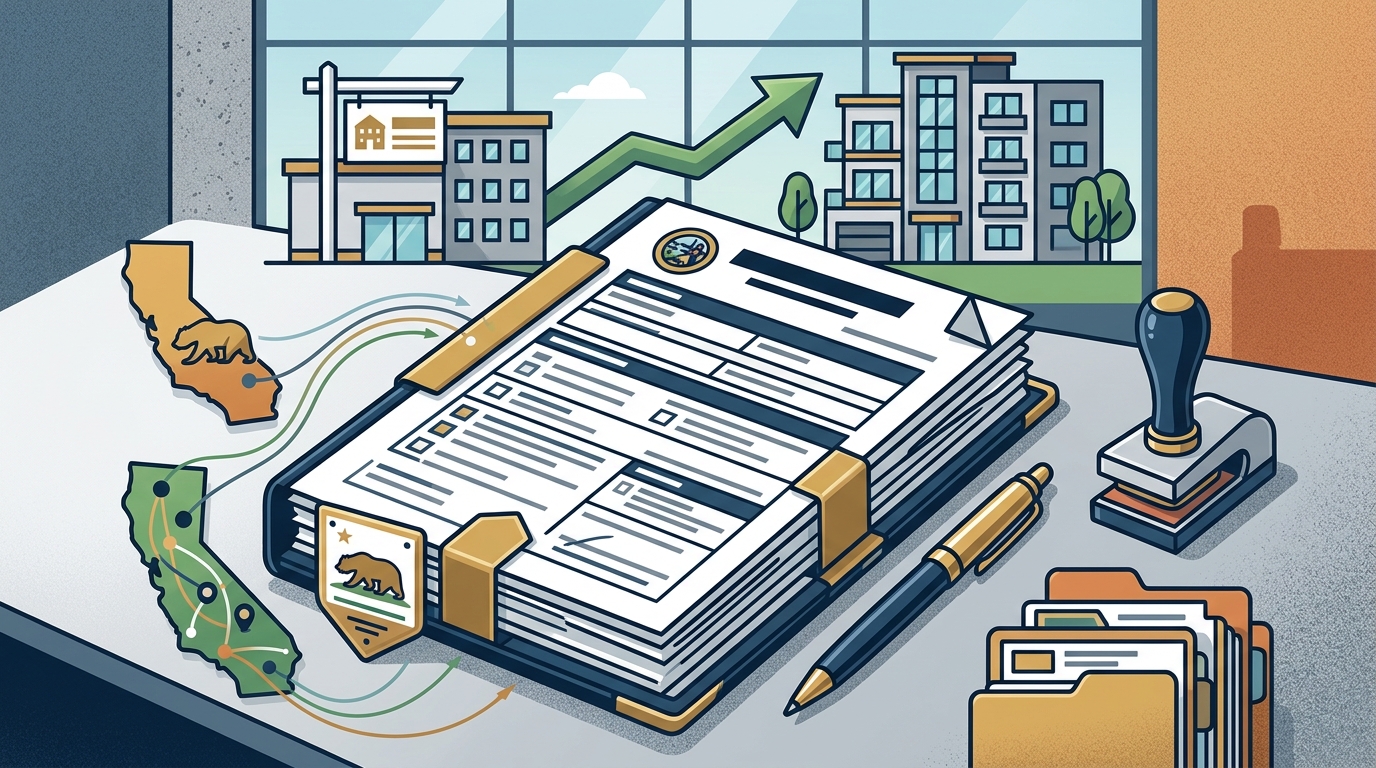
Investors selling California property must file FTB Form 3840, "California Deferred Gain on Like-Kind Exchanges." This form is required annually until the deferred gain is recognized. The form tracks the original sale date, the identification of the replacement property, and the current status of the exchange.
Failure to file FTB Form 3840 can result in significant penalties and interest charges. The FTB has been known to audit exchanges that lack proper documentation. A Qualified Intermediary must provide the investor with the necessary documentation to complete this form accurately. Granite Exchange Services includes detailed exchange schedules and closing documents to assist investors in meeting these state-specific requirements.
Annual Reporting Obligations
The obligation to report deferred gains does not end with the closing of the replacement property. As long as the investor holds the replacement property, they must continue to file FTB Form 3840. This creates a perpetual administrative task for California investors. The state tracks the deferred gain until the investor sells the replacement property or passes away, at which point the gain may be recognized or stepped up in basis.
This unique requirement makes California one of the most complex states for 1031 exchanges. Investors must work with a QI who understands these nuances and can provide ongoing support. Granite Exchange Services has guided thousands of investors through this process, ensuring that their deferred gains are properly tracked and reported.
Fund Security and Segregation Standards
The security of exchange funds is the most critical aspect of a 1031 exchange. The Qualified Intermediary holds the proceeds from the sale of the relinquished property in trust until they are used to acquire the replacement property. This custody arrangement is the real product of a QI, not the marketing or the paperwork.
FDIC Insurance Requirements
Exchange funds must be held in segregated, FDIC-insured accounts. This ensures that the funds are protected in the event of a bank failure. Granite Exchange Services uses a network of FDIC-insured banks to hold client funds. Each exchange has its own account, ensuring that one investor's funds are never at risk due to another investor's actions.
The FDIC insurance limit is $250,000 per depositor per bank. For larger exchanges, Granite Exchange Services utilizes multiple banks to ensure that all funds are fully insured. This level of security is essential for maintaining investor confidence and complying with industry best practices.
Prohibition on Commingling
Commingling of funds is strictly prohibited in 1031 exchanges. The QI must keep exchange funds separate from its own operating funds and from the funds of other investors. This segregation is required by federal law and is a key component of the QI's fiduciary duty.
Granite Exchange Services maintains a rigorous internal control system to prevent commingling. Each exchange account is tracked individually, and funds are only disbursed upon the successful acquisition of the replacement property. This ensures that your funds are always available when needed and are never used for any other purpose.
Critical Deadlines and Identification Rules
The 1031 exchange process is governed by strict deadlines. Missing these deadlines can result in the disqualification of the exchange and immediate tax liability. The two most critical deadlines are the 45-day identification period and the 180-day exchange period.
The 45-Day Identification Period
Investors have 45 days from the closing of the relinquished property to identify potential replacement properties in writing. This identification must be signed by the investor and delivered to the QI or the seller of the replacement property. The identification must be specific and unambiguous.
There are three identification rules that investors can use:
- Three-Property Rule: Identify up to three properties regardless of their value.
- 200% Rule: Identify any number of properties as long as their total fair market value does not exceed 200% of the value of the relinquished property.
- 95% Rule: Identify any number of properties as long as you acquire at least 95% of the identified value.
Granite Exchange Services provides a detailed identification schedule to help investors meet this deadline. Our specialists can assist in reviewing the identification to ensure it complies with IRS rules.
The 180-Day Exchange Period
The exchange must be completed within 180 days from the closing of the relinquished property or the due date of the investor's tax return, whichever is earlier. This period includes the 45-day identification period. The 180-day clock starts ticking immediately after the sale of the relinquished property.
Weekends and federal holidays are included in the calculation of the 180-day period. If the deadline falls on a weekend or holiday, the deadline is extended to the next business day. Granite Exchange Services calculates these deadlines precisely and provides investors with a clear schedule to ensure timely completion.
Understanding Boot and Taxable Events
Boot refers to any non-like-kind property received in the exchange. This can include cash, debt relief, or personal property. Receiving boot triggers immediate taxation on the gain attributable to the boot.
Cash Boot Implications
If an investor receives cash from the exchange, that cash is taxable. The amount of taxable gain is limited to the amount of boot received. For example, if an investor sells a property for $1 million and receives $50,000 in cash, the $50,000 is taxable.
Granite Exchange Services helps investors structure their exchanges to minimize boot. By ensuring that the replacement property is of equal or greater value and that all debt is replaced, investors can avoid taxable events.
Debt Boot and Equity Issues
Debt boot occurs when the debt on the replacement property is less than the debt on the relinquished property. This difference is treated as cash boot and is taxable. Investors must ensure that the debt on the replacement property is equal to or greater than the debt on the relinquished property to avoid this issue.
Granite Exchange Services provides detailed analysis of the debt structure in each exchange to ensure compliance. Our specialists work closely with investors and their tax advisors to structure the exchange in a way that minimizes taxable boot.
Frequently Asked Questions
Does California tax 1031 exchanges?
California does not tax the exchange itself, but it requires investors to track deferred gains annually using FTB Form 3840. The state does not recognize the deferral of capital gains in the same way the federal government does.
What is a Qualified Intermediary?
A Qualified Intermediary is an entity that facilitates a 1031 exchange by holding the proceeds from the relinquished property and acquiring the replacement property on behalf of the investor. They must be independent of the investor and the real estate agents.
Can I exchange California property for property in another state?
Yes. IRC Section 1031 permits exchanges of real property anywhere in the US. However, the investor must still comply with California's tracking requirements for the deferred gain.
What happens if I miss the 45-day identification deadline?
If you miss the 45-day identification deadline, the exchange is disqualified, and the entire gain is taxable. There are no extensions for this deadline.
How are exchange funds protected?
Exchange funds are held in segregated, FDIC-insured accounts. Granite Exchange Services ensures that funds are never commingled and are fully insured up to the FDIC limits.
What is boot in a 1031 exchange?
Boot is any non-like-kind property received in the exchange, such as cash or debt relief. Receiving boot triggers immediate taxation on the gain attributable to the boot.
Does Granite Exchange Services provide tax advice?
No. Granite Exchange Services acts solely as a Qualified Intermediary. We do not provide legal, tax, or investment advice. Investors should consult with their CPA or tax advisor for specific tax guidance.
Begin Your Compliant Exchange
Navigating the complexities of a 1031 exchange in California requires precision, expertise, and a trusted partner. Granite Exchange Services has guided over 20,000 investors through successful exchanges, safeguarding more than $1 billion in client funds. Our CES® Certified specialists are ready to help you defer your taxes and achieve your investment goals.
Do not risk your hard-earned capital on an inexperienced intermediary. Contact Granite Exchange Services today to start your exchange with confidence. Visit our home page to learn more about our services or call us at 800-899-6959 to speak with a specialist.